If you're having trouble viewing this email, you cansee it online.
June Newsletter
Saint Louis County Historical Society
Greetings from the Executive Director
Photo by Wayne Gannaway
With school winding down and sunnier, warmer weather looking like it might stick around for more than a day or two, my mind wanders to the open road. For a purely panoramic view, it’s hard to beat Skyline Parkway in Duluth. But if you want to get out of the city and head north, I recommend the Superior National Forest Scenic Byway. You can begin this 78-mile route of serenity in Eveleth in the west or Silver Bay in the east, offering a taste of both the Iron Range and the North Shore, with bucolic forests, hidden historic sites, and scenic views in between.
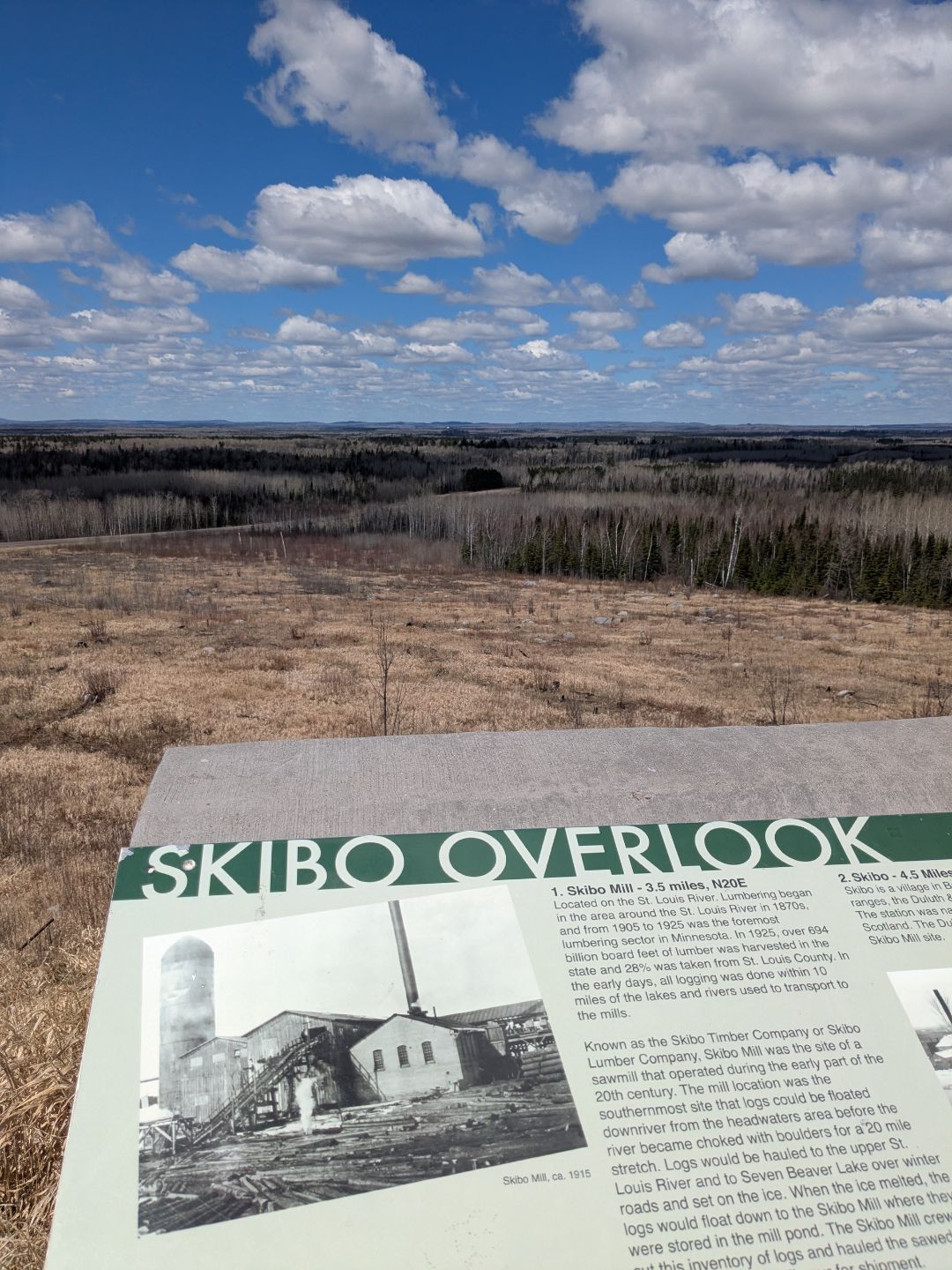
Scattered beneath the green canopy of white pine are scenic and historic features unique to our region. Traveling on the scenic byway (County Highway 15), about 12 miles southeast of Hoyt Lakes, rewards you with sweeping views from Skibo Vista. Once home to a USDA Forest Service fire tower, the overlook now offers parking, interpretive signs, and restrooms. It’sa great place for birdwatching and for taking in the Laurentian Divide, a watershed rift that can send two raindrops to opposite sides of the continent.
Photo by Wayne Gannaway
At one time, Skibo was more than a fire tower site. It sprang up to serve the logging and railroad industries, with a railroad spur, sawmill, logging camp, and post office. Although the Duluth News Tribune proclaimed Skibo a “Deserted Village” in 1914 because of “an aggravated case ‘skiddoo,’” just eight months later it reported that the town was celebrating when the local tavern’s liquor license was renewed, showing the town still had some life in it—at least for a little while longer.
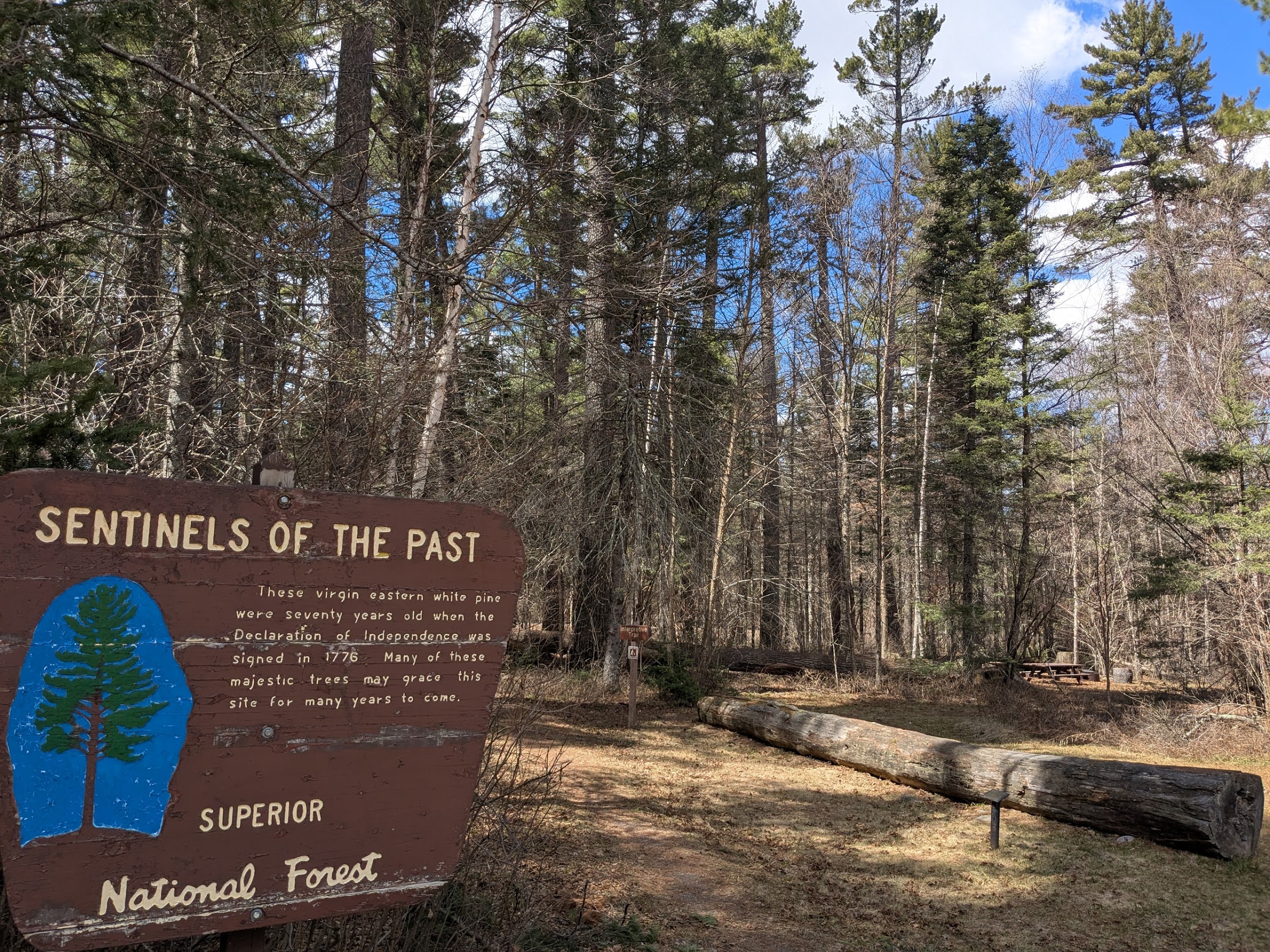
If Skibo’s past feels a little too lively for you, the White Pine Interpretive Trail may be more your speed. This picnic area and interpretive trail is 35 east of Hoyt Lakes, in Lake County.Apparently, lumber companies missed this small section of the Superior National Forest, as many of the white pines here are thought to be at least 250 years old. Live branches on these towering trees begin around 45 feet up, with the topmost branches reaching 100 feet. Listening to the white pines sing as the wind moves through them is just what you need to unwind.
Want to plan your drive along the Superior National Forest Scenic Byway? Discover the Range has a pageto help you get started.
See you on the road!
- Wayne Gannaway, Executive Director
Curator's Spotlight
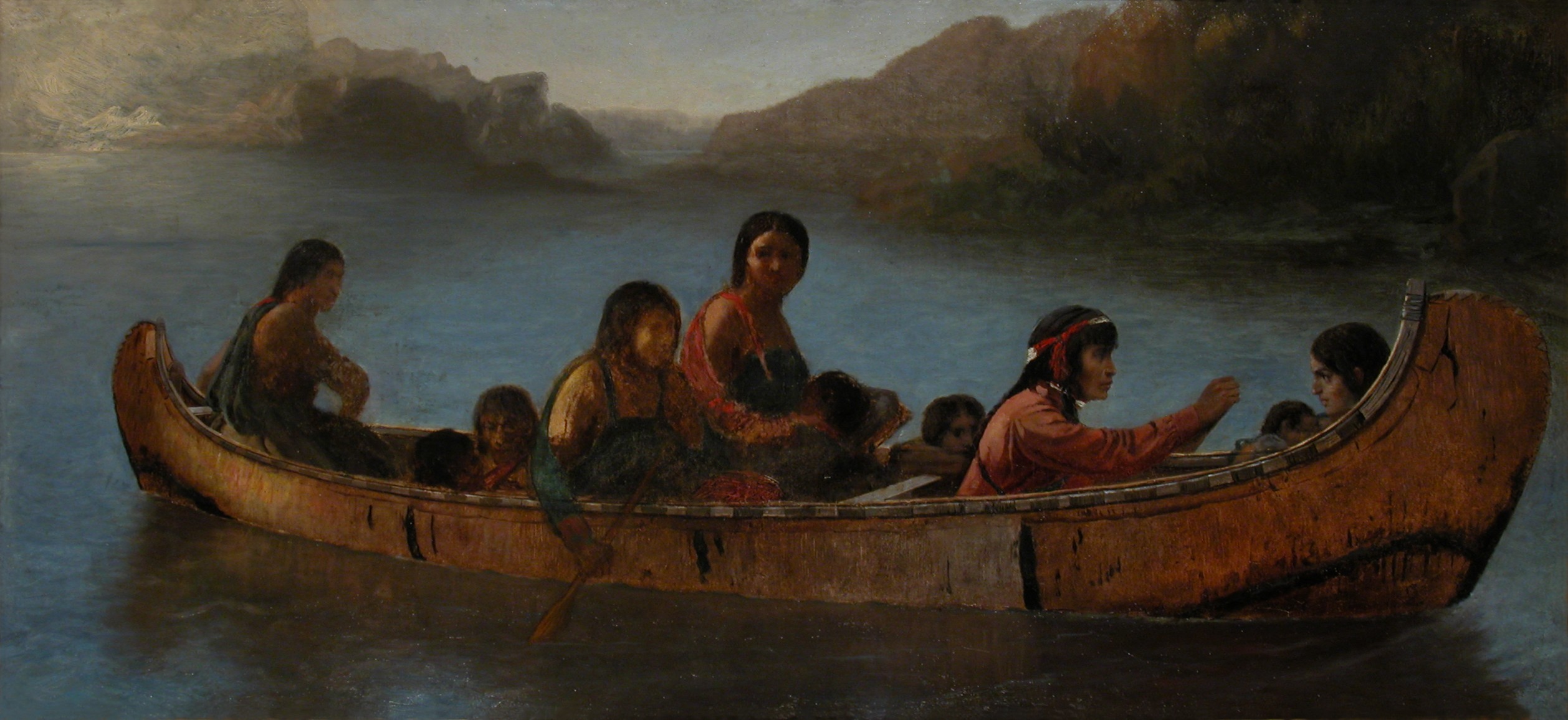
62.181.11 - Canoe of Indians by Eastman Johnson - Part of the SLCHS, American Indian Collection
We don’t take summer for granted here in St. Louis County and northern Minnesota.Even with modern comforts, after months of bitter cold and seemingly endlesssnow,I think most of us are simplyglad to have gotten through another winter.To take advantage of the nice weather and long days, peopleoften load up their cars and head out wherever they wish to go. As this is the land of 10,000 lakes, many bring along a boat. Of course, this ease of travel is a modern luxury. For most of the time that human beings have lived in the Arrowhead region of present-day Minnesota, canoe travel along lakes and rivers wasone of the best ways to get around.
Until quite recently, Ojibwe life meant moving around with the seasons.During the winter, one or two families lived together to hunt, fish,craft objects, and make repairs to help with work for the rest of the year. In the summer, people came back to each other, sometimes in villages of 1,000 people.Paul Buffalo recalled inWhen Everybody Called Me Gabe-bines, “Forever-Flying Bird”: Teachings From Paul Buffalothat movingwas generally done in groups.
“We moved our camps around in groups because the seasons were too short for everybody to be working just for himself. That bunch was called ayokwiinowaad or miziweaygoziwaad, and would be the relatives in a group, maybe five or six canoes full of relatives. Sometimes there would be only three or four canoes traveling together, with two and three in a canoe. Once in a while there would be seven or eight canoes. Most generally there would be fifteen or twenty people in a group, but many of them weren't full-grown. They were mostly children, and were closely related through the men.”
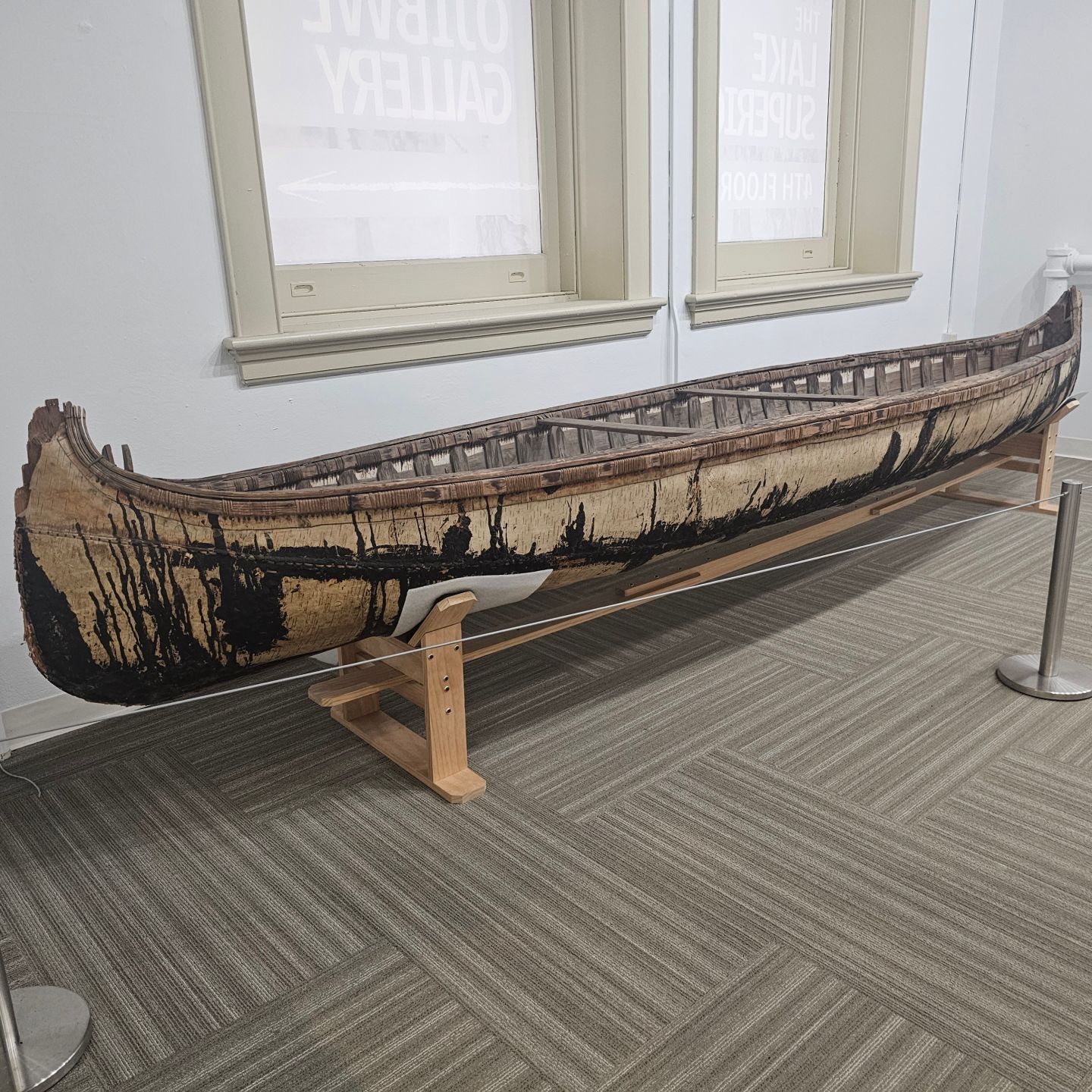
56.85.1 - Canoe - Part of the SLCHS, American Indian Collection
In Anishinaabemowin (Ojibwe language), the word for canoeis jiimaan.
Wiigwaasi-jiimaanan are lightweight and made of materials that are plentiful around the lakes and rivers of the Great Lakes region. A wiigwaasi-jiimaan like the one pictured above would be constructed by stripping the outer bark of a birch tree, which can be done without killing the tree. When used for the outer skin of a canoe, birchbark is a naturally waterproof, resilient material, suitable for canoes that must navigate rivers, lakes, and rapids. The bark would be stretched over a wooden frame, sewn together, and then sealed with tar. Trustin Timber created a great, 2 ½ minute video showing the process, which you can watch here.
Long before Europeans arrivedin North America, before the Ojibwe migration from the East Coast to the Great Lakes, people traveled all over the continent to exchange goods, technology, and stories. For example, corn was developed by indigenous farmers near present-day Mexicoaround 8,000 years ago. Over time, seeds and stories were tradedacross North and South America, eventually becoming part of Ojibwe life.Knowledge of the continent’s waterways would go on to be essential for the fur trade.
Building wiigwaasi-jiimaanan is in no way a thing of the past. While there are certainly less people building them today, Ojibwe people are still here, carrying on traditional ways of living. For a more detailed article about how people today build jiimanan using historical techniques, I recommend this article on building a canoe at Grand Portage from the National Parks Service.
- Terry Johnson, Curator
Veteran R&R
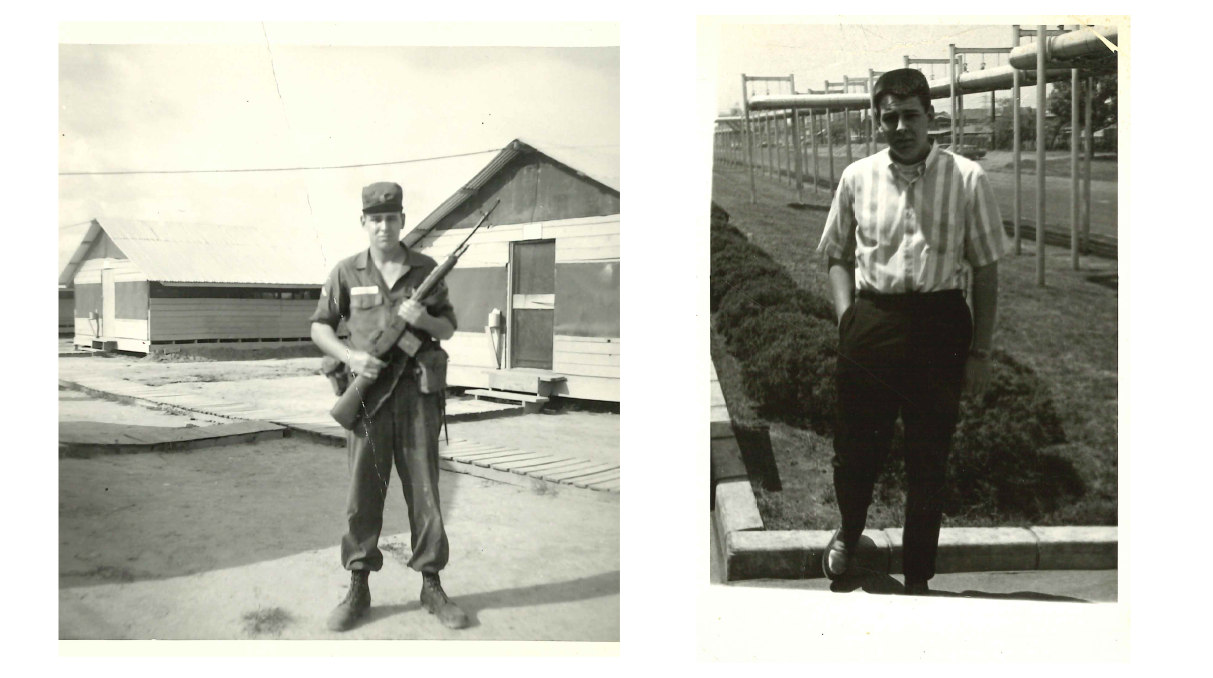
Robert J Beardsley in South Vietnam and Japan - 1966 - 1967 - Part of the Albert J Amatuzio Veterans Archives
As all of us civilians know, summer is a time for family fun and adventure, rest & relaxation (R&R). But for Veterans R&R more typically stands for Rest & ‘Recuperation’. Veterans that have been engaged in combat for days, weeks, sometimes months on end need a break due to sheer exhaustion and lack of sleep.
Militarily, the practice of R&R has been used for eons as leadership recognized that Army and Navy personnel, especially those in combat roles, needed periodic relief from the hardships of battle and shipboard life during long deployments and wartime service. In every American branch of service and in every conflict, there has been the concept of R&R. And in the age of sail, naval crews received liberty in port for rest and recreation after long voyages.
The goal was to support veterans’ physical, mental, and emotional well-being through rest, recreation, and camaraderie; much the same way a family summer vacation does; depending on how you view the movie versions of the ‘Vacation’ series. 😊
The difference between Military R&R and civilian Vacation can be similar but also have very stark differences. Families get to decide when and where they go on vacation to places that suit their fancy. Veterans on R&R are assigned a location and told what dates they can go. But the experiences are a lot alike. Veterans’ R&R activities may include:
Vacations or retreats
Outdoor Recreation and Hunting/Fishing Trips
Wellness and Therapeutic Programs
Family Reunions and Social Events
Access to Military or Veteran' Recreation Facilities
For local Veteran Clifford Wiklund, from Virginia, MN who fought in Korea in the U.S. Army, he described his R&R like this, “And then we got here, ‘Fujiya’ Hotel was at the base of Mt. Fuji. Real stateside beds. We hadn’t been in a bed for six months or so. Here we’re out at the what you call the Rocker Four Club, having a big meal. Not many people out there, but this is a fancy restaurant and hotel where we stayed. I think the military owned this. Because that’s where all of us stayed. We didn’t pay any bills.”
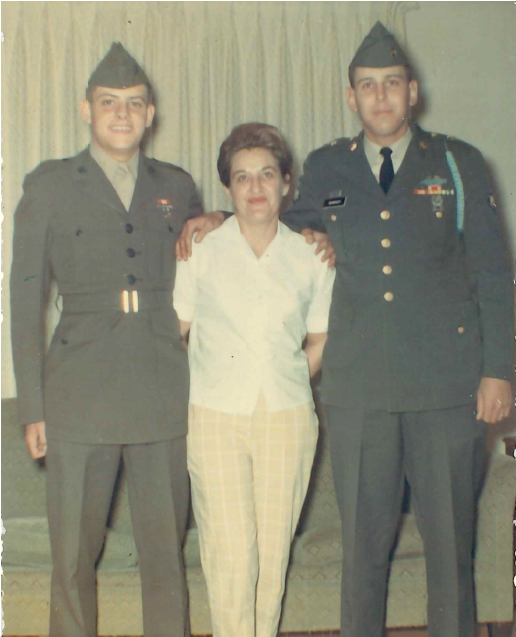
Another local Veteran Robert Beardsley, of Duluth, MN who fought with the U.S. Army in Vietnam; he too cherished his R&R; he used it for recreation (Japan) and an opportunity to visit home.
Robert J Beardsley home on leave after 2nd Vietnam tour, 1968 - Part of the Albert J Amatuzio Veterans Archives
Today, R&R continues in various forms through military leave programs, veterans’ retreats, therapeutic recreation, and MWR activities, reflecting the long-standing belief that rest and recovery are essential parts of military readiness and well-being.
The Veterans Memorial Hall mission is to Collect, Preserve and Disseminate the history of Veterans of northeastern Minnesota. There are an estimated 35,000 Veterans who have served from our area, and over 29,000 servicemen and women catalogued in our Veterans Information Database. For more information about any of our Veterans of northeastern Minnesota, go to www.vets-hall.org to read some of their stories.
Out of 35,000 veterans, only 8,000 have a completed documented story. If you would like to help write any of the remaining 27,000 Veterans stories, take some time during the cold Spring months, or anytime, and reach out to the Veterans Memorial Hall.
- Jay Hagen, Veterans Memorial Hall Program Manager
(c) 2026 The St. Louis County Historical Society. All rights reserved.
Unless otherwise noted, photographs acquired by the St. Louis County Historical Society are now a permanent part of the Archives collection at the Kathryn A. Martin Library, University of Minnesota Duluth. Used with permission.
Our mailing address is: 506 West Michigan Street, Duluth, MN, 55802

.png)
