・・・
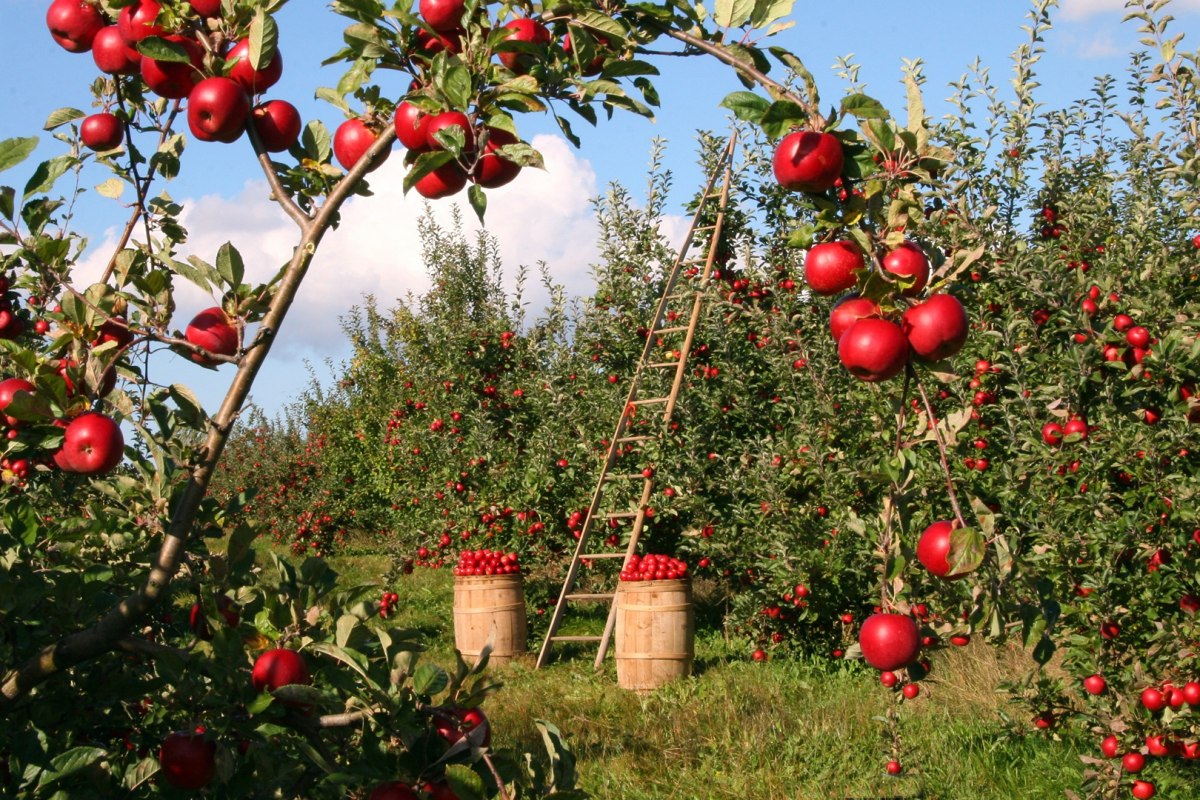
Some years the harvest was abysmal — dense, knobbly things that made your lips dry up and pucker on contact. Other years we raced to beat the fruit to the ground, distributing apples to neighbors before they rolled off the driveway, splitting open, releasing that first intoxicating trace of fermenting cider. On Park Lane in Jamaica Plain, barn jackets came off fast, flung on the porch, and small hands reached for empty paper bags, swinging them hard enough to threaten the handles popping off. I earnestly picked, shared, and ate the fruit from the old apple tree in my nana’s front yard but eventually adolescence pulled me away from this, as it does most devotions, in favor of hanging at the Copley Mall or Corner Mall downtown. But in those apple-picking years, I’d experienced joyful anticipation, sometimes disillusionment and outright disappointment from bad harvests. Some years a harvest paid off really big, in apple crisp. In good years, we'd have large scoops of crispy, nutty bran layered with butter, brown sugar and hot, sweet apple slices. Eating entirely too quickly with no regard for the roof of my mouth, I’d sear the tender skin, wondering where these yummy things even came from.
Apples rose to fame in Europe, but their legend wouldn't fully cement until they boarded ships headed for Plymouth, Massachusetts, and later, the land of the Massachusett tribe in modern-day Boston. Even though wild apples existed on Turtle Island before the invasion of European settlers, they were mostly inedible — small, sour crab apples. The early seedlings cultivated in Europe, derived from wild apples in Kazakhstan, were cultivated on European farmland, meaning over time their growers replanted varieties that suited them. It would take getting to Massachusetts for apples to achieve their true genetic destiny and reveal just how imaginative they are. Apples carry thousands of genetic traits — more than most other fruits — that mix and match every time a seed develops and grows. Once the apple seeds were free to roam and express their endless characteristics — crispier flesh, redder skin, longer shelf life — different varieties started coming into being that never existed anywhere else.
Famously, one of those uniquely American varieties was born in Roxbury, Massachusetts, in 1623. The Roxbury Russet could be mistaken for the potato with which it shares a name. Its papery brown skin, hard flesh, and acidic but brown-sugary flavor proved an interesting combination for colonists. The hardness made it ideal for winter storage, and its flavor made it uniquely suited for cider production. In the 1700s and 1800s, there were over 7,500 American varieties in the US, several times what Europe managed to produce in 3,000 years of continuous cultivation. Obsessed with having a reputation for the best (hello, coastal elitism), East Coast settlers in the mid 1700s continued to focus on producing the best apples by grafting trees—a process of growing and reproducing plants by splicing and joining branches from different specimen, thereby reproducing favorable characteristics— and in the South, enslaved Africans were forcibly grafting apple trees to meet an increasingly demanding volume of fruit grown at scale.
・・・
Thomas Jefferson, famed president and Southern enslaver, was, if we call it plainly, a drunkard whose tastes for cider required his enslaved workers to perfect their craft with expediency and efficiency. “Jefferson's” apples are widely accounted for; he often bragged in correspondence with Europe that European apples failed to compare to the Newtown Pippin, one of 4 native varieties planted for eating and cider at his estate. But Beronda Montgomery helps us further untangle the purposefully obscured legacy of Black agricultural expertise that lives just below the surface, in When Trees Testify: Science, Wisdom, History, and America's Black Botanical Legacy. She writes,
President Jefferson had prized orchards at his Monticello plantation that depended upon the care and cultivation of the people he enslaved. These individuals had the ability to propagate the apple trees and also developed needed cider-making skills. Jupiter Evans was one of the individuals enslaved by Jefferson whom we know by name. Evans was a trusted, expert bottler of Jefferson's hard cider. Another man enslaved by Jefferson was George Granger, who was an orchard caretaker and who, together with his wife, also made and bottled cider for Jefferson's consumption and use. (202)
Most accounts have left the names of the enslaved out of the historical record; perhaps because they found the people unworthy of mention, or because the vast majority of details about these enslaved experts could only be found in Jefferson’s garden books – coincidentally donated to the Mass Historical Society on behalf of his great-great-grandson, Thomas Jefferson Coolidge. Jefferson's apple trees were less a food source and more of an emblem; a source of great comfort and pride. But Jefferson was projecting an image of prosperity and innovation, all while stealing credit and labor from enslaved people.
Still, free Black settlers depended on their knowledge in cultivating apples when establishing free Black settlements and towns in the early 20th century.
Harriet Tubman imagined herself one day growing, eating, and sharing the apples she was forced to pick as an enslaved girl in Maryland. Freely, without permission or punishment. And she’d keep that promise. According to Montgomery, “In her homestead in Auburn, New York, the adult Tubman planted rows of apple trees along the road to her home in 1869.” She also had an orchard with apples and other fruit trees. Even now, a tour of her New York home—part of the Harriet Tubman National Historical Park—allows visitors to see remnant apple trees and orchards. An Apple for Harriet Tubman, by Glynette Tilley Turner, recounts a sweet moment from a 1907 conversation with journalist Frank C. Drake of the New York Herald during his visit to Auburn. Tubman told Drake, “I liked apples when I was young and I said, ‘Someday I'll plant apples myself for other young folks to eat,’ and I guess I done it.” Today, the Harriet Tubman National Historical Park in Auburn still holds remnant apple trees from that orchard — a living record of a vow made under bondage and fulfilled in freedom. The same fruit that was once withheld from her became, in her hands, an offering to others.
・・・
This very same legacy lives here in Black enclaves like Roxbury, Dorchester, and Jamaica Plain: neighborhoods where Black Bostonians settled and built communities, and where that larger legacy of land stewardship is being lived out today – even if the direct evidence of cultivation comes from elsewhere. According to Montgomery, "Apple trees are a core part of African Americans’ legacy of freedom [and] this is a legacy worth reclaiming and carrying forward as a gift into the future."
Standing where Columbia Road spills out into Everett Square is a towering testament to the legacy of Boston’s agricultural prominence. The 12 foot brass pear greets children walking home and neighbors walking past the number 15 MBTA stop on their way to work. The orchards for which this part of Dorchester was known have long since fallen victim to development and an ever-encroaching city; evidence fails to emerge in ledgers and monuments.
Jefferson's ledgers note Jupiter Evans's labor but not her knowledge; historical societies note the Roxbury Russet and its importance in the American cider industry but omit some of the experts who understood its cider yield best, and the enslaved Africans who likely contributed to its cultivation and growth. More plainly, there is an inherent tension in telling stories from the shadows about the formerly enslaved; this story perpetuates the erasure of Black agricultural innovation, expertise, and labor because it too is bound to the limited historical record of Black land stewardship and cultivation of apples in Boston. Ownership dictates remembrance. The logic that excluded Jupiter Evans's expertise from the record is the same possessive logic that treats land as something to possess rather than tend or steward.
Present-day land stewards, like the United Neighbors of Lower Roxbury (UNLR), have had to fight for their right to be in ongoing, uninterrupted relationship with the places they call home. Defined by aggressive urban renewal projects seeking to clear what the Boston Redevelopment Authority and other city planners termed "blight", the mid-twentieth century ushered in rapid development within Lower Roxbury. Abandoned, dilapidated buildings were marked for the bulldozer to make way for the highway and new infrastructure. But the United Neighbors of Lower Roxbury emerged from this pressure and stood in the wake. Their continued work honors the call to action from founding members Mrs. Gretchen Jackson and Mr. Jimmy Guilford, in their last wishes: "Don't lose that land and don't forget the history." Residents recognized that if they were to lose their physical connection to the land and to each other, that they'd lose the foundation of community memory; they understood that when the physical landscape is destroyed, the community’s memory is often erased with it, and began a decades-long struggle to maintain legal stewardship of their neighborhood.
・・・
This year I’ll be gathering the fragrant yellow quince, one of the apple’s country cousins, that still grows outside Park Lane in Jamaica Plain. Most often simmered slowly into jams because they’re too hard and bitter to eat, these small hard fruits remain one of the last links to an annual apple picking tradition that I can taste. My nana has passed on and so has the apple tree that inspired this story. But apples are patient and their imagination is infinite. When I visited to harvest quince early this month, ever curious, I inspected the cavity where the old trunk was ripped from the soil. To my delight, I saw what I believe is an apple tree seedling, waiting to fulfill its destiny. I’m hopeful that I’ll get to see it bear fruit once more to share it with my niece who, born this year, never met my nana. I imagine we might share these memories, while reading An Apple for Harriet Tubman together, eating big bowls of hot apple crisp.✦