If you're having trouble viewing this email, you cansee it online.
It's Downtrodden Boy vs Victorian England in The Novelist
Dear Dramatists,
It's 3 am in Victorian England. Palace guards track dirty footsteps through Buckingham Palace to discover a tiny, greasy boy perched on Victoria' throne. He's researching his obsession. He's composing his masterpiece. He's about to be very, very famous.
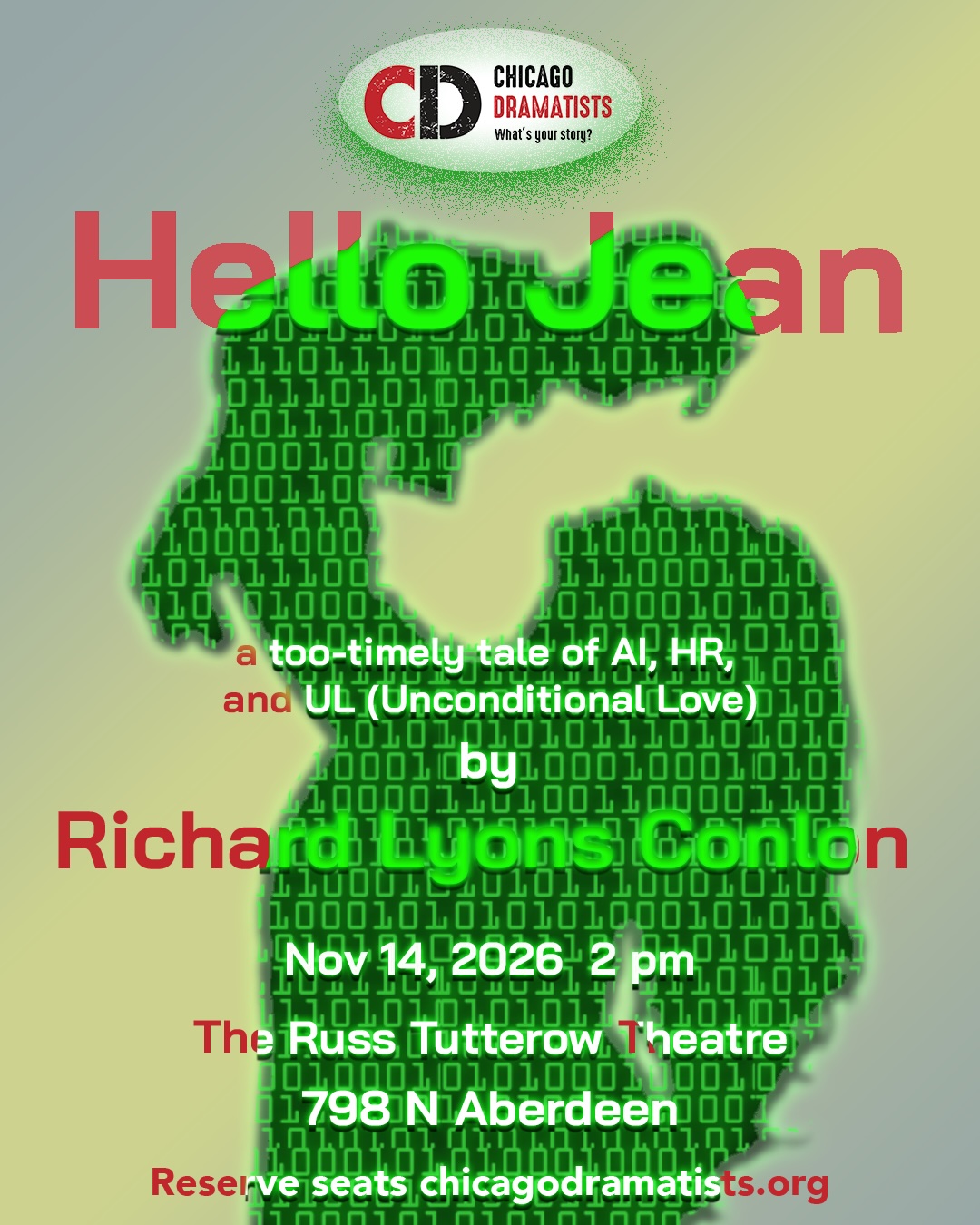
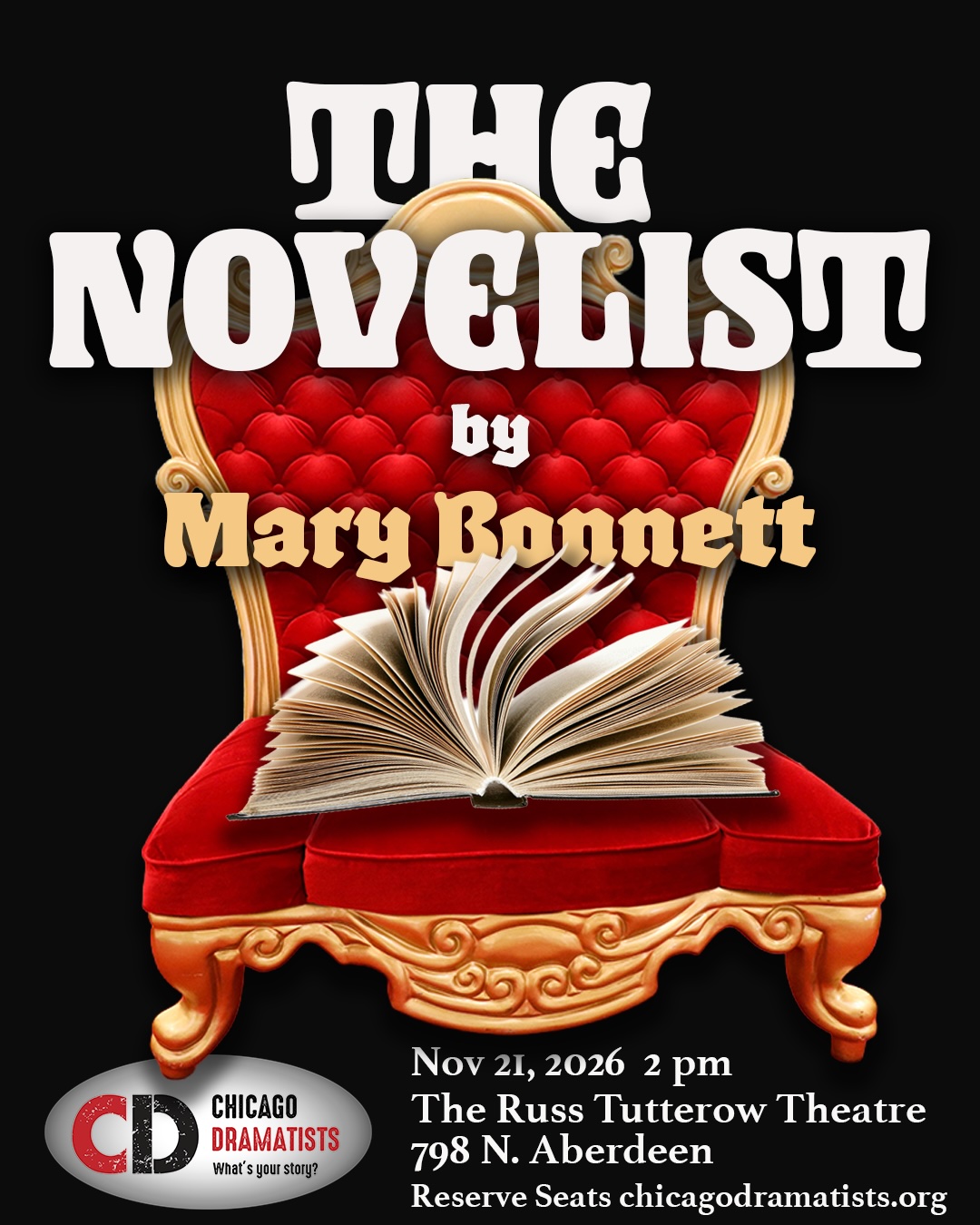
Come see Resident Playwright Mary Bonnett'sThe Novelist, a Saturday Series reading, Nov. 21, 2 pm, The Russ Tutterow Theatre. And don't miss Richard Lyons Conlon's reading of Hello, Jean, this Saturday, Nov. 14
CD: How/when did you learn about the facts behind “The Novelist,” and what prompted you to think this was good material to work with?
Mary Bonnett: Some years back, I was reading Queen Victoria's memoirs and books on her life and ran across the "boy in the palace" story, which had already been presented in the form of a film and novel. The boy's behavior was so outrageous. It just got my heart. The story was poignant and reflected our times. Poor against rich. I wrote a few opening scenes for Will Dunne's class. Then had those scenes presented in two theater readings for Perennial and Ubiquitous performances. Skip forward a few more years, and I made myself finish the script by setting a deadline for a First Draft reading. January 26, 2026. Thank you, CD.
CD: What has been the development path?
Mary Bonnett: Lots of research on England's early Victorian era -the mores, lifestyle, manners, language of the various social classes, all fascinating. The actual story of the boy in the palace is quite a journey. How his actions impacted the government and prompted the press and public to become involved. The piece is fictionalized but based on a number of true events. Both comedic and dramatic elements explored. I allowed the characters, once established, to dictate the actions and tone of the piece. Often, a film opens up and I see them moving about and speaking to each other, all in living color. Don't know if that's the norm, but it's my norm.
CD: The boy is described as having a face so unique some of the palace staff identify him as a ghoul sent by the devil." How did this factor into his treatment by the authorities...the press...and what role does it play in this work?
Mary Bonnett: The boy was somewhat grotesque, certainly not attractive. He did draw negative and unwanted attention solely based on his looks. Later, it was his looks along with his bold actions and defiant personality against anyone who crossed his path, which included the British government, celebrities, and the press. His looks became a cartoon drawing for the press and a punchline for the government. The Queen's staff was repulsed by his looks. To me, he became a sympathetic character. Eventually, as the play evolved, he became the central character in The Novelist.
CD: He breaks into the palace three times! Each time, the government is mercilessly ridiculed by the press. How does this factor into the action of the play?
Mary Bonnett: The government is forced to take action. It becomes a David and Goliath allegory. How can one person fight and win against a powerful and ill-intended government, especially if you're poor, discarded, and ignorant? Certainly reminded me of some contemporary issues we are facing.
CD: What theatrical style are you working in with “The Novelist” and how does this fit into your body of work?
Mary Bonnett: The basic theatrical style is presentational through the main character's interactions. A break of the fourth wall for the boy to speak directly to the audience. Actors perform multiple roles with costume and wig changes seen on stage, possibly silhouetted behind an onstage screen. The characters are realistic, the situations are realistic, yet there are transitions where the boy becomes the storyteller, weaving and stepping in and out of his scenes. In a few places, he becomes a tour guide of the palace escorting the audience from room to room, introducing them to the Queen's chambers and the palace throne room. Another layer is Brechtian with elements of Absurdism. I tend to take one overall style then integrate others into the fabric of a script. Brechtian elements are in a number of my pieces — with use of spoken word, poetry, dance, music interwoven with the dialogue. I've also used journalistic or a documentary approach to tell a story.
CD: The play is a comedy-drama. Tell us about your choice to deploy both and when or how you decide whether to lean into the comedy or drama?
Mary Bonnett: I chose a very outrageous lead character living in an outrageous time. The heightened use of language, the extreme contrasting living circumstances, the pomp and ceremony of the Victorian times — and all the rules people had to follow to be "proper". To me, as a writer, it was absurd. The character's obsession with an icon of his society. The lengths he goes to get what he wants - his rude behavior — his disregard for rules and authority. He's a wild guy and all others fall into place around him. I used a lot of humor because the boy was so disconnected from his feelings or at least expressing his feelings. His “kiss-off" attitude and cleverness — all those moments outsmarting others — lead to a lot of humor, but then when you see him truly threatened and his family grieving and suffering for his choices and the love they have for him —even though he rejects all they stand for — those are very touching moments. Very universal feelings — so the personal was revered and the public aspect was written verbally, dramatically, and situationally ironic.
Many of my plays address society's underdogs, their struggles, and abilities to fight and overcome life circumstances. They are heroic to me. Often, they can't overcome them, so as a playwright, I set about showing why, exposing the injustices and conditions "the system" has heaped on them. I try to write in a manner that keeps the audience engaged. Humor works. Even though The Novelist is historically dated, the cause and issues are still reflective of our current times, allowing the audience to see the same issue in a different light. Artistically, The Novelist is written with a spoonful of sugar -though not too sweet.
CD: You are known for your "Chicago Trafficking Cycle" plays. What led you to this work?
Mary Bonnett: I co-founded a theater company in 2011, Her Story Theater. Through theater and the written word, our mission is to shine bright lights in dark places on women and children in need of social justice and community support. The first play performed was Gloss Over, nine fictionalized monologues based on interviews with former Chicago homeless women from Deborah's Place. Performed in a beauty spa. In 2012, HST focused on domestic sex trafficking in Chicago. Trafficking reared its head in2010 and gained traction with the authorities by 2012. The local cases soared and the gangs became involved. The public was unaware. They also thought the women and girls were imported from Asia and that American girls were exempt. Unfortunately, both were being trafficked. I took about six months of reading on trafficking to immunize myself emotionally so I'd be able to conduct interviews. I was lucky to work with Anne's House, a home for trafficked girls between 12 and 18 years old. Their founder introduced me to a coalition of 33 organizations dedicated to anti-trafficking in the Chicagoland area. These included various departments from law enforcement, therapists, DCFS, advocacy groups, and more. Over time, I was able to interview at least 150women who had been trafficked, pimps who had sold them, men who had purchased them, undercover detectives, vice squad, special victims detectives, police, FBI, judges, lawyers who had arrested and prosecuted, advocacy groups both foreign and homeland…it was a 360-degree picture of what was going on in the city, county, and state. I wrote 6 plays over an 8-year span, featuring different points of view and perspectives by the lead characters. We presented them to audiences ranging from7th-12th graders to the general public, professionals in the field, and trafficked women. We performed and partnered in Philadelphia, Chicago; worked with lawyers and judges, down to Texas for the Super Bowl produced by a Houston theater. Educators and Therapists in Chicago, nursing students in Wyoming until COVID hit. Then mounted a final piece after COVID on missing girls in Chicago. The plays are: Shadow Town, The John, Court Side, Money Make 'M Smile, Monger, and Mia "Where Have All The Young Girls Gone?” A lot of good things came from the shows. We raised awareness. Formed partnerships. Funded advocacy groups. Presented workshops around the country, including one for Native American high schoolers in Wisconsin. Women's organizations became activists; girls were identified and rescued because people learned the signs. Students found a voice. We felt we had done a small part for the movement and community. However, domestic sex trafficking is currently epidemic in our country. It's everywhere, even though stricter laws are in place. We need an overhaul in our collective consciousness to end it.
CD: You've also written a number of historical short plays, mostly centering the lives of notable women. Why you continue to be drawn to this work?
Mary Bonnett: Women's history is important. It's an opportunity to see where we come from and where we are. I enjoy honoring remarkable humans through a script. We can experience their bravery, courage, tenacity, fearlessness, and be inspired. It's a reminder to women, young and old, everywhere —never say never. Persistence is all. I've written a number of historical plays for various women's advocacy groups; included are: The Working Women's History Project and the Illinois League of Women Voters.
CD: What are you working on now?
Mary Bonnett: Currently, it's Battling the Beasts, the remarkable journey of Katharine Graham, former owner of the Washington Post during the Nixon administration. I'd like it to be a one-woman show, but it may end up as a two-hander. I’m also working on Down Came the Rain on child exploitation. It will be presented to younger audiences. We'll partner with experts and professional organizations. The play focuses on raising awareness, empowerment, and self-protection. I'm also working on that novel that needs finishing, entitled The Quiet. It's historical fiction. The story spans from 1910 to 1930, taking place in Chicago and Mounds, Mississippi.
CD: What is your writing process? Fixed or serendipitous?
Mary Bonnett: My writing process is both fixed and serendipitous. I do the research, as most of my work is steeped in some current or historical reality. I structure a loose outline…see which characters need to be represented…loosely determine what message or what I want the audience to walk away with… and go from there. For me, once the characters take over — they dictate the flow and traffic of the piece. When the first draft is finished, I edit. A lot. Hone it, build it, clean it - cut out whole scenes that drag it down. Find where the holes are in the plot, write a scene I hope works to fill it to move the plot forward. I step away, mull it over, return and reconsider everything. I clean scenes as I go —even though "they" tell you not to —for me, it's important to have a coherent, workable (almost finished) set of opening scenes or monologues to build from…especially the first opening three scenes of the play. It often becomes about the style and if the style isn't working - I start over. Basically, it's whatever it takes.
CD: What do you hope to learn or gain from this reading and what do you hope the audience gains or walks away from the reading thinking about?
Mary Bonnett: From past experiences with CD readings, the moderators have been remarkable in leading and gleaning comments from the audience and also giving their own comments, which have been invaluable for insights and considerations for the playwright. I'm assuming the same will happen again. For The Novelist, I hope the audience has a really good time, laughs a lot, is emotionally moved, feels the love, and connects to the characters. I hope they also see that on a good day, with the right attitude, we are not powerless in solving society's woes.