If you're having trouble viewing this email, you cansee it online.
We’re shifting the focus from outrage to action, and building the blueprint for a democracy that truly works for the people it serves.
How ICE Spent a Billion Dollars and Walked Away
By Alice Bond
They called them "mega centers."
It all started in 2025 with big wads of federal budget money. Historic money.
In fact, it was your money.
The One Big Beautiful Bill Act (OBBBA), signed by President Trump on July 4, 2025, gave Immigration and Customs Enforcement (ICE) alone $75 billion — seven times its annual budget — as part of a broader $170.7 billion appropriation for immigration and border enforcement, according to NPR and the American Immigration Council.
By early 2026, DHS and ICE had begun quietly buying up warehouses, according to “The Washington Post,” eventually purchasing 11 for a combined $1.074 billion, according to “Spotlight PA”. This juggernaut was to be a showpiece for the efficiency of the national immigration detention and deportation program. But it became something else entirely.
Newest Trend: Review, Remap, and Rewind to the Era of Reduced Voting Rights
By Jo-Ann Johnston
You remember the big news from the Louisiana v. Callais case ruling from late April, right? The court knocked down a key part of the Voting Rights Act of 1964. With that, the court undermined the creation of a 2024 congressional voting district that would have been a majority Black district.
The majority of the Supreme Court ruled 6-3 against Louisiana, decreeing that maps can be redrawn if they were created with partisan intent -- but not if they were done with racial considerations.
That tactic is now being applied more openly across the country. To be clear, though, President Donald J. Trump, in 2025, requested that state-levelRepublican lawmakers in several states review and revamp congressional representation maps to give the GOP candidates an advantage.(1) Several started complying right away.
And since the Callais decision, Tennessee Republicans redrew the state’s voting maps for the upcoming midterm and erased the only majority-Black voting district in its state.
Ballotpedia reported that as of May 2026, six states had voluntarily redrawn their congressional maps for use in the upcoming 2026 midterms, meaning they made the changes before legally required to do so. Five are Republican-led states: Florida, Missouri, North Carolina, Tennessee and Texas.Democratic-led California did the same – to even the score with Republicans.(2)
Those six include only the states that wanted to make changes: others redrew boundaries to meet legal requirements they faced individually. So the actual total of states with redrawn maps for 2026 midterms is 10.(3)
This literally affects millions of people.
This pattern of more new maps emerging before the standard 10-year, census cycle could continue. Georgia wants to get remapping done for the 2028 presidential election.(4) Normally, maps would not be redrawn before the 2030 census.
And, in a different Supreme Court case, there was a 6-3 decision that likely favors candidates and political parties with the most cash. The court ruled that political parties should be free to coordinate campaign spending with their nominees for office, and that previous limits on that kind of planning were unconstitutional limits on free speech, as it had previously ruled in the Citizens United v. Federal Election Commission case from 2010. The younger sibling case from June is called National Republican Senatorial Committee v. Federal Election Commission. Voting rights advocates are calling for as broad a turnout as possible in November from those supporting fair voting to help offset mapping done to favor Trump-aligned candidates.
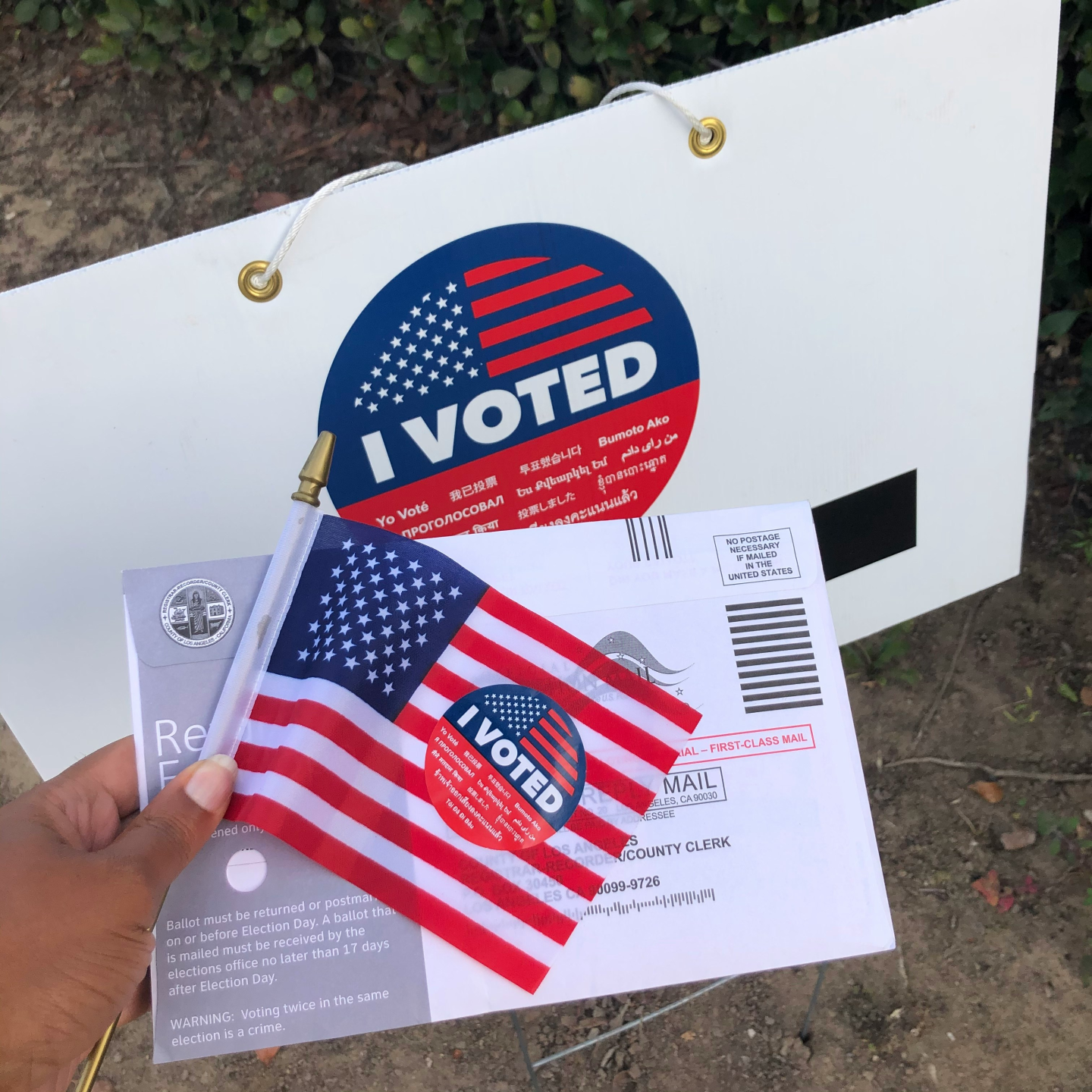
There was some good news over the past couple of weeks for Americans who like to use mail-in ballots to vote, courtesy of the U.S. Supreme Court.
If, for some reason, your completed and mailed ballot arrives at its correct destination after Election Day, your state can still count it as long as you mailed it on time. Make sure you do that, and know that it can now take an extra day or two for the postal service to get a postmark on an envelope.
The case came out of Mississippi, where the state allowed election officials to accept ballots postmarked by Election Day within a grace period of five business days after Election Day. Republicans aligned with the Trump administration challenged that.
Justices ruled 5-4, however, that Mississippi’s system is just fine. This is also good news for voters in 13 other states with similar allowances.
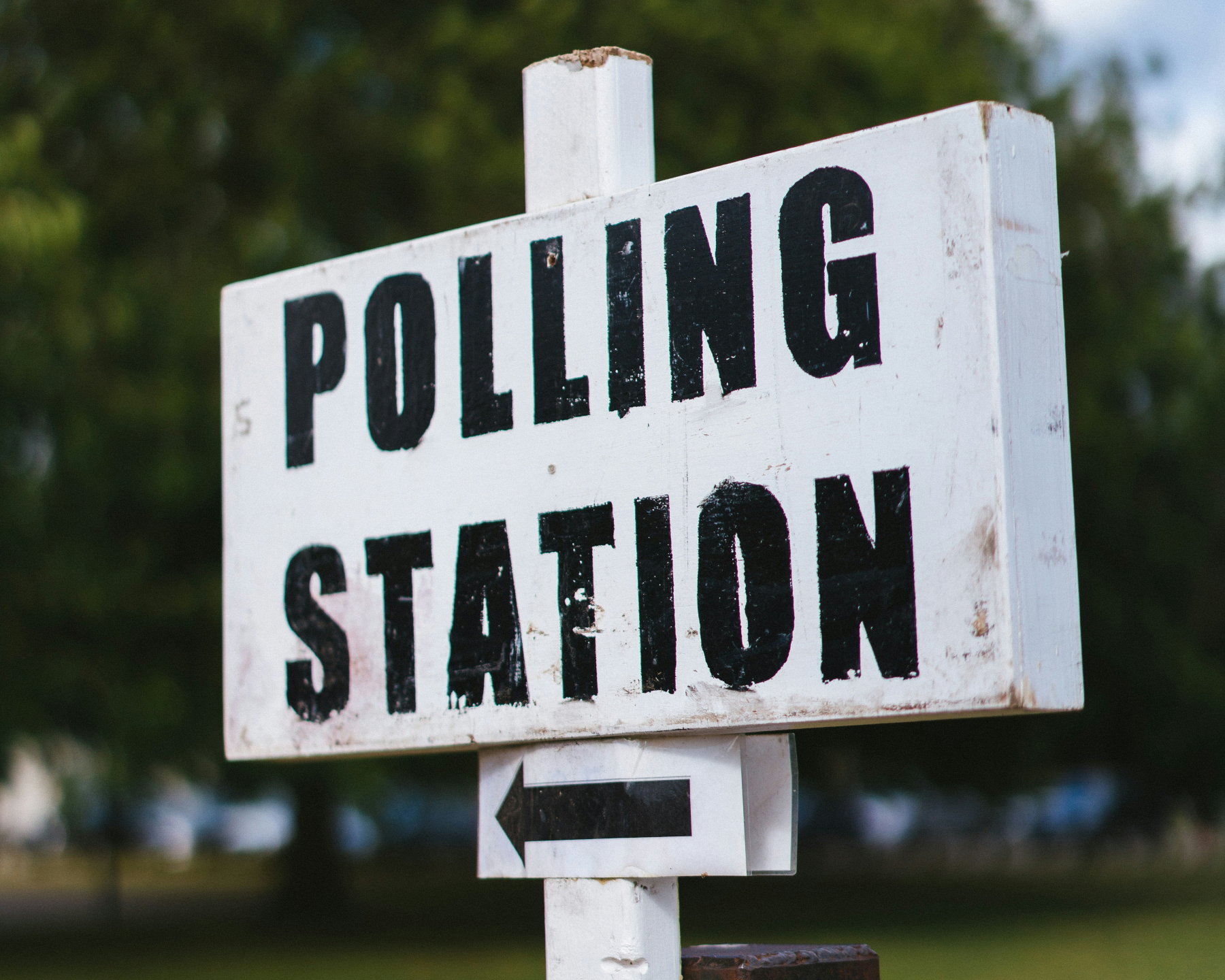
Photo by Phil Hearing on Unsplash
Voting Alerts: Bad Laws Migrate to Some States; Federal Commissioners Fired
By Jo-Ann Johnston
President Donald J. Trump continues to complain that the SAVE Act, his favored federal voting bill, failed to pass the Senate this year. But now he’s getting some help in certain states that are trying to give him limited versions of what he wants. And even that’s bad news for voters.
The Safeguard American Voter Eligibility Act and its later version, the SAVE America Act, would essentially require Americans to show proof of citizenship when they register to vote and again if they re-register after a move.
It’s not as easy to prove that as it sounds, unless you already have a valid passport.
Getting a passport (now $165) generally requires producing a birth certificate showing a name that matches the would-be voter’s current surname. There is also a cost in time, fees, and transportation to obtain these items.
Consequently, SAVE requirements would make it harder and more expensive for more than 21 million people nationally, according to the Brennan Center for Justice. That’s why the proposed federal act has been opposed by so many and stalled.
Understand that states’ SAVE-look-alike acts would end up costing voters fees, just as the stalled federal act would have. Other details and effective dates will vary by state, sometimes in subtle ways.
It’s imperative to keep up with what is being required or proposed in your state. If you don’t know where to start, visit VoteRiders.org to look up your state.
And in another disturbing development, President Trump has effectively taken control of the U.S. Election Assistance Commission and its four seats are empty.This leaves no one to take action, so far, should any be needed.
Congress created the commission to help states exchange information that is helpful in running elections and certifying election machines. The work needed to guide states through the midterm may already be complete.
But seeing Trump jump into commission personnel matters is alarming.We don’t know what is intended next.
In this environment, it’s important that we the people remind state and federal representatives that we understand just how fundamental our voting rights are and intend to protect them.
Sticking up for Science
By Jo-Ann Johnston
We need to give citizens and supporters a heads-up about troubling new guidelines the Trump Administration is considering using when reviewing future grant proposals for scientific research projects.
The administration has not put these guidelines into effect yet. This has allowed scientists, universities, research partnerships, smaller government agencies, and other interested parties to file formal comments on these proposed guidelines.
A chorus of NO, NO, NO has emerged in response, from both the public and specialized groups ranging from the Association for the Advancement of Science to the National Education Association.
Here’s the problem. While the Trump administration says it wants to enforce more accountability and fiscal discipline, the changes would actually give political appointees, rather than scientists, say in determining who should get grant money, how much, and for how long.
Professional and scientific opinions would be just advisory.
That is a huge shift in practice and trust in the scientific world. When applying for money, scientists have their proposals evaluated by others in the field with pertinent knowledge for peer review. A committee makes decisions. This process is intended to be apolitical and not subject to influences from outside the worlds of evidence and the scientific process.
There are other elements of the proposed framework that are also considered onerous or unwise. Grants could suddenly be terminated. Travel costs for conferences might not be allowed.
Researchers who work with team members in other countries might not be funded as these projects are not “America First” in design. And projects with elements of diversity, equity, or inclusion within the scope of their inquiries might be dismissed for favoring certain “identity groups.” That alone could end studies of diseases appearing in some populations or age groups more than others.
In sum, scientists consider the Trump management approach an overreach into science, dismissive of existing expertise that should be leveraged for the best decision-making, harmful to America’s global status in science, and bad for innovation in general.
We oppose the new guidelines on the grounds cited above. As specified by our vision of governance, we embrace policies informed by science, expertise, and empathy.
We will keep watching this issue and encourage supporters to do so as well.
Volunteers are critical to the success of our grassroots movement. Project 2029 is growing quickly, which is great news! That means we need you! All roles are remote.
While we are always looking for new volunteers, we currently have some available positions we need to fill quickly.
Critical positions:
Social Media Manager
Chief of Outreach
Press Secretary
Lobbyist
Communications Director
Issue Analysts
Deputy Program Manager
Deputy Chief of Policy
WordPress Lead
Google Workspace Lead
If the roles above are not a fit for you, that’s OK too! We have many more opportunities available and will talk with you about the right role.
Please visit our website to learn more and complete our volunteer application!
Your contribution helps us build a transparent and accountable government that truly serves ‘We the people.’
No billionaires here. We’re strictly nonprofit. No political party or corporate PAC is backing us, as we are independent by choice. Our organizers are unpaid. But if you can afford a few bucks, we’d appreciate the help covering expenses.
Thank you for your support!
Project 2029 | Drive Change Together
Project 2029 is a national all-volunteer grassroots movement committed to disrupting the broken system and redefining what democracy means from the ground up.
We are a 501(c)(4) and are not affiliated with, or supported by, any political party or political action group (PAC). We are funded by donations from everyday individuals wo support our shared hope for America.
343 Soquel Ave - Box #102, Santa Cruz, CA, 95062, United States
.png)

.jpg)
 Voters Granted a Break by the Supreme Court