“Above all birds, the hummingbird gives me that feeling of the mystery and the wonder of life. Such a vibrant little body, such color, and wings that beat faster than thought. I felt as if I could watch the whole of life if I could hold a hummingbird in my hand once.”
- Gladys Taber, The Book of Stillmeadow |
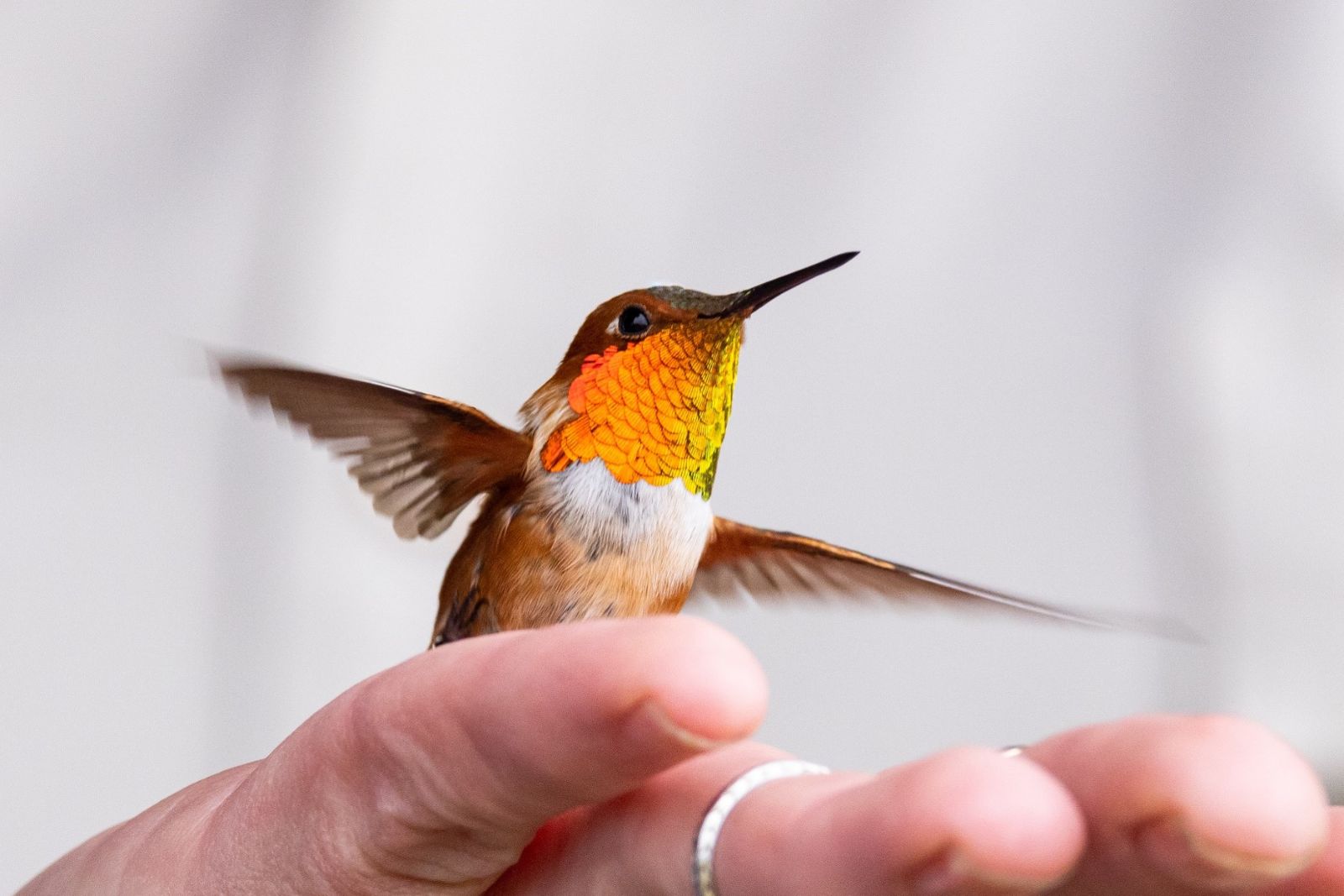
Hummingbirds in Alaska? Yes! Come hear about them at our March 17 meeting (details below). PC:Lisa Hupp/USFWS |
|
Tracking Rufous Hummingbirds’ Travel Itinerary
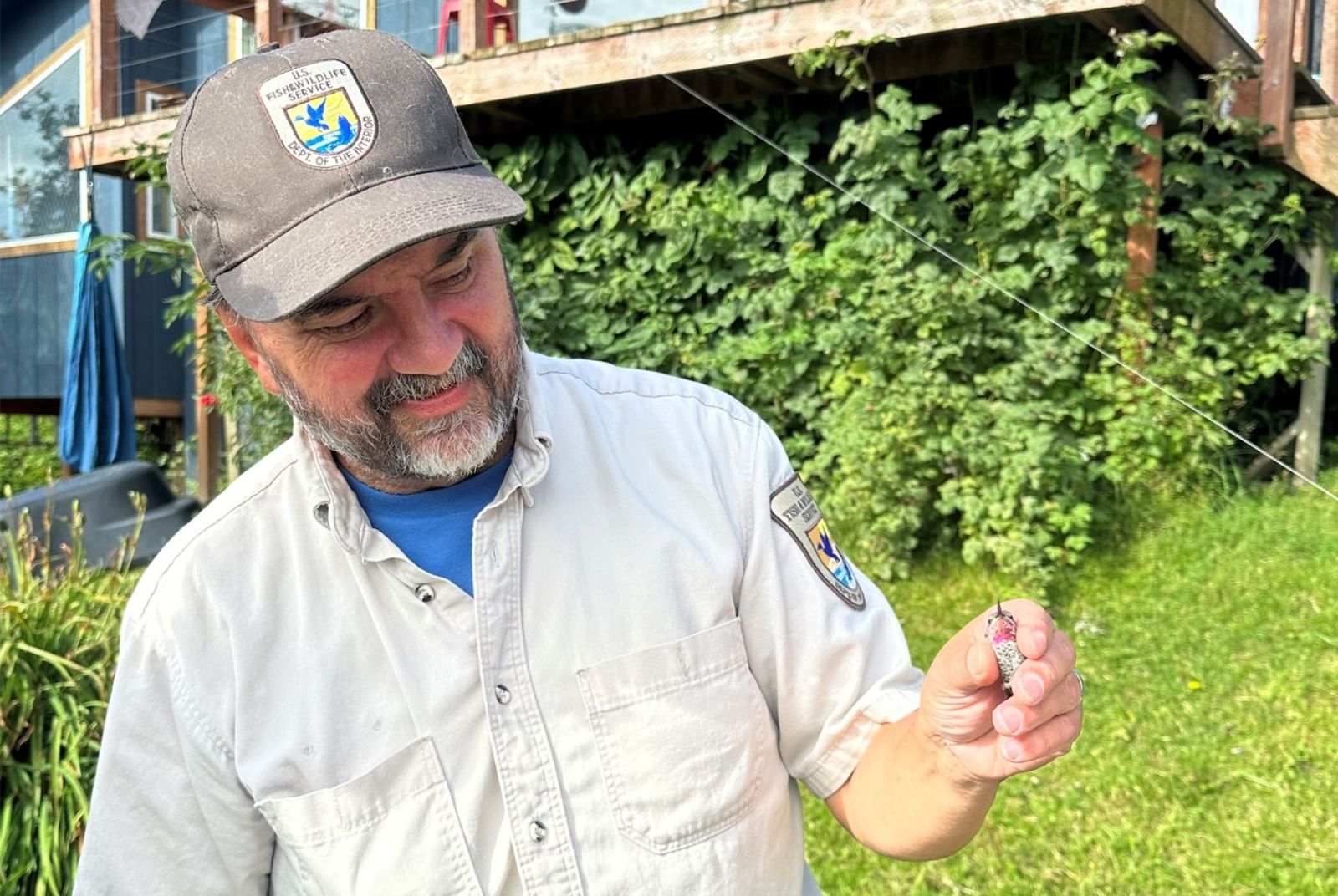
Presented by Todd Eskelin, Kenai National Wildlife Refuge Wildlife Biologist
Tuesday, March 17, 5 – 6 pm Alaska Daylight Time |
- Soldotna – Todd Eskelin in person. Bring green treats for St. Patrick’s Day if you can. Kenai National Wildlife Refuge Visitor Center, 33398 Ski Hill Road.
- Anchorage – Watch Party at REI’s Community Room, 500 E. Northern Lights
- Homer – Watch Party at the Alaska Maritime National Wildlife Refuge Visitor Center, 95 Sterling Hwy.
- Zoom – Zoom link to be posted HERE
What is going on with our most northerly hummingbird, the Rufous Hummingbird? These small birds nest throughout SE Alaska including islands of the Alaska Maritime Refuge and as far north on the Kenai Peninsula as Portage on Cook Inlet migrating through the Kenai Refuge. But Rufous Hummingbirds are in trouble with their populations down 60% percent in the past 30 years. They are declining faster than any other hummingbird. Could the problem be on their migration route which is the longest migration for any hummingbird species? Since hummingbirds cannot soar like other birds, they must beat their little wings for every mile from their wintering grounds in Mexico to the Kenai Peninsula. Traditional banding efforts cannot answer these next level questions. Hear from Todd Eskelin, Kenai Refuge wildlife biologist and one of only 3 Alaskans trained to band hummingbirds, about how he and partners are launching a new program, applying radio transmitters to migrating hummingbirds. They hope to learn more about the risks and rewards faced during migration. Read more about this program and Todd’s background here. |
Volunteer, Volunteer, Volunteer!!!
By Poppy Benson, Vice President for Outreach |
Want to do hands on field work? Share your enthusiasm for refuges with visitors? Be part of the biggest wildlife festival in the state? Eight refuges have submitted their wish lists for volunteers and they are now posted on our volunteer webpage. More projects are to come so bookmark this page. |
|
Photo: Read about Gail from Fairbanks experience volunteering at the Coldfoot Interagency Visitor Center here. The Arctic National Wildlife Refuge is looking for both summer-long volunteers and two week volunteers. |
Are you a birder? Then you know this chance to do seabird work for the Alaska Maritime Refuge on the famous Priiblof Islands will be the experience of your life. Izembek Refuge wants us back for the third year for black brant surveys. Selawik Refuge wants someone to help guide bird walks in Kotzebue in May.
Visitor Center help is needed everywhere. How about Coldfoot Interagency Visitor Center for the Arctic Refuge at the base of the Brooks Range? They are looking for long term and shorter (two weeks) help. Or Alaska Peninsula in King Salmon that needs help with their visitor center and an enticing schedule of summer events. Read how much fun Barbara of Palm Beach had at King Salmon with Alaska Peninsula last year. Yukon Delta, largest waterfowl refuge in the country, is asking for visitor center help for the first time in Bethel. The refuge is all Yupik country and many of the staff are Yupik. Another life experience. All remote assignments offer housing but only some airfare from Anchorage. Check the details on the website.
One day or afternoon projects include three big outreach events – the Kachemak Bay Shorebird Festival, Seabird Fest and the Kenai Sports and Recreation Show. Friends cosponsors with the Alaska Maritime Refuge the Kachemak Bay Shorebird Festival, May 6 - 10 in Homer. It is Friends biggest project, best source of new members and 5 days of birds, beach, art and all the charm of Homer. So come on down. Volunteers are needed for two types of events with two different online signups. 1. Friends events – staffing our Outreach Table, hosting the Birder’s Coffee, and staffing Bird Trivia Night at Alice’s Champagne Palace. 2. Refuge run events – staffing bird stations, bird walks, monitoring talks and more. You can sign up for either or both Friends and refuge work here. May 2 - 3 is the Kenai Sports and Recreation Show in Soldotna and June 6 - 7 is Seabird Fest in Seward. Friends are needed to help the refuges with activities and education at these events.
Other one day events vary from fencing the Kenai River for riverbank protection, building a picnic table in Homer, installing signs, creating an invasive species guide and trash cleanups planned for the Alaska Maritime Refuge site in Homer (April 18) and the Kenai Refuge (date TBD). Refuge visitor centers – Kodiak, Kenai, Yukon Delta in Bethel, Alaska Peninsula in King Salmon and the Alaska Maritime in Homer - can always use local help. If you live there, give them a call.
You can find all projects listed here including who to talk to for more information. Keep checking back though as more projects will be added. Applications are needed for most projects and you must be a member for most projects. You can join or renew here.
Volunteering on a refuge is a great opportunity to learn about and experience a refuge, meet wonderful refuge staff and community members, feel like a contributor and in most cases, get out on the land. Just do it. |
Friends Providing Over $100,000 for Alaska Refuge Projects
By Mike Schantz, Chair of Friends Finance Committee |
As a result of staffing and funding pressures, Friends has seen a dramatic increase in refuge project support needs. In a meeting this past month, the Friends Board evaluated 40 project proposals from Alaska’s national wildlife refuges outlining needs for approximately $105,000 in financial support. We are pleased to report that as the result of your membership dues and the generous contributions of major donors: the Board approved $97,000 to fund nearly all the proposed projects for the current year. We also applied for and received an additional $11,500 in grants for refuge projects. This brought the total funds we have made available to refuge projects to $108,500. This is three times more than we have ever been able to fund before.
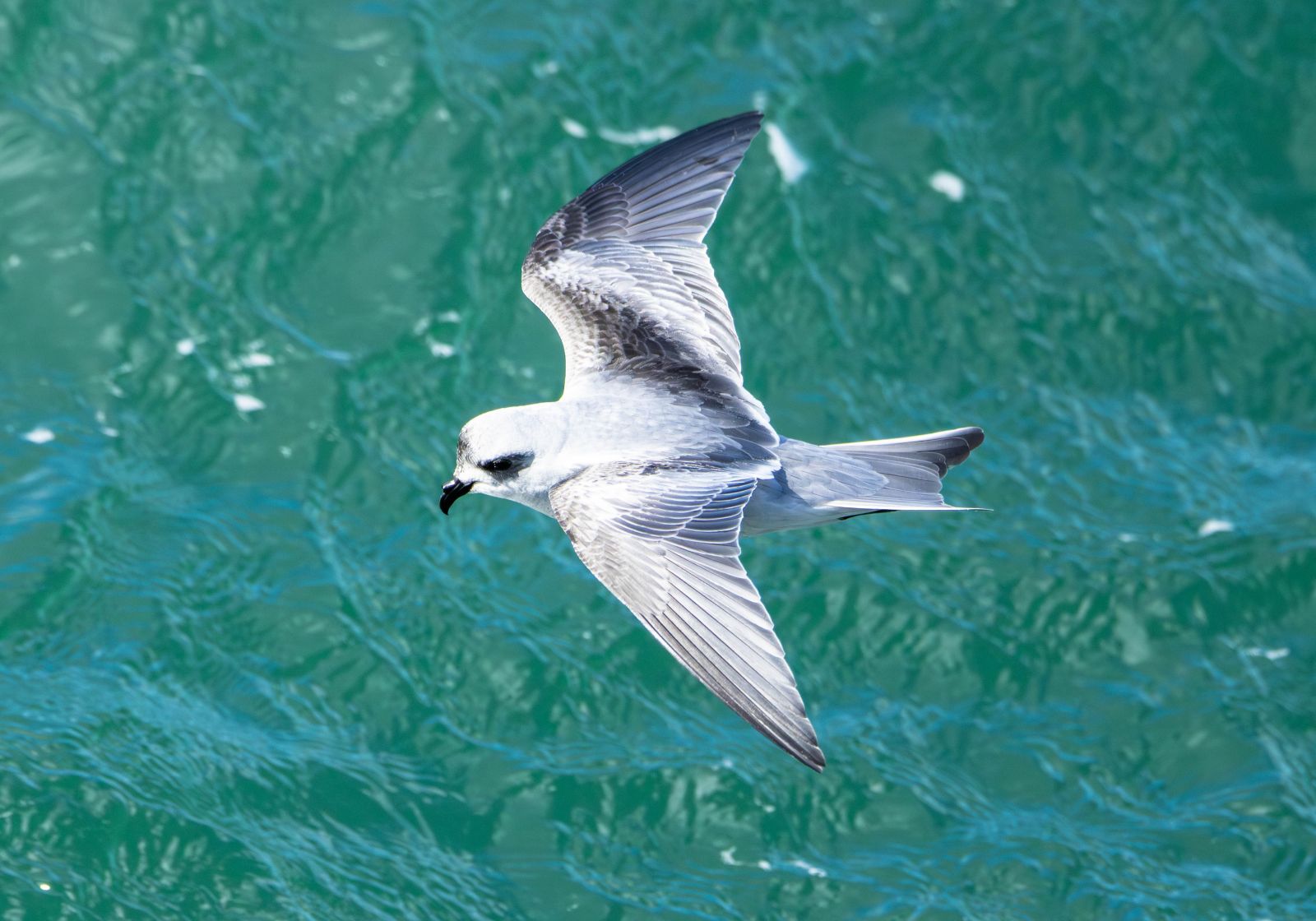
Most projects fell into two broad categories: wildlife research and education. The research projects we funded included collecting storm petrel geolocators on the Alaska Maritime Refuge, travel for volunteers to Izembek Refuge to work on brant and eelgrass surveys, a plane charter for a “Bears and Berries” study on Kodiak Refuge and the continuation of a common murre research project on the Maritime Refuge. Some of these projects are long-term biological studies that would otherwise have been terminated, devaluing years of data. |
Photo: For the second year in a row Friends are funding storm petrel research by paying for the charter boat to get biologists out to the islands where these seabirds nest. Biologists will be collecting the geolocators that they attached to the birds last year. Next year, at one of our monthly meetings, we will get to hear the results of this research which will tell us more about the health of the oceans as well as the life of these birds. PC: Randy Lewis/Friends. |
The education and outreach projects we funded included partial funding for interns on Kenai and Tetlin refuges, support of Migratory Bird Day at Becharof/Alaska Peninsula, production of a visitor orientation video for the Arctic Refuge, production costs and prizes for the Migratory Bird Calendar made with village children’s art and poetry, travel for volunteers to staff the visitor centers at Kodiak, Alaska Peninsula and Yukon Delta refuges, and buses for school field trips to the Kenai and Alaska Maritime refuges.
Projects to benefit refuge users or communities include purchasing materials for a new outhouse at a river launch on the Togiak Refuge, funds to facilitate the “Slug-out” black slug and orange hawkweed invasive species control event for Alaska Maritime and Izembek refuges and support for community events at Selawik and Togiak refuges.
As we have communicated over the past few years, the amount of federal funding per acre to protect and manage Alaska refuge assets has eroded significantly. This dynamic is not expected to let up any time soon. Cuts have already resulted in reduced educational programing, visitor center hours and programming, and biological studies. These changes degrade recreational and subsistence opportunities and impair refuge managers’ ability to protect these national treasures long term. As a result, non-governmental resources like those provided by Friends are becoming more important to the refuges.
While this was our annual request for proposals from the refuges, given how dynamic things are for refuge staff right now, we expect there will be more “asks” as we move towards summer. To support these unplanned opportunities and needs, the Board has established a Rapid Response Fund for Alaska refuges and allocated $25,000 to it.
The Sam and Mary Lawrence Foundation made a second $5000 Sea2Earth Grant to Friends with $2000 going to Innoko Refuge for a high school program and $3000 going to Kodiak Refuge for Salmon Camp in the villages. The USFWS Retirees Association is also a repeat grantor with $1,500 to the Alaska Maritime Refuge to support “Tiglax in the Bay” an onboard education day on the refuge’s ship for K-12 students. The Homer Foundation granted $5000 to fund Junior Birder and Teen Birder activities at the Kachemak Bay Shorebird Festival which is cosponsored by the Alaska Maritime National Wildlife Refuge and Friends. These generous grants will support wonderful educational projects.
Our ability to support the refuges in this manner, is a function of the donations that you, our members, have entrusted to us. Know that we take very seriously the responsibility to get these resources to the refuges as efficiently as possible. Your continued membership dues and unrestricted or restricted donations are ever more critical to maintaining the programing at these vital natural treasures.
Want to be at the center of serving the refuges’ needs? We desperately need a new treasurer on the Board. You would be the key player in making these projects happen for the refuges. Speak QuickBooks or willing to learn? Contact us at treasurer@alaskarefugefriends.org. |
March 2026 Advocacy Report
By Nancy Lord, Advocacy Committee Chair |
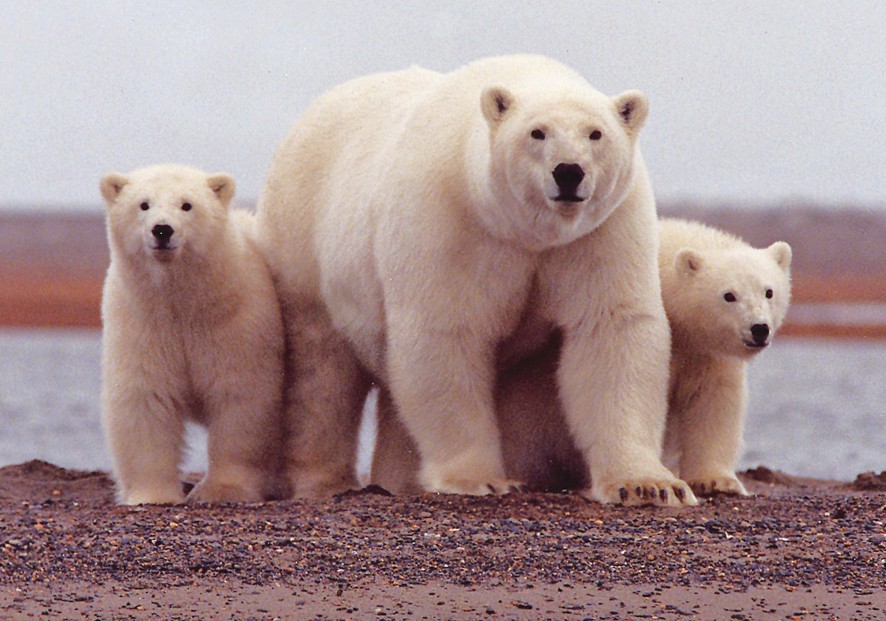
DOI and FWS are proposing loosening restrictions on the “incidental take” of polar bears during oil and gas activities along the Beaufort Sea from Utqiagvik east to the Canadian border (excluding the Arctic Refuge itself). Comments due April 8. Polar bear sow and cubs along the Beaufort Sea. PC USFWS |
We continue to advocate in every way we can for the Arctic National Wildlife Refuge, the Coastal Plain of which is now open to oil and gas leasing. The brief 30-day comment period for tract nominations and comments ended on March 6. The first of the mandated refuge lease sales must be held, according to the Big Bill passed last summer, before July 4 of this year.
Trustees for Alaska, representing Friends among other organizations, recently amended our lawsuit challenging the oil and gas leasing program on the refuge. The initial lawsuit addresses legal problems with the leasing program at large and with the reinstatement of the Alaska Industrial Development and Export Authority’s (AIDEA’s) illegal leases. The amendment adds violations of the Endangered Species Act because of the lack of protection of polar bears in the 2025 Record of Decision for the leasing program.
Follow more of Trustees’ good work for the Arctic here.
Most recently the Department of Interior (DOI) and Fish and Wildlife Service (FWS) have proposed a rule to loosen restrictions on the “incidental take” of polar bears during oil and gas activities on the North Slope and in the Beaufort Sea. (“Incidental take” refers to “unintentional” harassment and death.) Although this proposed rule excludes lands within the Arctic Refuge itself, it would further reduce protections for the threatened Southern Beaufort Sea polar bear population, a population that increasingly comes ashore within the refuge.
The Southern Beaufort population of polar bears that range into the Arctic Refuge is already challenged by global warming and the loss of sea ice. This population has declined substantially and is expected to continue to decline to a small fraction of its historical size by the end of the century. These bears were listed as threatened under the Endangered Species Act in 2008 and currently have an estimated population of under 1,000 individuals.
Historically, the maternal dens of bears in the Southern Beaufort Sea population have been on the sea ice. But as the ice has retreated and thinned as a consequence of global warming, about 1/3 of the bears in this population have adapted by making their dens on land in the Coastal Plain of the refuge. This places them on a collision course with disturbance by oil and gas exploration and development at the most vulnerable time in the young cubs’ lives.
Friends can help by commenting on https://www.federalregister.gov/documents/2026/03/09/2026-04558/marine-mammals-incidental-take-of-polar-bears-and-pacific-walruses-in-the-beaufort-sea-and-north, pointing out the need to protect, on land and sea, the vulnerable Southern Bering Sea polar bears. The deadline for comments is April 8.
You can view the proposed rule, the associated draft environmental assessment, map of the proposed area, comments received, and other supporting material (including Supporting & Related Materials) here. https://www.regulations.gov under Docket No. FWS-R7-ES-2026-0694. |
Kachemak Bay Shorebird Festival Registration Opens March 20!
By Marcy Melville, Friends Programs Manager |
Mark your calendars! Registration opens for the Kachemak Bay Shorebird Festival in a little over a week, and tickets to many events go quickly. Online registration will open at 11AM Alaska time, and you can view a registration walkthrough video here to get an idea of how the process looks. We recommend checking out the festival program in advance to decide which of the nearly 200 events you would like to attend during festival weekend in Homer. You can also pre-order your festival merchandise here for access to online-exclusive tshirts, sweatshirts, tote bags, and more. |
One of the two lawsuits that Friends is party to is over the land exchange removing land from the Izembek National Wildlife Refuge for a road corridor. PC Lisa Hupp/USFWS |
Sometimes Lawsuits are a Form of Tough Love for Alaska Refuges
By Marilyn Sigman, Board President |
As a Friends group to Alaska’s 16 National Wildlife Refuge, we strive to fulfill our mission to promote their stewardship through education, support and advocacy. Our Advocacy Committee is actively monitoring and commenting on and informing Alaska’s Congressional delegation about Alaska refuge issues. However, when other forms of advocacy fail, we join lawsuits, sometimes against the Department of Interior and sometimes, against the Fish and Wildlife Service, the agency that we generally support wholeheartedly. We are currently engaged in two – one challenging the legality of the most recent oil and gas leasing decision for the Arctic Refuge’s Coastal Plain and another challenging the legality of the land trade that removed public lands from Izembek Refuge to provide a privately-owned road corridor.
Nancy Lord’s article in this newsletter explains the vulnerability of polar bears that range onto the Arctic Refuge. Trustees for Alaska recently addressed this by amending the initial lawsuit we were part of, to include violations of the Endangered Species Act (ESA) by the 2025 Record of Decision which opens the entire Coastal Plain for exploration and development. In addition to the ESA, the other laws that the lawsuit contends have been violated include the Alaska National Interest Lands Conservation Act (ANILCA), the National Environmental Protection Act (NEPA), the Refuge Administrative Act, and the Wilderness Act. This lawsuit is against the Department of Interior, the Fish and Wildlife Service and BLM, all of whom were involved in the 2025 Record of Decision.
The Izembek lawsuit is against Secretary of Interior Doug Burgum because he approved the land trade. This lawsuit is also based on violations of ANILCA and questions the lack of a NEPA process to reverse previous decisions by the Fish and Wildlife Service and Department of Interior. Those prior decisions rejected exchange proposals and concluded that high-value wildlife lands in the proposed road corridor would be irretrievably damaged by road construction and operation. One provision of ANILCA being challenged governs rights-of-ways across refuges which the land trade attempts to side-step, a dangerous precedent for all other Alaska refuge lands. Another ANILCA provision being challenged requires that land trades be for conservation purposes, which a trade for the purpose of a road corridor violates, another dangerous precedent.
We can’t afford to fight these lawsuits alone. We are part of coalitions for each lawsuit that include the National Wildlife Refuge Association, tribal partners and local, regional, and national conservation organizations. Trustees for Alaska represents us and many of these groups pro bono. Some organizations like Earth Justice and the Center for Biological Diversity have lawyers on staff and have filed their own lawsuits. We are extremely fortunate to work with Trustees, a nonprofit organization. (You can support them here.)
We will keep you informed as these lawsuits progress in the courts. |
Friends Save Art in the Arctic: Annual Fairbanks Art Show Celebrates Refuges
By Poppy Benson |
|
It looked like this annual event that for 10 years had been lighting up a Fairbanks Friday night with art highlighting Kanuti, Arctic and Yukon Flats refuges was doomed. Severe staff losses at the three Fairbanks based refuges left them with no capacity for this or other outreach and education events. |
Photo: Art in the Arctic has been a part of the Fairbanks social scene for more than 10 years bringing the refuge message to a different audience. Call for Artists will go out April 1 with proposals due May 1. |
But Fairbanks Friends wouldn’t let it die. A group has been meeting for weeks planning out this event scheduled for First Friday, October 3 at the Black Spruce Brewing Company. The art would remain on display for the month of October. The call for artists will go out April 1 with proposals due by May 1. The theme will be selected shortly and it along with how to submit art will be found on this page. The intent of this art show is to use art to create interest in and a different perspective on the wildlife and habitat of these northern refuges. If you love art, refuges, and community events, now is the time to get involved. Contact us at info@alaskarefugefriends.org to help make this happen. |
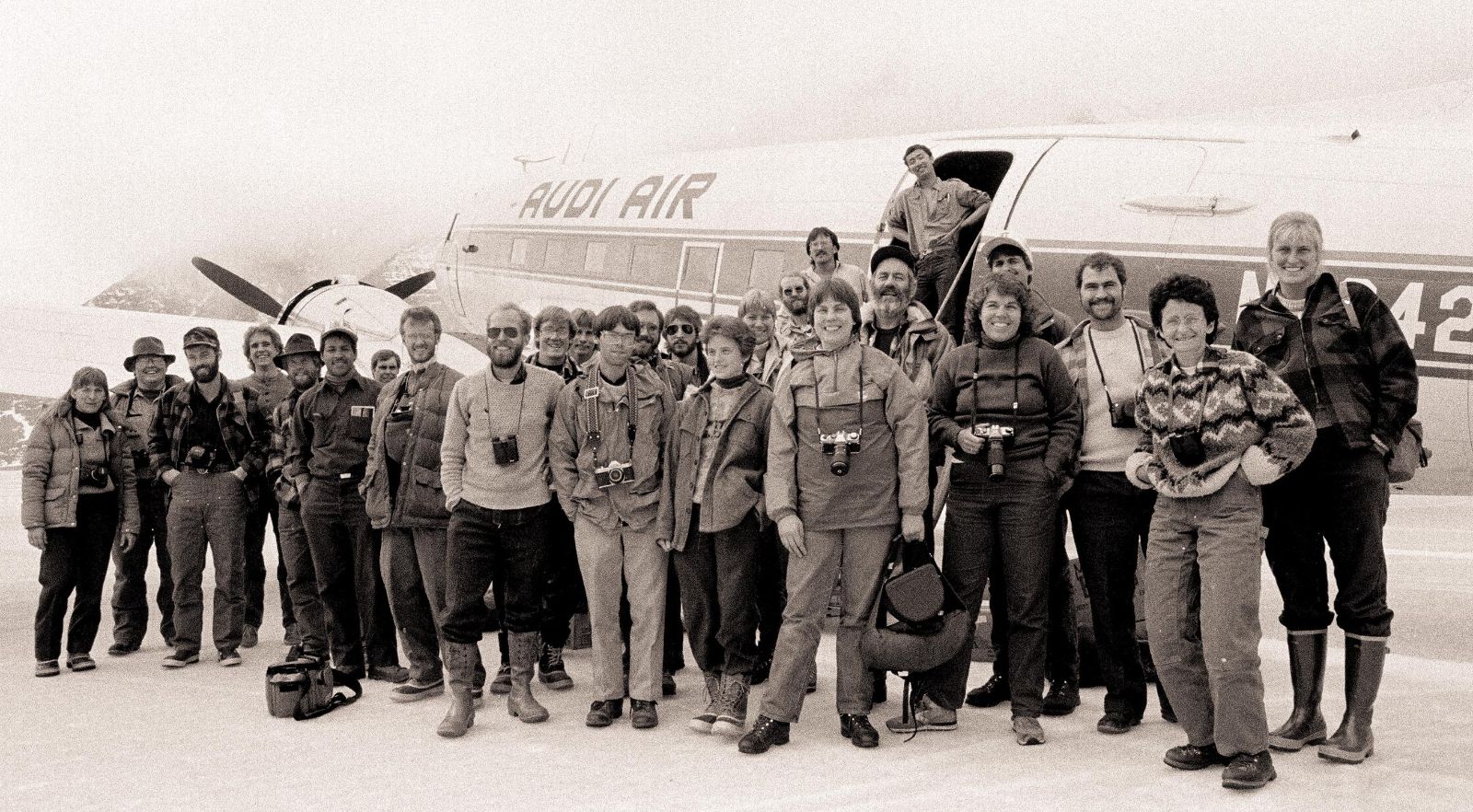
Tundra Bird Project personnel were ferried by Audi Air to Peters Lake (Arctic Refuge) for field training on May 29, 1985 (from left): Marta McWhorter, Terry Maxwell, Russ Oates, David Douglas, Steve Gehman, David Whiting, C-47 pilot, Douglas Braddock, Doug Plummer (photographer), Paul Obbink, Dave Anthon, Geoff Kingman, John Rider, Rob Secunda, Suzanne Appellaniz, Kim Sepanski, Chris Babcock, Rebecca Fields (front row), John Morton (lower plane step), Robert Loftin, Mamoru Matsuki (upper plane step), Michelle Gareau, Mark Conover, George Durner, Patsy Christgau, and Ada Fowler (credit: D. Plummer). |
Arctic National Wildlife Refuge in the Spotlight
By John Morton, Wildlife Biologist and Soldotna Friend
Did you know….
that when Arctic National Wildlife Refuge was expanded in 1980 by the Alaska National Interest Lands Conservation Act, Congress specifically authorized in Section 1002 “a comprehensive and continuing inventory and assessment of the fish and wildlife resources of the coastal plain?” Section 1002 (ten-oh-two) also required “an analysis of the impacts of oil and gas exploration development, and production, and to authorize exploratory activity within the coastal plain.” This mandate took on a life of its own, and those baseline studies became the 1002 studies and the 1.56-million-acre area being considered for extraction became the 1002 Area.
Although 1002 studies started in 1981, most baseline studies (57!) were conducted during 1984–86 by the US Fish and Wildlife Service. At its peak, hundreds of radio transmitters, monitored by aircraft stationed in Kaktovik, provided information on habitat use and movements of muskox, caribou, brown bears, long-tailed ducks, and wolves. Crews in field camps ground-surveyed eight sites scattered around the 1002 Area for nesting birds. Waterfowl using Beaufort Sea coastal lagoons and nesting tundra swans were aerially counted. The behaviors and changes in body composition of lesser snow geese were quantified to assess why they staged on the 1002 Area before flying south. Biologists jumped from helicopter skids to tackle caribou calves, which were fitted with radio-collars to assess mortality rates. Bear dens were measured by crawling into them. It was an exciting and busy time, and many now-retired biologists and managers began their careers on the 1002 studies.
In the Environmental Impact Statement sent to Congress in 1987, the Secretary of the Interior recommended that Congress consider leasing the 1002 Area for oil and gas. The expectation in that assessment was that only 12,650 acres were likely be developed. The most significant impacts were deemed to be to the Porcupine caribou herd, recently reintroduced muskox, and traditional subsistence activities of Kaktovik residents.
Biological studies have continued in and around the 1002 Area since the baseline assessment. Research conducted during 1988–1994 and 2002-2017 were summarized in US Geological Survey reports in 2002 and again in 2018. Perhaps the most significant new finding is that female polar bears regularly den on land now, a consequence of Beaufort Sea ice receding from land as the climate warms. Polar bears not only den during winter within the 1002 Area (at least 24 known dens), they spend much more time on land in summer and fall now. In 2008, polar bears were listed under the Endangered Species Act, their existence threatened by human-driven climate change. It’s also better recognized now that threats to the Porcupine caribou herd on their calving grounds have far-reaching impacts to Gwich’in living on both sides of the US-Alaska border.
In October 2025, the Department of the Interior opened the entire 1.56-million-acre coastal plain in Arctic Refuge to oil and gas leases. |
What's Happening On Our Refuges
Check the Activity Calendar HERE
Visitor Center Hours:
Tuesday - Saturday 12PM - 4PM
(907) 235-6546
It's spring break on the refuge! Call the visitor center to sign up for these events and reserve snowshoes:
- March 11 and March 14, 12-2PM Guided Adult Snowshoe walks
- March 12, 2-3:30PM Family Snowshoeing (best for grades 2 and up)
- March 13 & 14, 2-3PM Guided Winter Walk exploring winter wildlife adaptations (ages 10+)
Join us as well for these events:
- March 17, 5PM Todd Eskelin, Kenai Refuge biologist in person presenting Tracking Rufous Hummingbird's Travel Itinerary. Bring green treats for St. Patrick’s Day reception at 6.
- March 19, 9AM or 10:30 AM PEEPS preschool program on all things moose
The refuge is hiring teens for Youth Conservation Corps. 8 weeks from June 8 to July 31. Applications accepted now until April 24. Pick up flyers and applications at the refuge.
Visitor Center Hours:
Wednesday - Saturday 10AM - 4PM
(907) 262-7021
- April 3, 5-7PM First Friday Art Walk. As part of a community event, the visitor center will sponsor Earth Day crafts.
Visitor Center Hours:
Tuesday - Saturday 12PM - 4PM
(907) 487-2626
March 10, 2026 |


|
|
|
.png)
.JPG)
.png)