A letter from Samantha Alloway, Executive Director, The Arc of Illinois
If you're having trouble viewing this email, you cansee it online.
He Wanted to Go Home.
His Mom Wouldn't Stop Until He Did.
A letter from Samantha Alloway, Executive Director, The Arc of Illinois
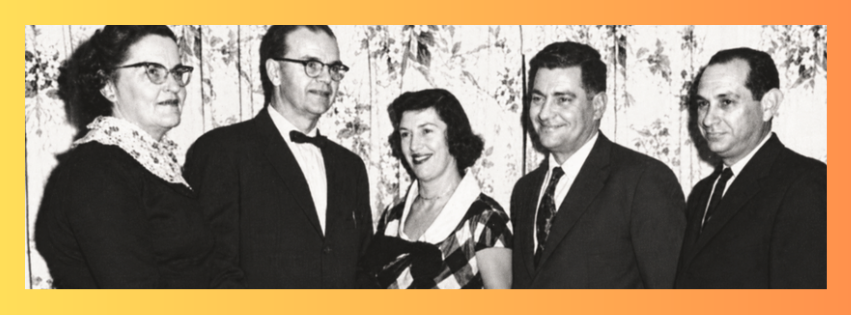
In 1950, a small group of parents came together and challenged what society told them: that their children belonged in institutions, far from home. They said no. Their children deserved more, and they were going to fight for it.
That's how The Arc began. Not with a government program, but with families who knew their loved ones deserved better.
This fall, as the general units at Choate Developmental Center in Anna closed to people with intellectual and developmental disabilities, I've thought often about those parents. And I've thought about one family whose story captures exactly what they were fighting for.
The family in this letter gave me permission to share their story but asked that I protect their identities.
He lived at Choate for nearly 14 years. He wanted to go home, and his mom never stopped fighting to bring him there. When he moved to the step-down unit, she believed a transition was finally possible.
But obstacle after obstacle stood in the way. She was told he needed a court order. His attorney and the court were willing to support his return home, but they needed documentation from Choate confirming he was ready. According to his mother, that documentation never came.
She reached out to The Arc of Illinois' Family Transition Project and Equip for Equality. Together, they worked through months of barriers until the day finally came: her son came home.
Even then, paperwork needed to establish his Social Security benefits was never sent. After two years at home, his first check is only now arriving. His mother had to keep fighting for that, too.
But what she later learned about her son's final months at Choate is the part of this story we cannot ignore. Two months before his discharge, while plans for his return home were underway, he was sexually assaulted twice by a staff member.
He told no one. His mother shared that he was afraid and did not know how to speak about what had happened. After returning home, he began experiencing seizures he had never had before. His doctors eventually traced them to the trauma.
His mother's words have stayed with me. No mother should have to fear for her child's safety while he is in the care of an institution. No person should have to endure abuse in a place entrusted with their care.
Every person deserves to be safe, protected, and treated with dignity, regardless of their circumstances or the level of support they need.
His family found counseling in their community, and he is healing.
His mother shared something that gives me hope:
He does have power. And today, he is using it to build the life he wanted.
He started in a day program, then decided he wanted to work in the community. He took jobs at a gas station and a local pizza restaurant while searching for what he called his "dream job." He found it at a resale shop, surrounded by the treasures he loves.
He volunteers at his church, participates in community activities, attends Bible study, and helps with Sunday services. He has played sports, attended dances, and been crowned prom king. He is a self-described "weather guy" who once fulfilled a childhood dream by doing a weather segment with a local meteorologist and sitting in a storm tracker.
He cooks, gardens, organizes his own medications, and takes pride in his space. Most importantly, he says he no longer has to worry about what might happen to him.
I recently spoke with them by phone. They shared that they are living the best days of their life. That sentence is both beautiful and heartbreaking. Imagine what it means to spend nearly 14 years wanting to go home, and then finally experience the peace, opportunity, and belonging every person deserves.
His mother knew her son belonged at home. She knew to keep asking questions, making calls, and pushing when the system said no.
And he knew what he wanted, too. He knew he wanted to go home. He knew when he was ready for a job in the community. He knew what a good life looked like for him.
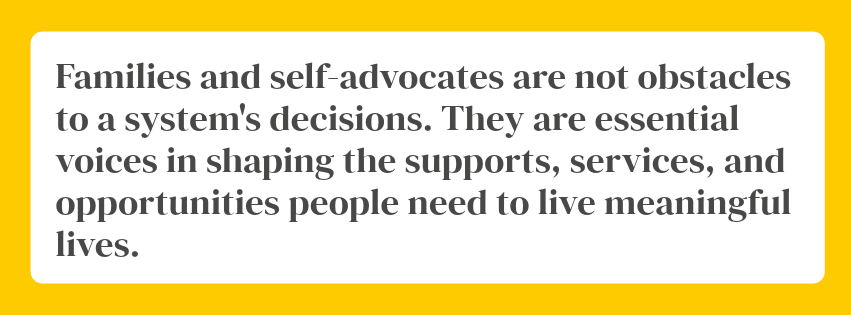
This is why advocacy matters. This is why community-based services matter. And this is why we must never stop listening to the people whose lives are most affected by the decisions we make.
I keep coming back to those parents in 1950. They refused to accept that separation from family and community was the best their children could expect. Every Arc in this country exists because families believed we could do better.
We still have work to do. This man's story includes extraordinary joy, but it also includes serious barriers and challenges that deserve our attention. Access to community life should never depend on a family's ability to fight every barrier.
We must celebrate progress while remaining honest about the harm people have experienced. We must build systems that listen to self-advocates, respect families, protect people from abuse, and make it possible to live the lives they choose.
A man who spent nearly 14 years at Choate wanting to go home is now working his dream job, volunteering in his community, grilling steaks, and finding treasures on resale shop shelves. His mother never stopped fighting. He never stopped knowing what he wanted.
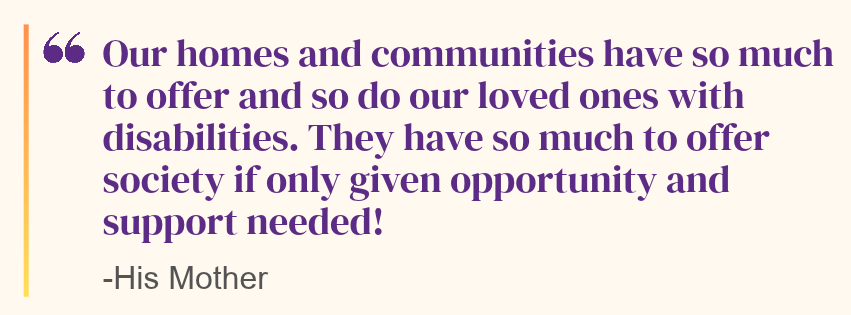
His mother said it best:
That is the promise those parents made in 1950. It is the promise we must keep today.
With my whole heart,
Samantha M. Alloway Executive Director, The Arc of Illinois