In this Issue: Trail work-parties, Program highlights, August events and more >>
From the Chair's Desk
It is hard to believe that I have now served as Chair of Friends of Fort Flagler for eight months. So far, 2026 has been an exciting and productive year for our organization.
One of the highlights of the year was being recognized by Washington State Parks with the “Significant Contribution by a Group – Flagler Theater Project”award. This recognition reflects the extraordinary contributions made by our hardworking and dedicated board members, volunteers, and donor members who gave their time, talent, and financial support to restore the historic Flagler Theater. Each year, State Parks recognizes only a small number of parks and partner organizations for extraordinary contributions, making this a particularly meaningful honor. Friends of Fort Flagler is extremely proud to receive this recognition, and we share it with everyone who helped make the theater project possible.
Earlier this year, nine members of our Board of Directors came together for a strategic planning meeting to establish our priorities for the next three years. We left that meeting energized and ready to put those goals into action. One of our primary objectives was to strengthen our partnership with Fort Flagler State Park. To support that goal, another board member and I now meet monthly with park managers to coordinate short- and long-term projects. These meetings take place before our monthly board meetings and allow us to plan more effectively, respond to changing needs, and work together in unison.
Protecting the park’s wildlife and natural habitats remains one of our most important priorities—a priority first identified by our members in 2024. We are currently working with State Parks to help protect the sensitive dune habitat near the lower campground and explore opportunities to restore habitat for the sand-verbena moth. This imperiled species faces significant challenges because of its rare habitat, small and isolated populations, extremely limited range, and ongoing threats to the places it depends upon.
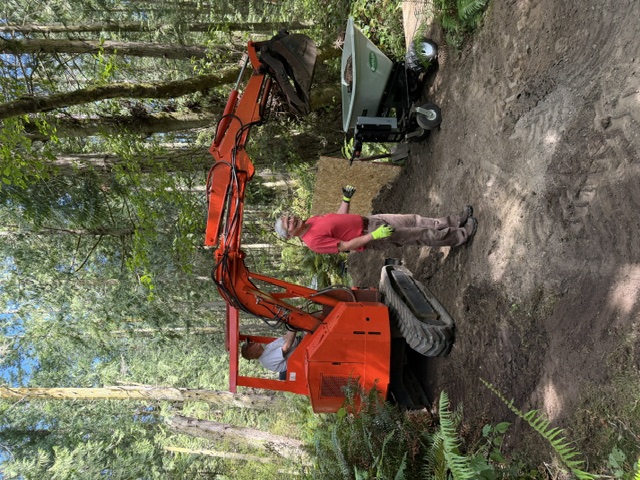
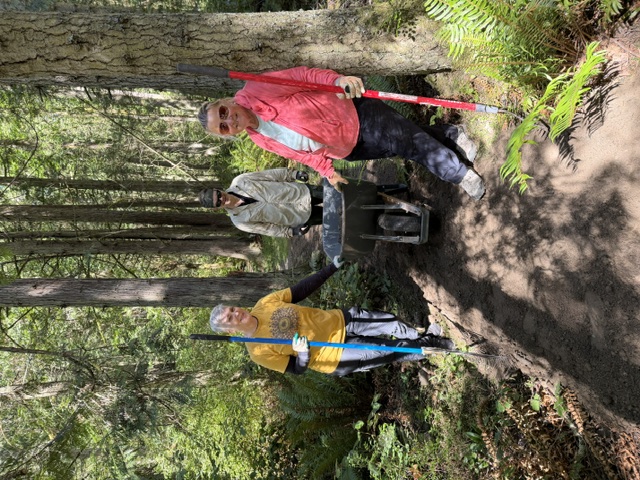
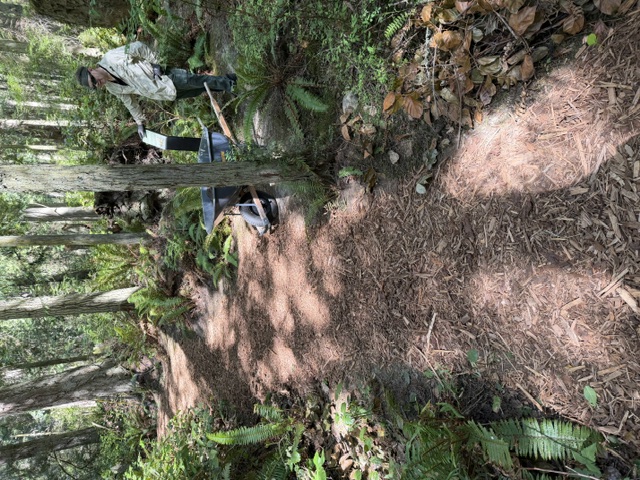
We are also continuing our work to improve the Interpretive Trail. Volunteers are helping lay new soil and bark to create a softer, more comfortable walking surface for park visitors while protecting the surrounding natural environment.
Your support is critical to everything we accomplish. None of this work would be possible without our dedicated members and volunteers who give their time, contribute financially, and continually support our mission. The State Parks award for the Flagler Theater Project is a wonderful example of what we can accomplish when our members, volunteers, donors, board, and park staff work together.
Your input is equally important. Please share your comments, questions, and suggestions with us atinfo@friendsoffortflagler.org. I look forward to continuing this important work together and to all that we can accomplish for Fort Flagler in the months and years ahead.
Deisy Bach Chair, Friends of Fort Flagler
Fort Flagler's Interpretive Trail
By Mark Peters
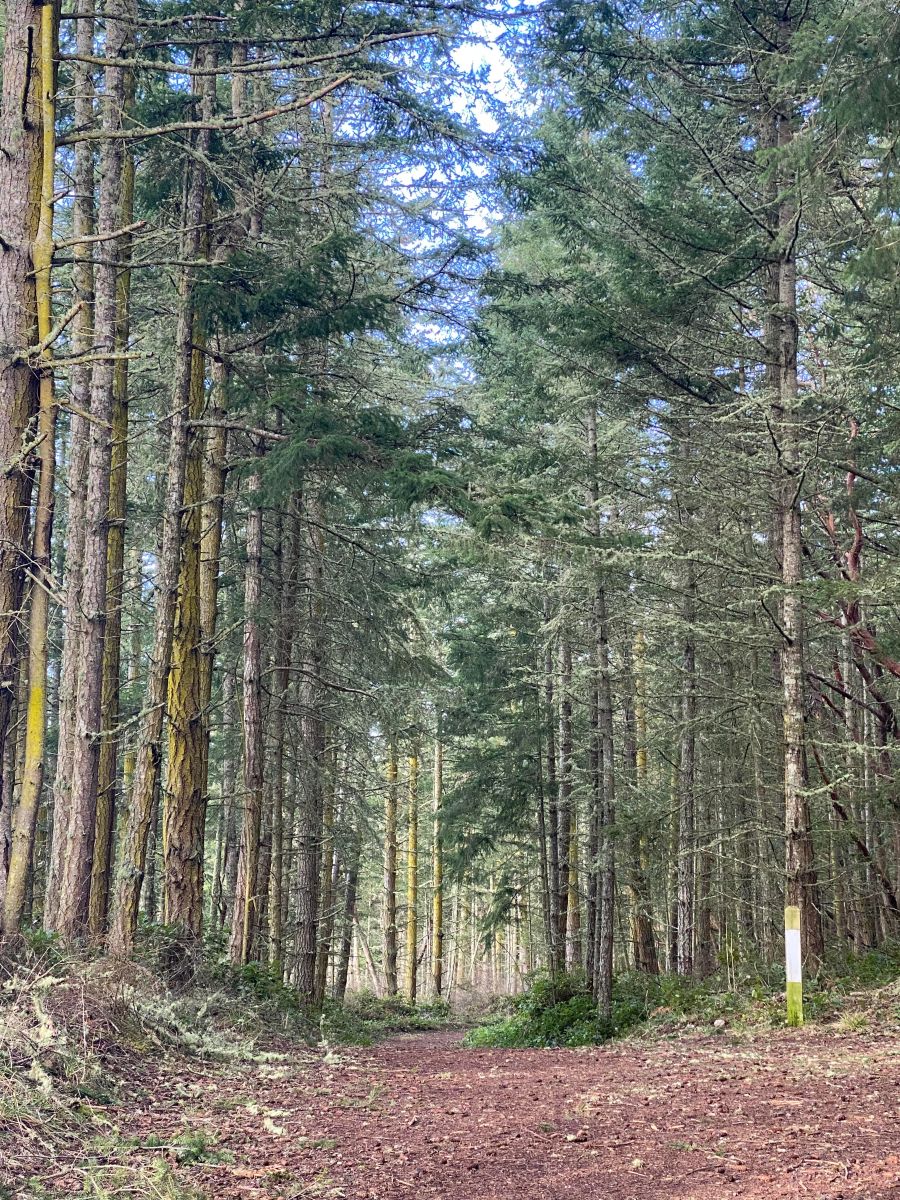
One of the great joys of the Fort are the walking trails. This particular state park has a variety of trails with very different personalities. Some trails are flat with little elevation change; others are steep for a cardio challenge.Some have magnificent water views while others sport quiet forest walks where you can listen to the birds, small animals running through the underbrush and winds, rustling the leaves of the majestic trees.
Among all of these trails my favorite it the Interpretative Trail in the middle of the park. It is a short walk, only a half mile in length and is fairly flat, but offers a refreshing sojourn with the quiet of the park around you as you glide along the trail.
On the trail one willfind placards describing the forest growth and what is happening with the vegetation and trees in that area. They are interesting and informative.The small displays provide a break from your walk and an educational experience.
But as with all trails this special one requires maintenance.
Friends of Fort Flagler (FoFF) assembles teams several times each year to level the path, cover exposed tree roots and tripping hazards and soften the walk by spreading a layer of trail mix bark.We try to keep the path wide enough to accommodate two people, or a parent and child walking hand in hand to enjoy nature’s gift.
The FoFF (Friends of Fort Flagler) works hard to provide this service to the State of Washington at no cost. Just neighbors helping neighbors. We believe it makes a difference.
Each shift of 4 or 5 volunteers works about four hours spreading soil and trail mix bark to improve the walking surface.
We invite you to come out and enjoy the Interpretative Trail. If it moves you, as it does me, and you’d like to contribute four hours of your time we’d love to have you join one of our Trail Clean-up teams. You can sign up and get more information by reaching out to www.friendsoffortflagler.org/volunteer
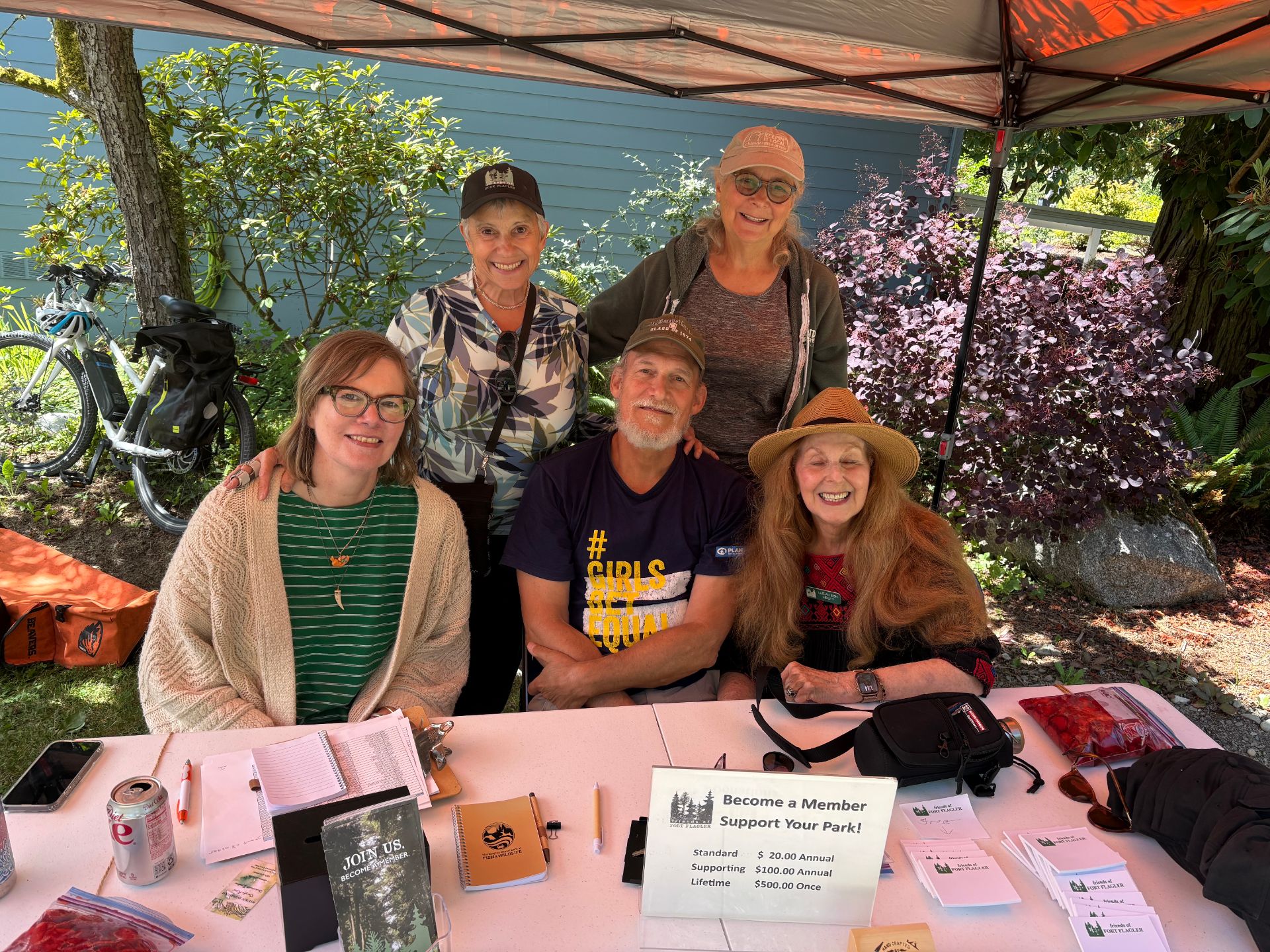
FoFF Board members and volunteers support community events like MICA’s annual Strawberry Festival which took place at the Nordland Garden Club, on June 21,2026.
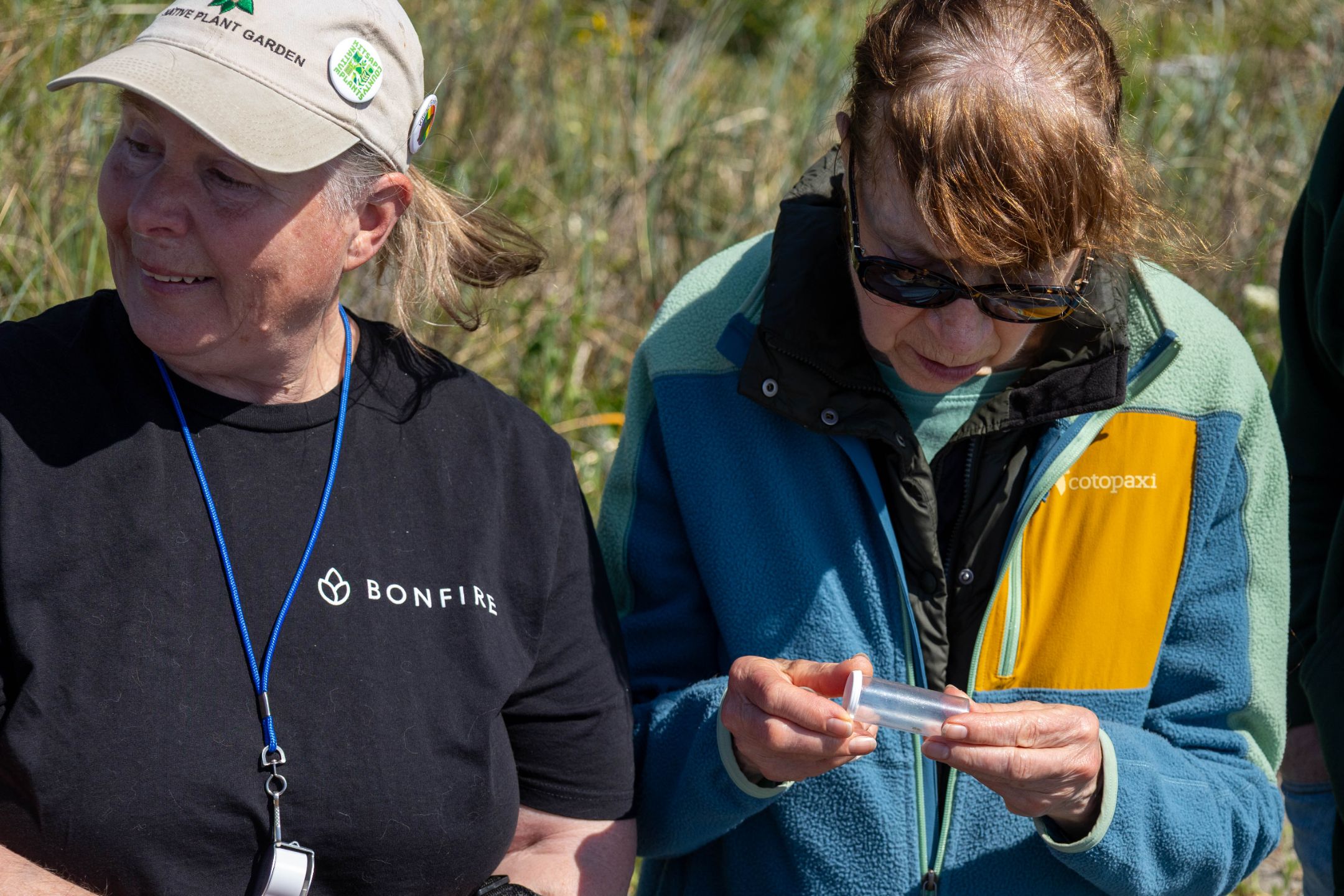
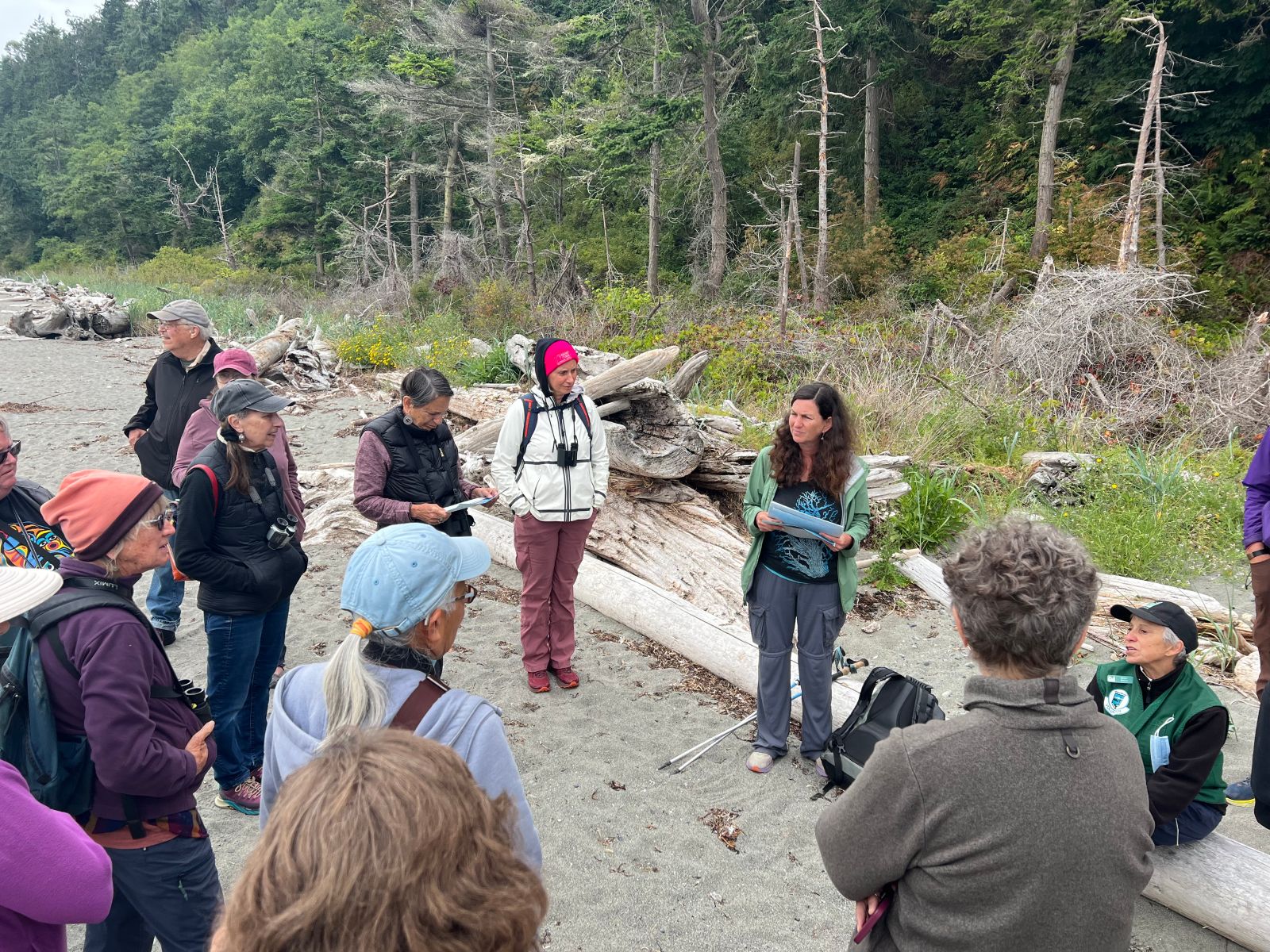
I’m happy to report that our 2026 Natural History Program has been a tremendous success. So far this year, we have offered 11 programs, including four special-guided walks that were exceptionally well attended.
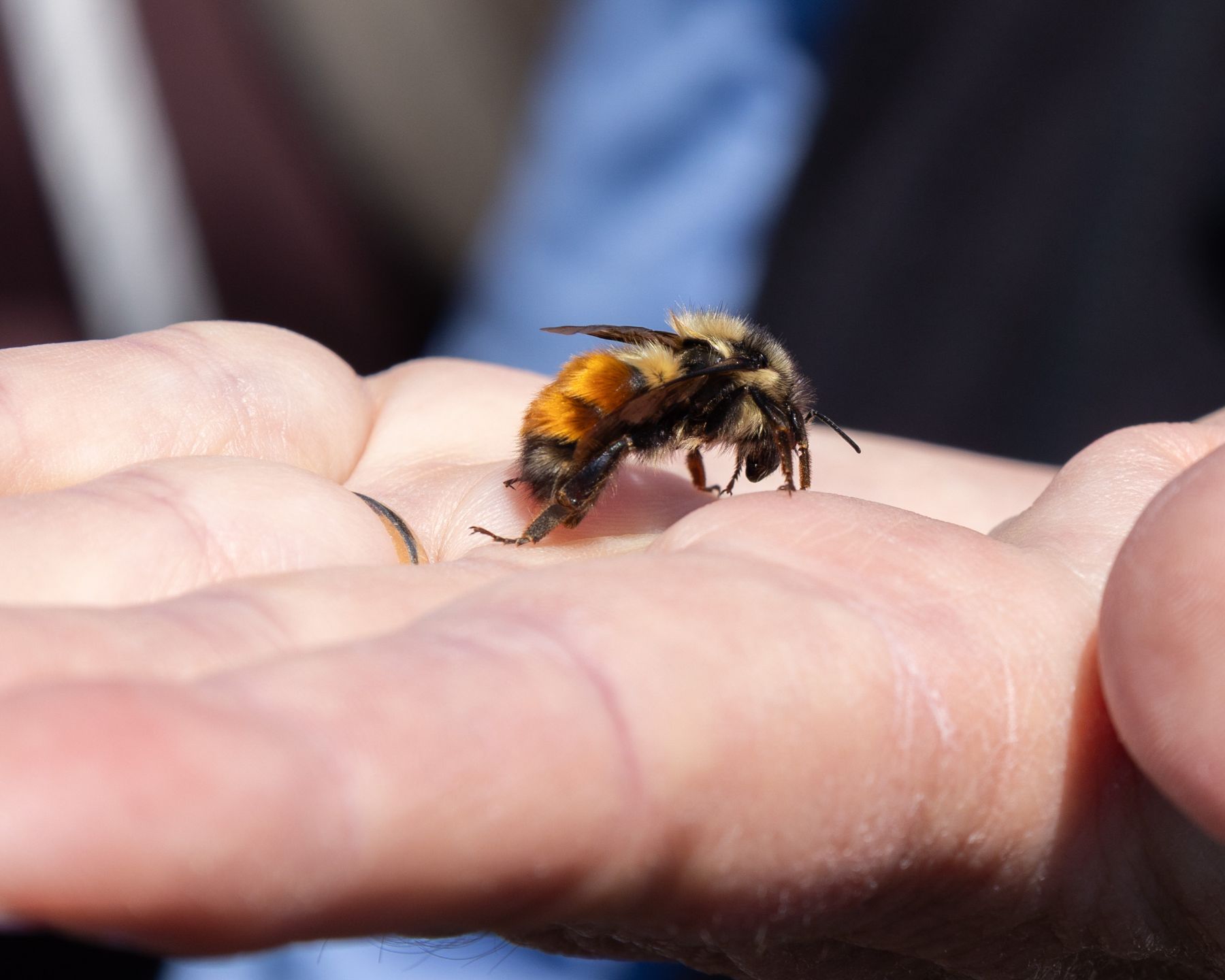
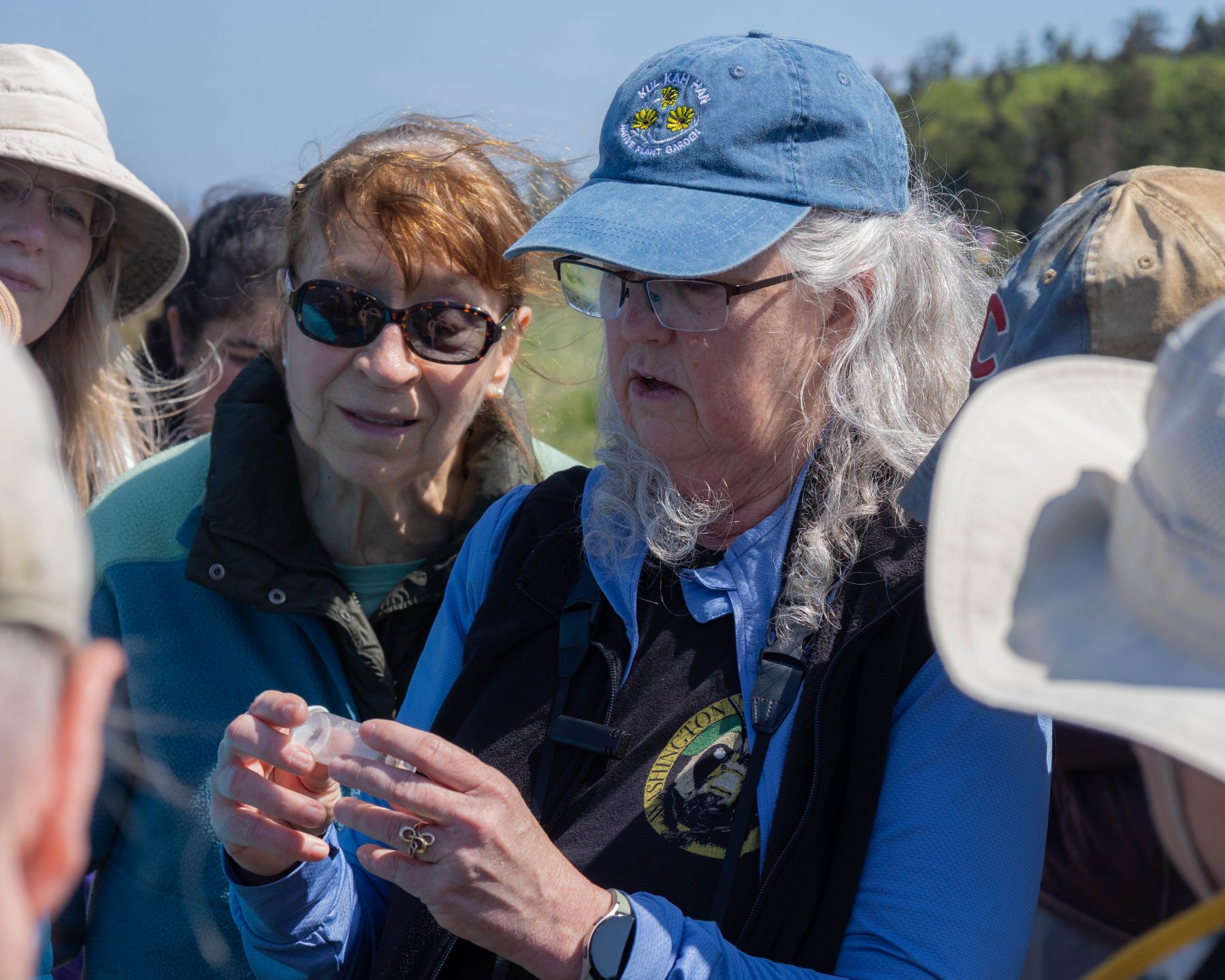
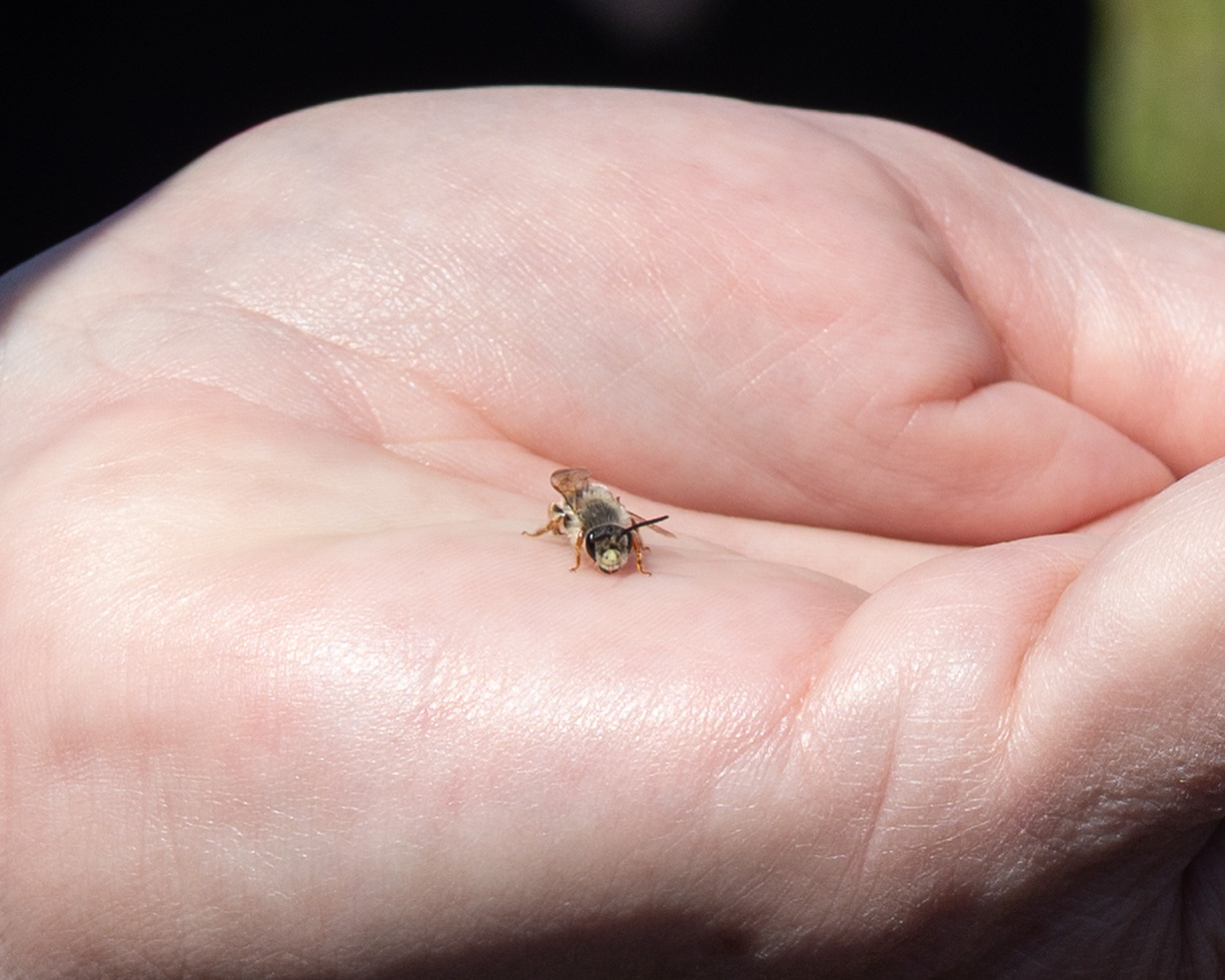
Two programs tied for the title of most popular: our geology walk led by Ralph Dawes and our bee walk led by Kris Ethington. We are incredibly fortunate to have such knowledgeable and talented people in our community who are willing to share their time and expertise with us. It is difficult to imagine finding this depth of talent anywhere else!
We still have three Natural History programs remaining in 2026. For information about upcoming programs, visit friendsoffortflagler.org select the Resources tab, and then choose 2026 Events.
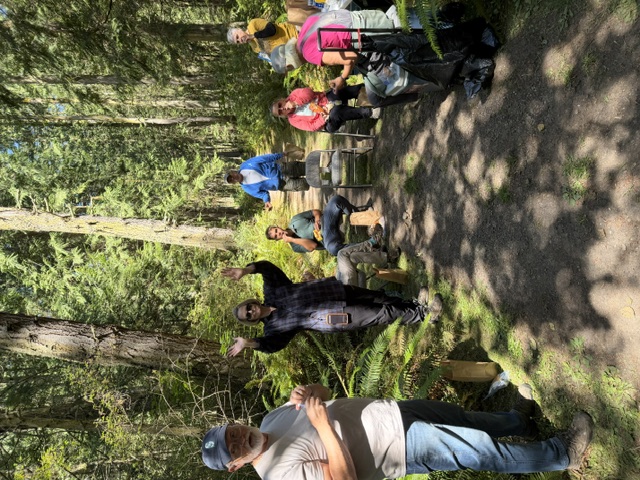
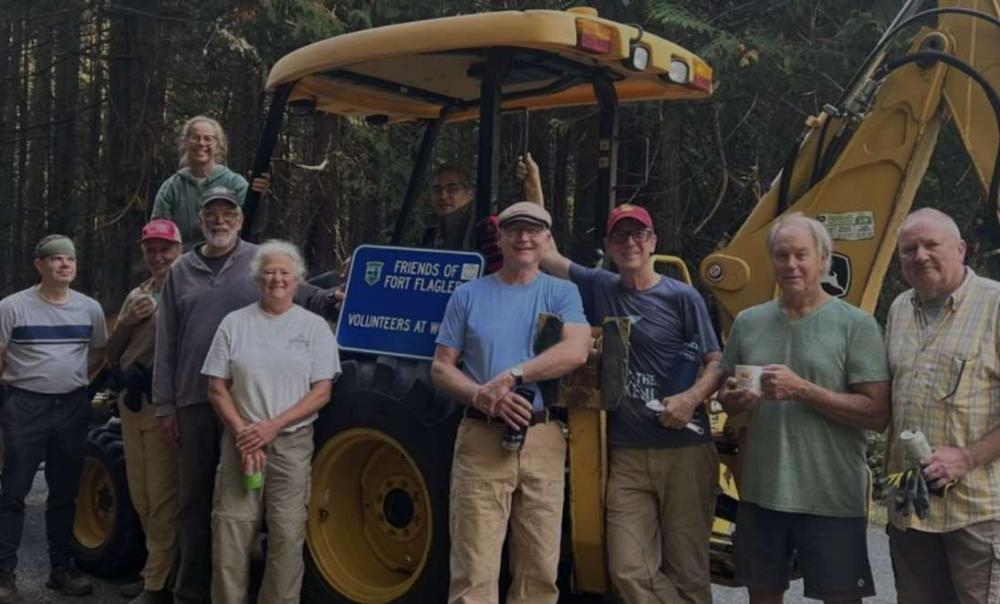
Our volunteer work parties, which are essential to keeping Fort Flagler beautiful and well maintained, have also been very popular. We have held three work parties so far this year, with two more scheduled for August. Please watch for upcoming volunteer opportunities—we would love to have you join us.
Your suggestions matter! If there is a particular educational program, topic, or speaker you would like us to consider, please let us know. There are also many ways to help with our Natural History Program, from assisting at events to helping organize future presentations and walks.
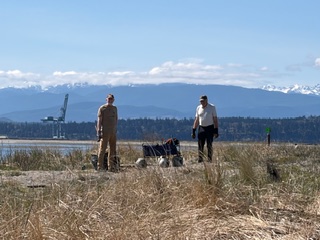
The 2026 season has been an unusual one for our Rat Island Docent Program. The spit was much quieter than in past years because the clamming season did not open on its usual July 1 date. In previous years, hundreds of clammers would arrive on the spit, keeping our docents very busy. This year, our volunteers had more time to enjoy the quiet, observe the wildlife, and spend time with one another. That does not mean we were not busy—just not quite as busy as usual.
Our season began on May 31 and ended on August 12. During that time, docents staffed the spit on 19 days, with 57 volunteer shifts filled throughout the season. Together, our volunteers contributed 228 hours.
This year, the program was led by two outstanding volunteer coordinators, Rachel Imper and Joyce Lauterback. Both have volunteered as docents since the program began and have been invaluable to its success. Their knowledge, people skills, and organizational abilities are superb, and I truly appreciate everything they have done to support our volunteers and keep the program running smoothly. Thank you, Rachel and Joyce!
The role of our docents is to educate visitors about the wildlife and sensitive habitats surrounding the spit. We spend considerable time sharing information about Rat Island, the thousands of seabirds that nest there, and the nearby harbor seal rookery. Rat Island provides a rare and increasingly threatened habitat for migratory seabirds that travel thousands of miles to nest and raise their chicks.
Without the temporary seasonal protections provided by the Washington Department of Fish and Wildlife, this sensitive habitat could easily be disturbed by visitors walking dogs, picnicking, or hauling boats onto the island. Friends of Fort Flagler is grateful to both WDFW and Washington State Parks for helping protect this remarkable island just offshore from Fort Flagler.
We are always looking for new docents, and no previous experience is required. Training and educational materials are provided. To learn more, visit friendsoffortflagler.org/volunteerand select Volunteer under “Ways to Help.”
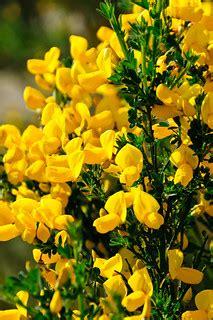
Help us tackle invasive Scotch broom and protect the natural landscape at Fort Flagler State Park.
We will be cutting Scotch broom to the ground along the top of the barracks. August is an ideal time for this work because the plants are dry and vulnerable. This approach has been highly successful at other Washington state parks.
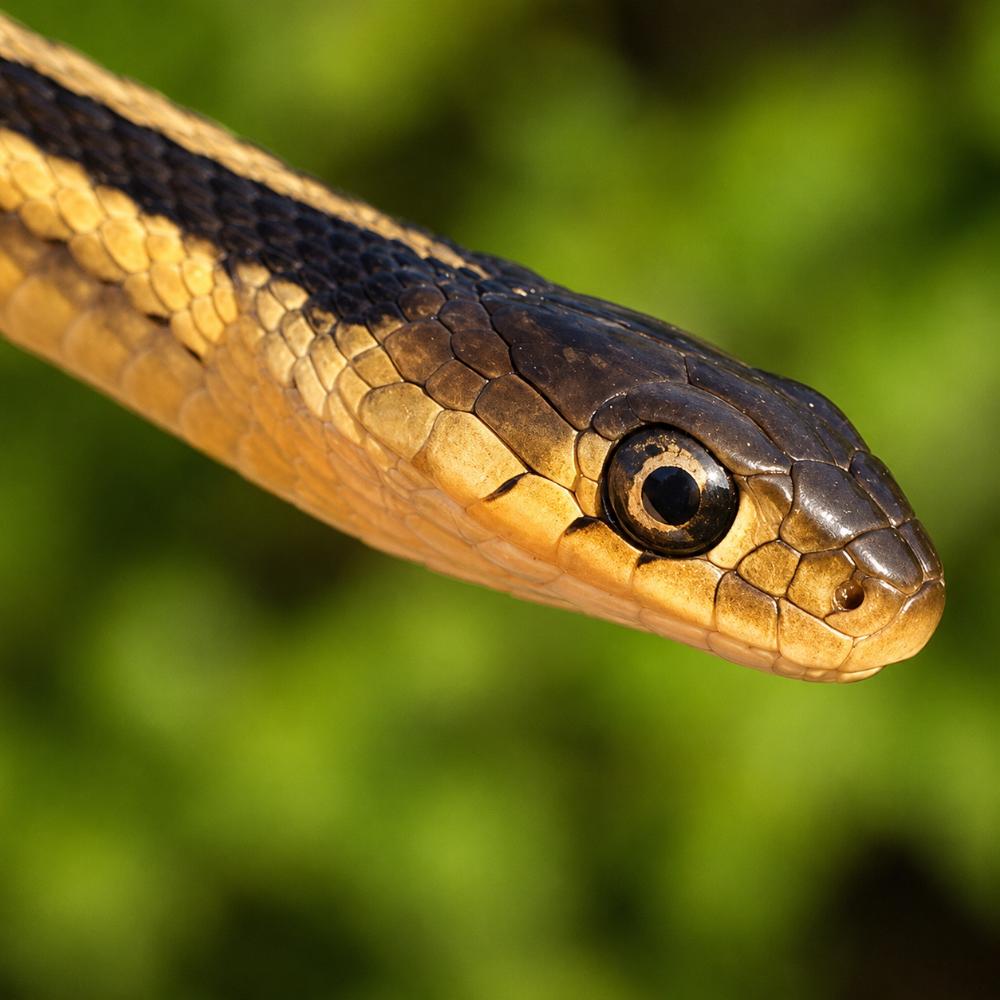
Join Friends of Fort Flagler for a special program on Washington’s native amphibians and reptiles, presented by Abby Sage, Wildlife Diversity Biologist, Washington Department of Fish and Wildlife.
Abby will give a presentations, then lead a guided walk to look for suitable amphibian and reptile habitat, and discuss the important role frogs, toads, salamanders, snakes and lizards play in our local ecosystems and how to create habitat for them in your community.
Part 2 will highlight another three, 2026 Board members with their bio's below. View the full list here: 2026 FoFF Board Bios
John Gonnella, Director.My wife Carol and I moved to Marrowstone Island 10 years ago after a little over 40 years working and raising our family in Jackson Hole, Wyoming. There I spent time in the ski industry, home construction, and 20 years as a restaurant owner. Born and raised in Seattle, I am delighted to be back in the NW. I have stayed active in a number of community non-profits and am honored to be on the FOFF board. There could not be a better group of dedicated volunteers to be associated with and to pursue and implement the goals of the Friends of Fort Flagler.
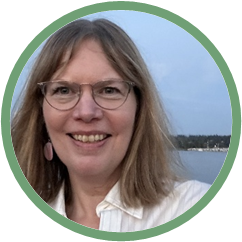
Claire Jackson, Director. Claire Jackson is a writer and attorney whose professional roles have ranged from editor at an environmental consulting firm to legal counsel at Sound Transit in Seattle. Her writing has been published in various Northwest literary journals, including Crab Creek Review. A fan of classical music, she has volunteered with the Seattle Symphony, and as a fan of birds, she has worked with Birds Connect Seattle, where she contributed articles to EarthCare Northwest. She will walk any beach she can find, including on the Oregon coast, where she has friends and family. Currently, she is learning the ins and outs of community theater production and hopes to bring more performances to the Fort Flagler Theater.
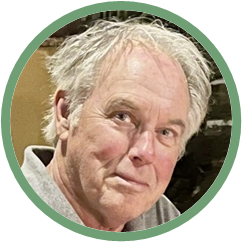
Mark Secord, Director. Mark has been on the FoFF Board since the fall of 2019 and president from November of that year to December 2025. Prior to retirement in 2016, he had a long career in health care administration, first as a member of the administrative team at Virginia Mason Medical Center and then as CEO of Neighborcare Health, a community health center providing care to 50,000 predominantly low-income people in Seattle. Mark and his wife Linda live adjacent to Fort Flagler, love life on Marrowstone Island and enjoy frequent trips to Seattle to spend time with their children and grandchildren.
A donation of any size is greatly appreciated and is tax-deductible! Help us continue the great work we do at the park—from natural history events and habitat restoration, to maintaining trails, renovating buildings, putting on community events, and so much more.
We are deeply grateful to our amazing and dedicated volunteers. Their commitment helps keep Fort Flagler State Park clean, safe, and beautiful for visitors and wildlife alike. If you’d like to join future efforts, we’d love to have you! Cick below to tell us what you would be interested in helping with.