How to make Peace Corps Park a place of calm in a turbulent city
If you're having trouble viewing this email, you cansee it online.
Dear Houston PCA,
In previous emails taking you behind the scenes of the construction of Peace Corps Park and onto the fabrication shop floor, we’ve focused mainly on the stoneelements, which communicate the magnitude and symbolism of what we are doing together: Building a new, permanent tribute to peace in the heart of Washington, D.C.
Today, I want to tell you more about how the other elements of the Park will work together to create a sense of peace in this triangle of land a short walk from the National Mall, realizing lead designer Larry Kirkland’s vision to create a space for visitors from everywhere to reflect on our shared humanity.
To achieve it, Larry partnered with artist and landscape architect Michael Vergason, who in turn brought longtime collaborator Doug Hays out of retirement to conceptualize how the site will relate to its historical, environmental and geographical context, using landscape design to ensure Peace Corps Park exists in harmony with its surroundings.
“Our process always starts with the history of the site and the broader context of where it is located,” Michael told me, “then collaborating with Larry to develop the sculptural idea and actually turn it into a place that supports the artistic vision.”
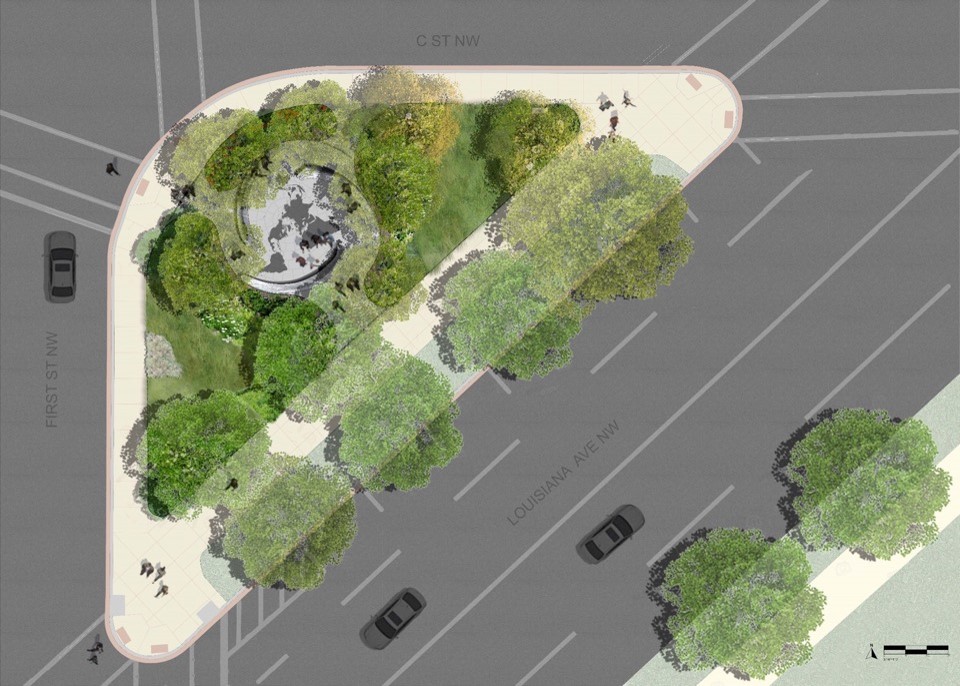
We’ve talked previously about how the team addressed the first goal of making the small site feel larger by connecting it with the Capitol grounds across the street, but the compact dimensions bring with them a second challenge in the Park's exposure to vehicle traffic on its triangular perimeter.
“You’re really exposed on two sides with busy streets, and to create a place of solitude and contemplation in such a small space is a tough challenge,” Michael said.
While canopy trees will provide coverage for the Park’s three benches, the design team has also included a shaded allée, a wide and peaceful walkway with trees on either side, along the longest and busiest edge of the site at Louisiana Ave.
“We wanted to provide shade and comfort,” Michael said. “There are existing canopy trees on the street side that we are saving, and we’ll build upon them to create this allée using some of the same species.”
While trees will be used to provide a sense of isolation at Peace Corps Park, the site’s history presents a constraint on how many can be planted there.
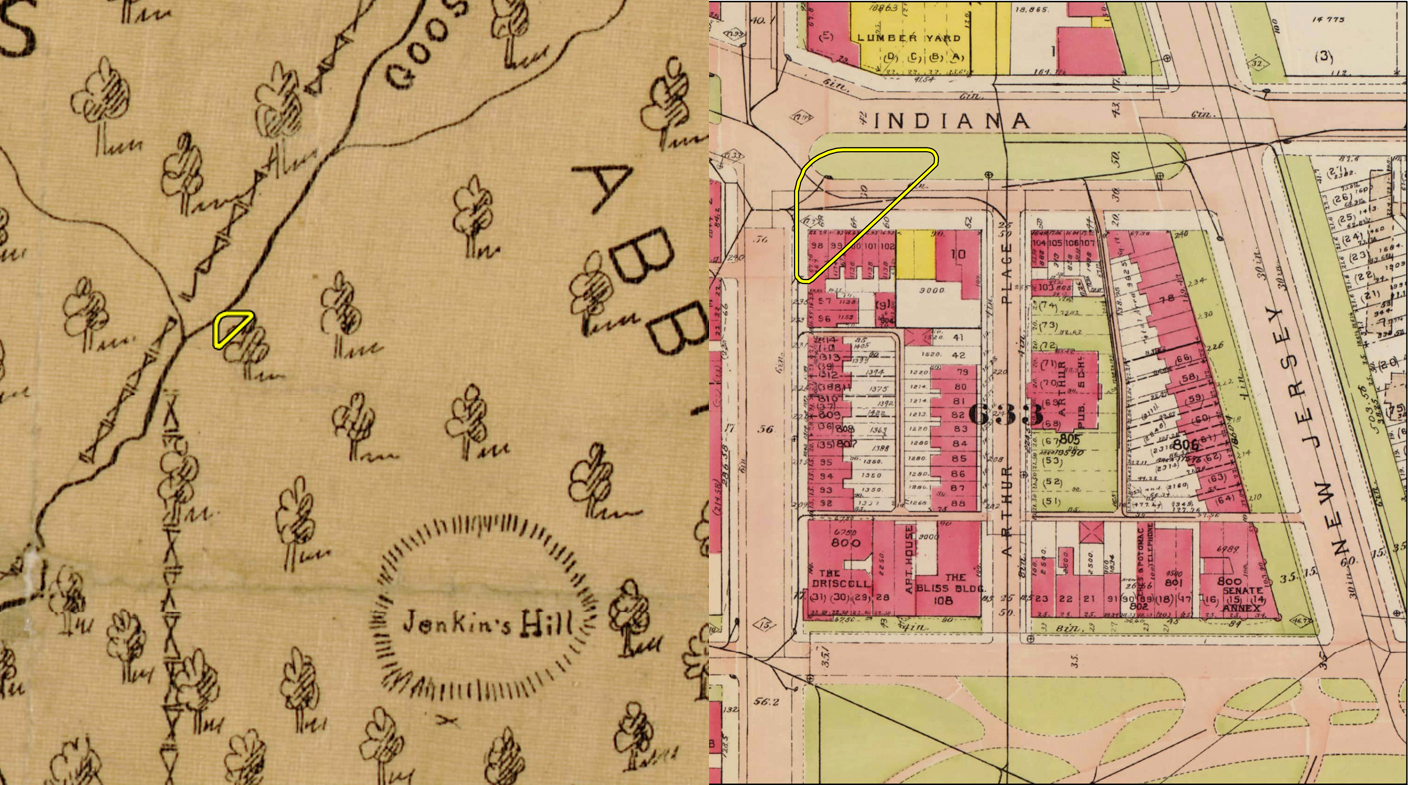
In 2023, the Foundation commissioned a detailed archaeological survey of the land that included geotechnical borings and a review of historical maps to determine if any prehistoric artifacts might be present underground. The survey found no evidence of ancient settlements needing to be preserved, but the location of historic Tiber Creek and the stormwater channel later put in its place meant that the design had to ensure that the Park wouldn’t affect drainage during heavy rains.
Left: A 1792 map of D.C. shows Tiber creek and forested land on the Peace Corps Park site. Right: A 1919 map shows the site with more development and underground sewage lines.
To deal with this requirement, Doug and Michael included a pair of stormwater management basins, one on either side of the main Park space, to clear water from the site. They had two main options for the basins: fill them with plants or turn them into lawns.
While the team initially favored a mix of native grasses and bushes that would attract pollinators, maintaining these plantings would require significant resources. So the team landed instead on gently sloping grass lawns that can be used for sunning and reclining on dry days, and that will meet drainage requirements on wet ones.
Not only will these open spaces provide additional real estate for visitors to relax and reflect, they will also create an opportunity for outdoor events at the space like reunions, storytelling events, maybe even a wedding or two.
Our immediate milestone is to fund the construction of the Park, but we are also excited to start thinking about how it will feel once it’s built.
The generosity of this community has gotten us within arm’s reach of meeting our fundraising goals with almost two thirds of the funds raised, and your support will make that vision a reality.
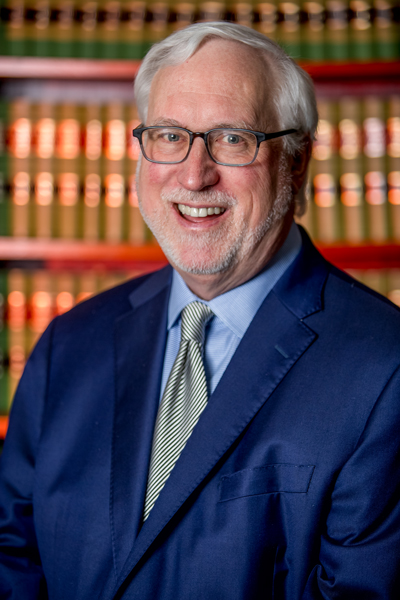
The Peace Corps Commemorative Foundation welcomes Arthur “Scott” L. Porter Jr., Managing Partner at Porter Thomas Grabell & Baumwoll P.C., as director and the Foundation's new General Counsel.
You may remember Scott from his previous advocacy for Peace Corps Park, in which he shared his story about being a teenager along for the ride during his parents' service in Malaysia through the Peace Corps Families Program.
His blend of legal expertise, business leadership, and service‐driven perspective makes him a strong addition to our team. He will replace outgoing General Counsel Mark Rosenberg, who we deeply thank for his years of service to the Park.
Campaign progress
To date, this dedicated community has raised $8,790,000 of the $14,000,000 budget for Peace Corps Park and its digital companion, leaving $5.21 million left to raise.
We gratefully thank the following generous supporters who have made new or additional gifts (or pledges) since Aug. 27, 2026:
$1,000 - $4,999 Anonymous Peter Deekle* Keith Gallaway* Peter M. Hansen Fund* Alan Johnston* Marjorie Maritzen* Gianna Marrs William P. Romenius* Alan Yount*
Other gifts to $999 Cornelia Barrow Melanie Boulet* Peggy Bromley* Glorious Broughton Lane Bunkers Winifred Delaria John Fleckner Jim Hafner Eric Hardy Nancy Hatch Steven John Barb Johnson Jeremy Juern Rosalie Lisa Ron Luzier Joel N Martin Travis Matthews Wayne McCartney Sydney Merz Ann Morgan Margo Pfleger Walter Ruge Christine Saudek* Nora Shuman-Moore Jack Robert Staff
Other gifts to $999 (cont'd) Ellen Storch Robert Strauss Michael Stryker Carol Tumaylle Cary Virtue Dana Wekerle* Dennis Weller Paul Robert Willey John Wozniak Jim Yardley Linda Zenick
Peace Corps Park Sustainers Contributions from monthly recurring donors
Anonymous Jane Bardon Linda Barnett Rick and Karline Bird Ellen Davis-Zapata Greg Emerson Bocquet G David Hicks Peter Hofman Laura Kettel Khan Ashley Leinweber Roni Lerner Love Robert Leslie Deborah Manget Judy Marcouiller Cynda McMahon Family Marty Mueller Richard Pyle Shawn Reagan Jessica Rogers Robert Smythe Pete Stubben James D. Wagner Mary Lou Weathers Kathleen Williams-Ging Charles Wolf
Follow us on social media at the accounts below
Peace Corps Commemorative Foundation 5636 Connecticut Avenue, NW Suite 42143 Washington, DC 20015 T 443.240.4080
Peace Corps Commemorative Foundation is a 501(c)(3) charitable organization. EIN: 01-0554700
.png)