Stay informed with articles, books, and advocacy opportunities!
If you're having trouble viewing this email, you cansee it online.
The Voice of CanadianHumanism
La voix de l'Humanisme canadien
August 15, 2026
Dear fellow Humanists,
Welcome to the first edition of ‘The Voice of Canadian Humanism’ after the World Humanist Congress.
This is a historical moment both for the Humanist movement in Canada and worldwide.
In two days, we saw the adoption of ‘The Ottawa Declaration on Humanism as Resistance’, the foundation of The Amsterdam Circle at the World Humanist Congress in Ottawa, and the overall success of the Congress, “with over 500 delegates from 60 countries around the world, making it the largest Humanist Congress in over a decade”.
This has been largely thanks to you and to your support.
The Humanist Canada Team
Inspiring progress. Advancing Humanism.
La voix de l'humanisme canadien
15 août
Chères et chers ami.e.s humanistes,
Bienvenue dans ce premier numéro publié après le Congrès mondial humaniste de « La Voix de l’humanisme canadien ».
Il s’agit d’un moment historique aussi bien pour le mouvement humaniste au Canada que dans le monde entier.
En deux jours, nous avons assisté à l’adoption de « La Déclaration d’Ottawa sur l’humanisme comme résistance », à la création du Cercle d’Amsterdam lors du Congrès humaniste mondial à Ottawa, ainsi qu’au succès retentissant de ce congrès, « qui a réuni plus de 500 délégué.e.s venus de 60 pays du monde entier, ce qui en fait le plus grand congrès humaniste depuis plus d’une décennie ».
Ce succès est en grande partie dû à vous et à votre soutien.
L’équipe d’Humaniste Canada
Inspirer le progrès. Faire avancer l’humanisme.
Secular issues and Humanist Canada's events/Questions et événements laïcs d'Humaniste Canada
The Ottawa Declaration on Humanism as Resistance
The World Humanist Congress, meeting in Ottawa, Canada, in 2026, adopted ‘The Ottawa Declaration on Humanism as Resistance’, a text of 8 salient points that respond to the urgent issues of our time, from the outsurge of disruptive technologies, wars, nationalism and authoritarianism.
In this declaration, Humanism is seen as both a philosophy in action, responding to the challenges of the XXIst century.
We invite you to read the whole declaration, and to join the resistance.
Humanist Hangout with the ED
📅 August 17th 🕖 9pm ET📍Online
Join Janalee Morris, Executive Director of Humanist Canada for an informal chat!
We look forward to having a wonderful summer outing and chapter meeting in August . On August 23, 1pm, we’ll have a picnic (BYO) at Bannerman Park (off Military Road) for our August meeting. This will be an excellent opportunity for new attendees to get to know us, for meaningful conversations over food, and for all of us to (re-)connect.
In addition, you can join in doing a little hike at Signal Hill prior to our meeting – For the hike, we’ll be meeting at the Signal Hill Visitor Centre Parking Lot at 11am. Please reach out to nlchapter@humanistcanada.ca in case you are interested or for more information.
New Members Connect
📅 August 26th 🕖 7:00PM ET📍 Online
If you have joined Humanist Canada in the last year, we invite you to our New Member Orientation, where you’ll have the chance to:
Explore the member portal
Learn how to make the most of your membership
Connect with fellow Humanists
These events happen on the last Wednesday of each month.
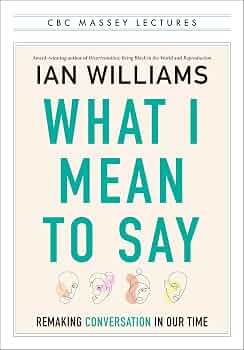
This month's Book Club pick: What I Mean to Say- Ian Williams
In What I Mean to Say: Remaking Conversation in Our Time (the 2024 CBC Massey Lectures), Giller Prize–winning author Ian Williams explores the decline of meaningful human dialogue in an increasingly digital, polarized world.
Blending personal reflection, cultural commentary, and playful literary devices—including marginalia from a fictionalized editor—Williams examines what makes a genuine exchange.He advocates for slowing down, listening deeply, and embracing the vulnerability required to communicate across differences, framing conversation not as a debate to be won, but as a vital act of civic connection and shared humanity.
September Webinar: Lessons in Skepticism: The Paranormal as a Teaching Tool
📅 September 9th 🕖 7:00PM ET📍 Zoom
For nearly 20 years, Dr. Rodney Schmaltz has taught a course on pseudoscience and skepticism that turns extraordinary claims into hands-on lessons in critical thinking. Students conduct ghost hunts, learn to perform convincing psychic readings (it takes about 45 minutes), and put paranormal claims to the test through their work with the Centre for Inquiry Investigations Group. In this talk, Dr. Schmaltz will share practical teaching strategies and insights from his research on skepticism and belief. He will discuss how educational experiences can cultivate curiosity and intellectual humility both inside and outside the classroom. Educators and skeptics alike will leave with practical approaches for making critical thinking engaging and memorable.
Humanist groups applaud modernization of Armed Forces military ceremony policy
By Martin Frith, President of Humanist Canada
In this Blog Post, Martin Frith, President of Humanist Canada, reflects on the debate that was ignited by the Canadian Armed Forces' new Spiritual Reflections in Military Settings policy and its impact on freedom of religion or belief.
Martin details how, unlike what many might suggest, this new policy upholds the principle of religious neutrality and only applies to the official CAF ceremonies, and those of the Government of Canada, which by definition protects freedom, pluralism and respect for the diversity of Canada and its armed forces.
Humanist Canada and the British Columbia Humanist Association already issued a joint statement welcoming the policy.
Humanism is a philosophical and cultural tradition that places human beings, their dignity, reason, and potential at the center of value and inquiry. The widespread belief that humanism is essentially Western comes less from any exclusive ownership of the ideas than from the way Western history named and packaged them. The word itself took shape in Renaissance Europe and was later reinforced during the Enlightenment. Because European thinkers formalized these concerns into named movements, often in tension with religious authority, global narratives have tended to treat that particular path as the only authentic one. Societies that never staged the same drama of secularization against a dominant church are therefore assumed to lack humanist substance. Yet East Asia developed its own durable traditions of human-centered thought—rooted in Confucian ethics, Daoist naturalism, and later modern intellectual shifts—that emphasize human dignity, social responsibility, and practical reason without following the Western secularization script.
WeCanReason Webinar - From Church Graveyards to Country Clubs: Changing Preferences for End of Life Rituals with Chris Miller
📅 August 26th | 🕖 7:00 PM MDT |📍Zoom
For centuries, religion has shaped the way by which people approach death. In addition to shaping beliefs around what happens after we die, religions traditionally describe what rituals we might carry out just before and just after death. With growing numbers of people no longer affiliating with religion, how does this change the rituals people carry out to make sense of death? This presentation reflects on the changing ritual landscape over the last century, and explores emerging preferences for memorializing life in ways that are more personalized and meaningful.
Join the Rocky Mountain Atheists and Dr Chris Miller in this webinar.
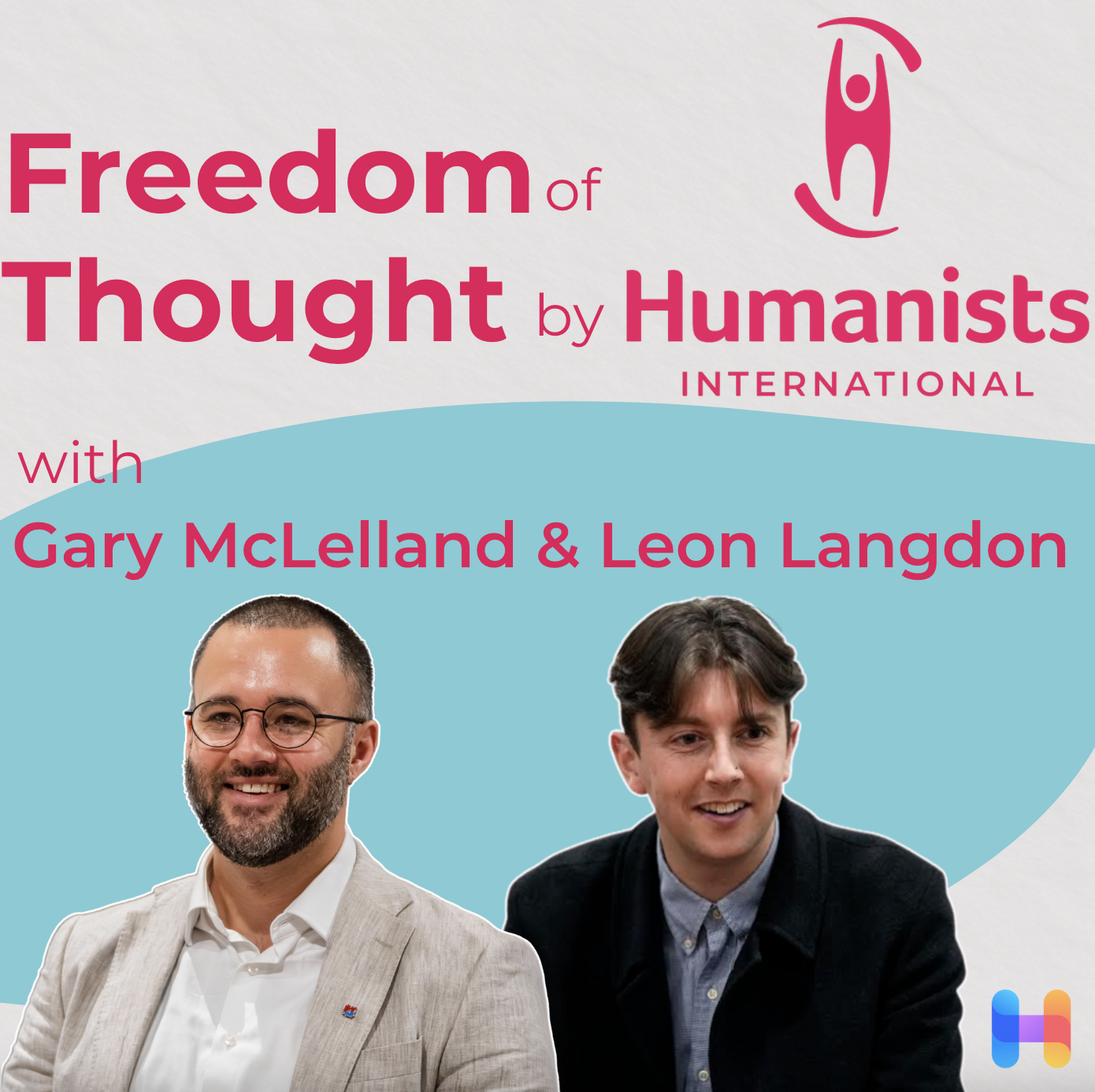
How Humanists International Makes Decisions At The Global Level - Guide to the General Assembly - The Freedom of Thought Podcast
Gary McLelland and Leon Langdon step back from interviews to do something different: build an evergreen guide to how Humanists International's General Assembly actually works. The idea came from a board meeting where HI decided to use the podcast to create resources that will remain useful long after any particular news cycle. This episode was designed for delegates heading to Ottawa and for anyone joining the movement who wants to understand how a humanist voice becomes global humanist policy.
In this episode they cover
Who makes up the General Assembly
The governance structure
GA timelines and submission: resolutions, motions, and board nominations
Emergency motion process
How a resolution becomes global policy
Safety mechanism and: quorum rules, emergency assemblies
Your membership, volunteer efforts, and financial support help us advance reason, compassion, and secular values across Canada. Every contribution strengthens our work in advocacy, education, and community building.


.jpg)

.png)