Dig in! This month's issue focuses on food systems and farming 🌽
If you're having trouble viewing this email, you cansee it online.
August 2026 Newsletter
In This Issue
This month's theme: Food and Farming
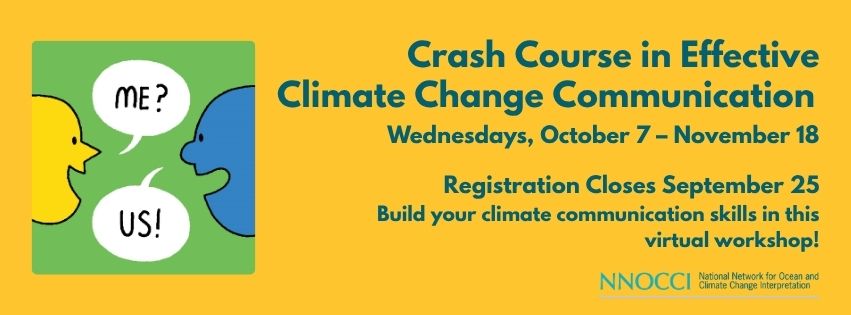
Register now for virtual climate communication course
Featured Story: Sharing Lessons Learned in Climate Communication
Fall Conference Meet-up Survey
Science Corner: Interview with new Governing Council Member Ubaida Abdallah
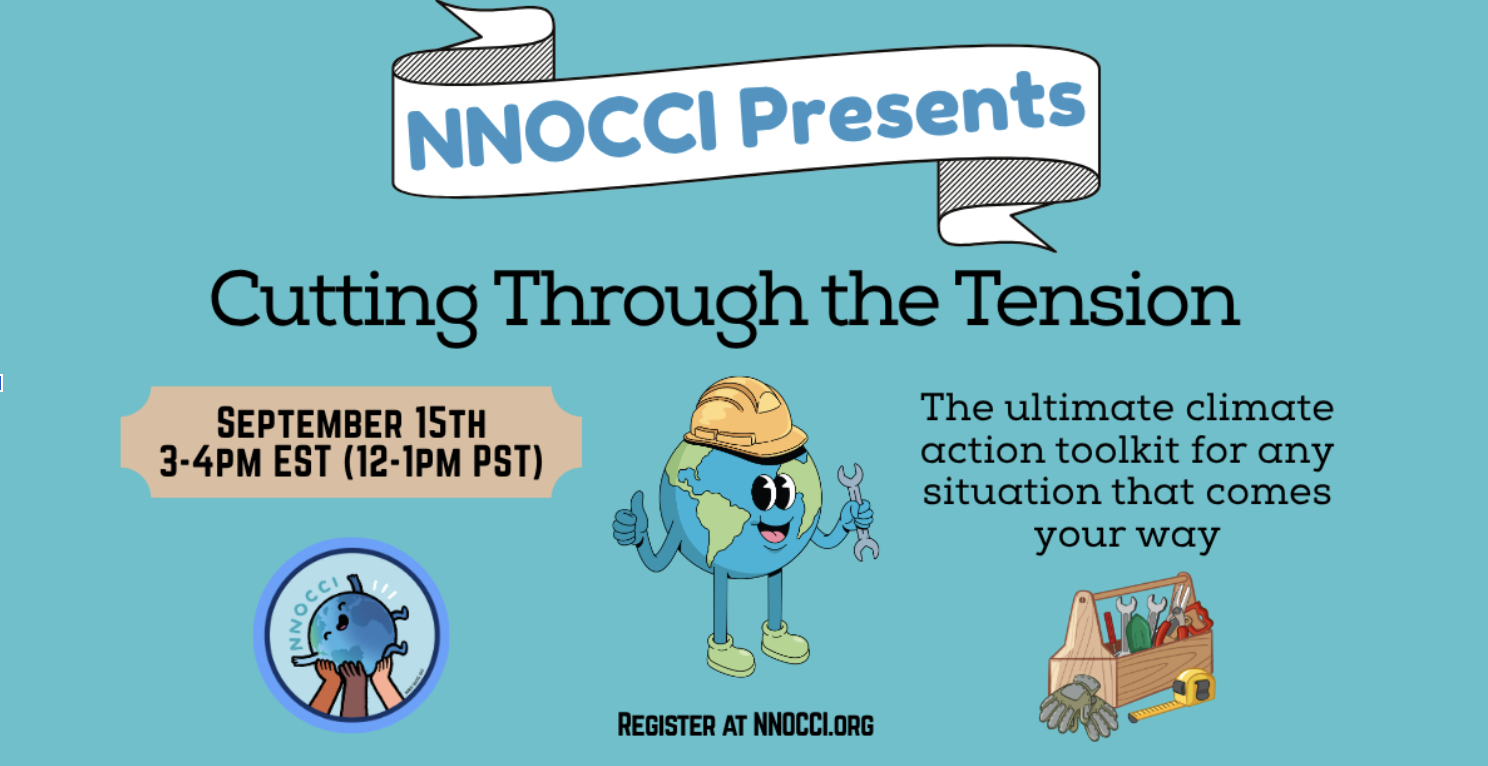
NNOCCI Presents: Cutting Through the Tension Solutions Toolkit
More Announcements!
This month's theme: Food and Farming
We hope you’ve been enjoying some invigorating time outdoors this summer!
Perhaps you’ve done some gardening, gone fishing, foraged on a hike, or attended local food markets. If so - this month’s theme is for you! We’re digging into the climate side of food systems, especially through the lens of farming.
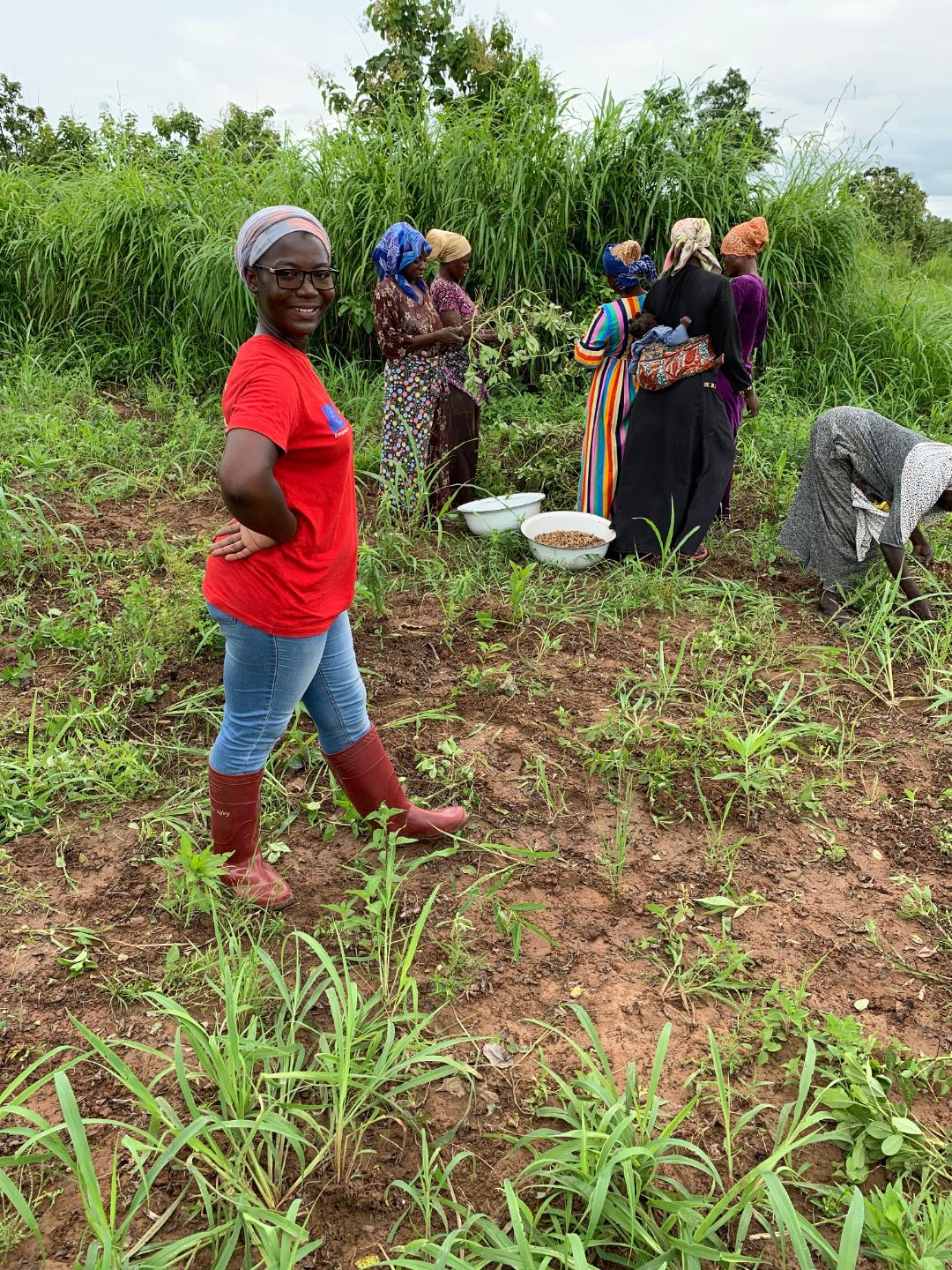
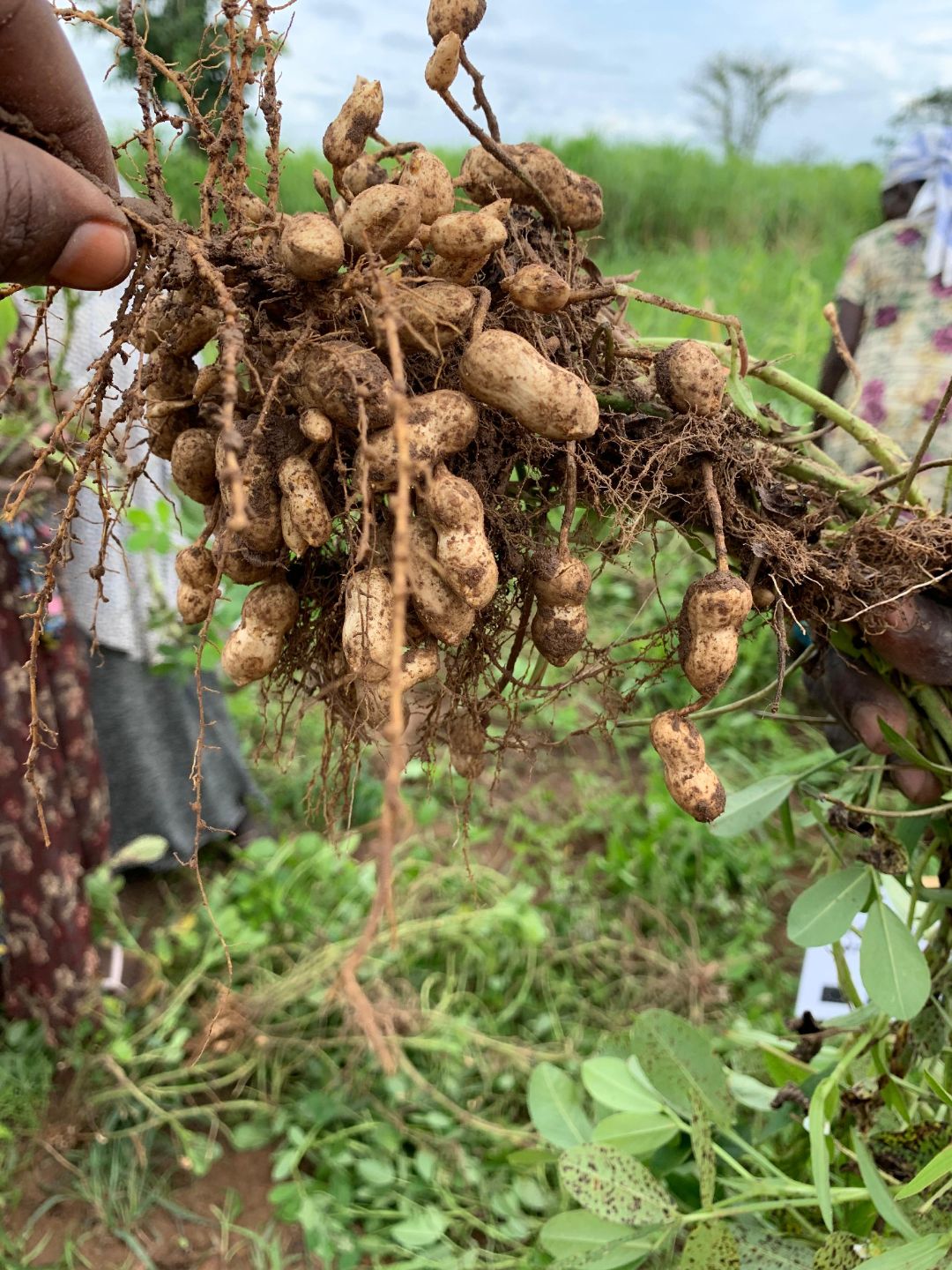
Alongside training announcements and a few other cool tidbits, this edition shines light on the climate work being done at member organization the Blandy Experimental Farm (State Arboretum of Virginia), as well as introduces our new ‘Science Corner’ section! This month, we’re hearing from a new Governing Council member about her doctoral research in Ghana, looking at how climate change affects agricultural communities, highlighting the role of gender.
Oh, and did you ever ask for a solutions bank? Don’t miss the ‘Cutting Through the Tension’ webinar announcement below… 👀
Registration is NOW OPEN for our virtual course for climate communicators!
Gain strategic framing skills to inspire hope and action.
Learn to use researched values, metaphors, and solutions in your communication.
Network with climate scientists, educators, and communicators.
Develop your own climate story to share post-course.
Join a supportive international community of practice.
🖥️ Course Format
7 weeks / 25 hours total
Weekly live facilitated webinars
Asynchronous modules
Dedicated, individualized, weekly feedback
Practice assignments culminating in immediately usable climate communication
💬 NEW THIS SEMESTER:
Practice Sessions: As an optional additional tool, half-hour practice sessions will be held after class on weeks three (10/21), five (11/4), and six (11/11). These sessions include additional activities and discussions designed to hone skills in real-time.
Introducing Google Classroom: Goodbye Canvas, hello Google Classroom! Migrating platforms has allowed us to dig deeper into our survey feedback to clean up, consolidate, and re-vamp our virtual classroom model. We believe this shift will lead to the best cohort yet!
Discounts for Multiple Attendees: NNOCCI started in a dyad model; meaning, our original participants had a partner to participate with. We know this helps build strength and longevity in this work, for both the individuals and the communities they represent. Want to sign up with a friend or two? Awesome, email us for a discount code!!
✨ This course is a great way to unify our voices around climate hope and action. Consider joining us this spring, or share with someone who might be interested! ✨
🎉 BUT WAIT, THERE’S MORE… 🎉
Curious to learn more about our work, and our effective climate framing strategies, before signing up? Are you trained and want to bring some new friends into the Network?
This Month's Featured Story:Sharing Lessons Learned in Climate Communication
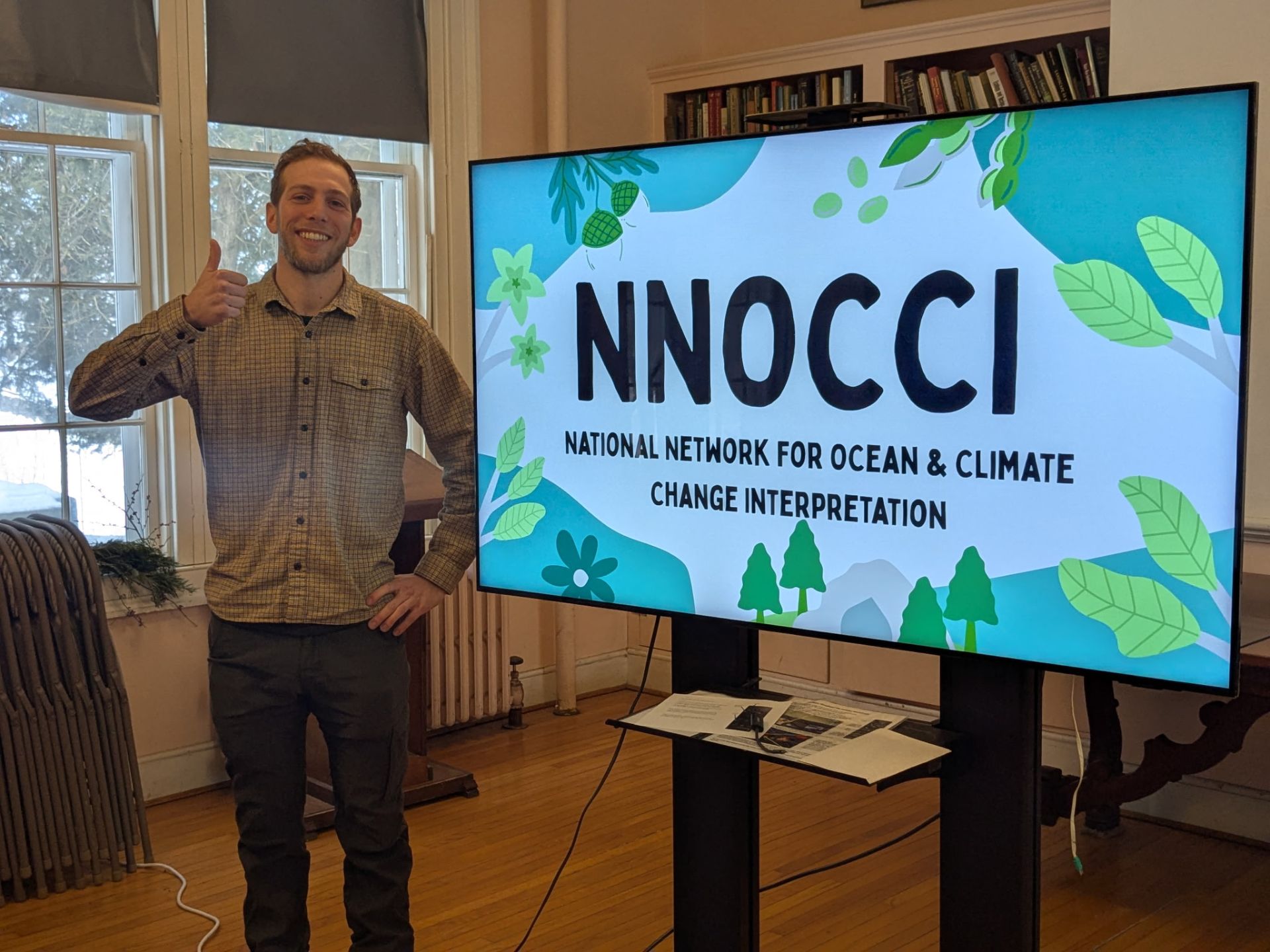
After graduating from NNOCCI’s Framing the Conversation ‘Crash Course’, environmental educator Jake Trusheim was inspired, so he did what anyone else in his position would—he prepared a presentation on his experience for his colleagues at Blandy Experimental Farm.
Blandy Experimental Farm, based in Boyce, Virginia, is a University of Virginia research facility. The folks at Blandy hope to increase understanding of the natural environment through research and education in an assortment of areas including plant biology, ecology, and the environmental sciences. We’re thrilled to see, and hear, how NNOCCI’s principles and tools have not only brought the team together, but motivated them to enact change and explore new ideas.
Click the button below to read the full story about Jake’s presentation and the takeaways from the Blandy team on the NNOCCI blog.
Going to any conferences in 2026? Let us know by filling out this 2-minute survey!
We know many members attend annual events with organizations like NAAEE, NAI, AZA, and beyond. If there’s a quorum of NNOCCI Members at any conference, we’d love to see if we can get a couple of informal meetups going, or promote each other’s presentations.
Science Corner: Interview with new Governing Council Member Ubaida Abdallah
Your work sits at the intersection of climate, agriculture, and community partnerships. Can you tell us about your research and why it's so important right now?
My research examines how climate change affects agricultural communities and how institutions shape people’s ability to respond. My doctoral research focused on rural northern Ghana, where I studied how NGOs understand and address climate change and gender in their agricultural interventions. I was particularly interested in whether these programs reflected the experiences of the women farmers they were intended to support. This work is especially important now because farmers are facing increasingly unpredictable weather, declining soil fertility, insecure access to land, and economic pressures. Effective adaptation requires more than introducing a new farming practice; it also requires understanding the social and institutional conditions that determine whether farmers can realistically adopt and sustain it.
Your work elevated the voices of women who had often been left out of agricultural decision-making. Why is inclusion essential—not just ethically, but scientifically?
Inclusion is essential because people living with climate change possess knowledge that researchers and institutions may otherwise overlook. Women farmers can identify changes in rainfall, soil conditions, labor demands, household food security, and access to resources that may not be visible in conventional agricultural data. Their experiences also show that women are not a single, homogeneous group. Age, marital status, ethnicity, migration history, land access, and household responsibilities can all shape vulnerability and adaptive capacity differently. Including these perspectives produces a more accurate understanding of climate impacts and helps researchers design interventions that respond to real conditions rather than assumptions. In that sense, inclusion is not simply ethical; it strengthens the quality and usefulness of the science.
If you could fast-forward 20 years, what would success look like for the communities you've worked with?
Success would mean that farmers are not simply described as resilient while being expected to manage increasingly difficult conditions with inadequate support. Women would have secure access to productive land (not just access to land), financial resources, climate information, markets, and meaningful decision-making power. Agricultural and climate programs would be developed with communities rather than designed for them from a distance. I would also hope to see institutions being accountable to farmers beyond the lifespan of individual projects. Ultimately, success would mean that people could adapt without sacrificing their livelihoods, food security, health, or dignity, and that younger generations could view farming as a viable and valued future rather than a livelihood they must escape.
What recent discovery or trend in climate and food systems research are you most excited about right now?
I am encouraged by the growing shift from asking only whether farmers adopt climate-resilient practices to examining what makes adoption possible. Researchers are paying more attention to land tenure, credit, labor, trust, market risk, program design, local knowledge, and other institutional conditions. I am also excited by the increasing emphasis on producing knowledge with farmers and communities rather than treating them solely as recipients of scientific solutions. This does not diminish the importance of technology. Instead, it helps ensure that innovations are locally relevant, accessible, and sustainable. It represents a more holistic understanding of adaptation, one that connects environmental change with power, equity, and everyday realities.
After spending so much time studying climate impacts on food systems, what gives you the most hope today?
The farmers and community members I have met give me the most hope. They are not passive in the face of climate change. They observe environmental changes closely, experiment with farming practices, share knowledge, organize groups, and find creative ways to support their households and communities. I am also encouraged by the growing number of researchers, practitioners, and communicators who recognize that climate solutions must be scientifically sound and grounded in people’s lived experiences. Climate change presents enormous challenges, but communities already possess valuable knowledge and capacity. When that knowledge is respected.
NNOCCI Presents: Cutting Through the Tension DATE: September 15th TIME (ET / PT): 3-4 pm ET/ 12-1 PT
You have been asking for it and it’s finally here: a Solutions Toolkit! In this interactive and engaging session, Bailey Robbins will walk us through the Climate Action Toolkit that she designed--aligned with NNOCCI Strategic Framing best practices for collective, existing, and local solutions that are formed through an environmental justice lens.
This session is open to NNOCCI Members and the public. We encourage participants to join with a webcam and mic to participate in the Q&A, but this is not required.
On August 26th, from 3-4 pm ET / 12-1 pm PT, join Adam Ratner and Kait Birghenthal as they give a special introductory session to who NNOCCI is, what we do, and how to do it! Please invite friends and colleagues to this session. Register for free, here!
You are receiving this email because you are an integral part of our NNOCCI network. Thank you for framing your climate communications as hopeful and solutions-oriented!
Our mailing address is: National Network for Ocean and Climate Change Interpretation 2000 Bunker Road The Marine Mammal Center Sausalito, CA 94965-2619