TCCTA Messenger
January 2026 - Volume LXI |
Happy New Year from your friends at TCCTA!
As we turn the page on 2025, I want to thank all 3,695 of our members for your continued support. Over the past several years, our organization has experienced significant change. While transformation can be daunting, please know that decisions are carefully considered and made in the best interests of the Association. TCCTA has a long and rich history that deserves respect; at the same time, we cannot be beholden to the past. My New Year’s resolution for our organization is that members remain open-minded about the future direction of our beloved Association.
Speaking of change, one noticeable difference for this year’s convention is that it will be held entirely during the week—Wednesday, February 18 through Friday, February 20, 2026—at the Embassy Suites by Hilton Dallas Frisco Hotel & Convention Center. This shift allows us to expand programming by half a day and increase the number of sessions by nearly fifty percent compared to last year. I hope you will join us for the 79th Annual Convention, the largest gathering of two-year educators nationwide.
Continuing with the theme of change, this edition of The Messenger includes the proposed TCCTA amendments to the Constitution and Bylaws, along with detailed explanations. It is understood that, if adopted, these changes would fundamentally alter the Association. However, our organization is strengthened through thoughtful and vigorous debate regarding our governing documents. Members will have the opportunity to weigh in on these proposed amendments to the Constitution and Bylaws on Thursday, February 19, at 5:00 p.m. in Frisco Rooms 8&9 during the general session of the annual convention.
Related to both change and your constitutional responsibilities, I encourage you to vote in the TCCTA State Officer elections. Apart from our Treasurer, none of the candidates on the ballot ran for office last year. Candidate bios for President-Elect, Vice President, Treasurer, and Secretary can be found in The Messenger. In elections where historically fewer than ten percent of voting members participate, this is your opportunity to shape the direction of the Association for the upcoming term. Voting opened on Friday, January 16, and will close on Friday, February 20.
Finally, the theme of my presidency—and of this year’s convention—is 50 Strong – United We Stand. This theme resonates at both the state and national levels. Historically, Americans across all 50 states have come together during times of need, and I ask the same of our members who teach at the 50 two-year colleges across the state. While the convention will offer abundant professional development opportunities, I also hope attendees will enjoy time together through food, fellowship, and connection.
Cheers,
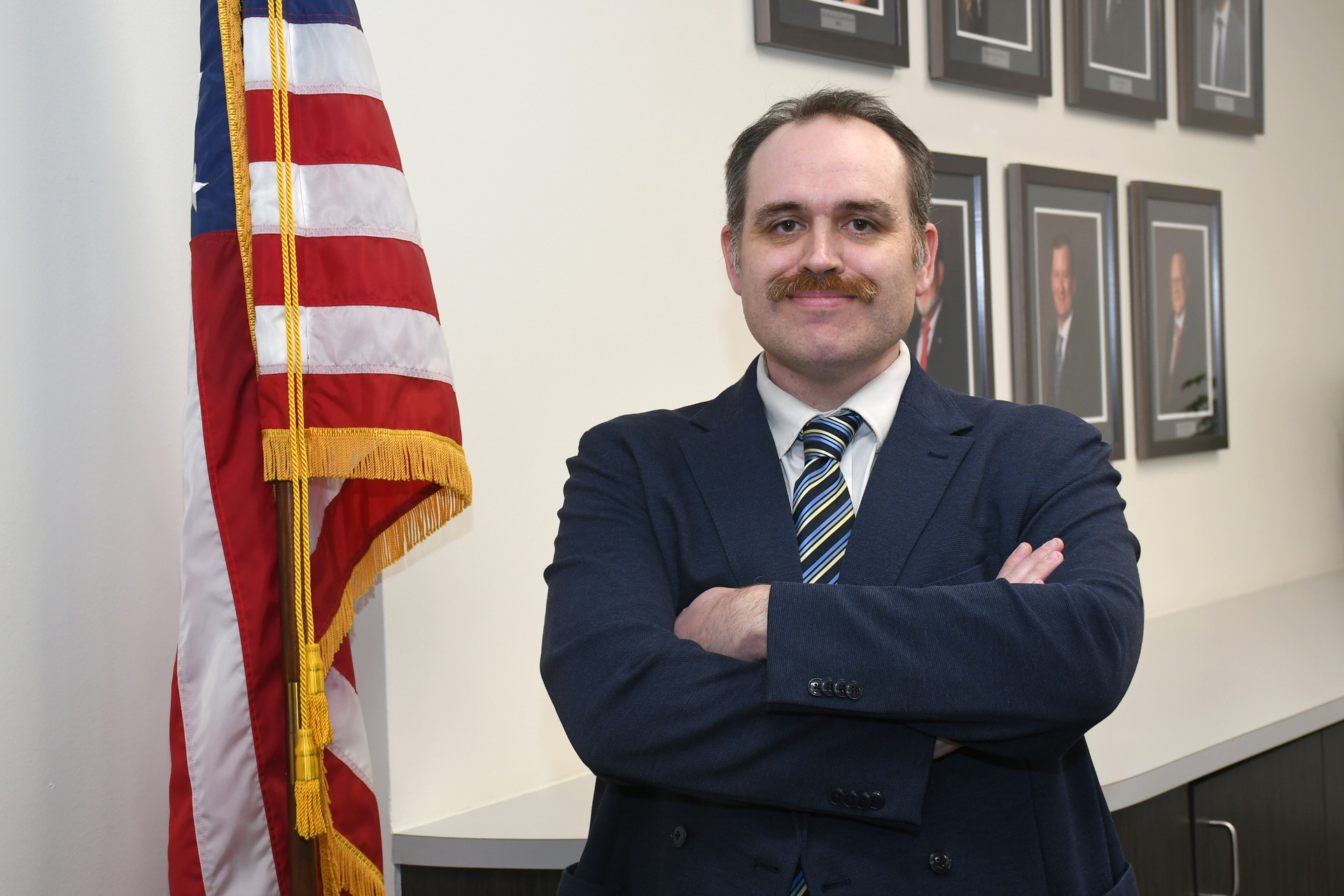
Will Parent
TCCTA President
C: 281-467-0496
|
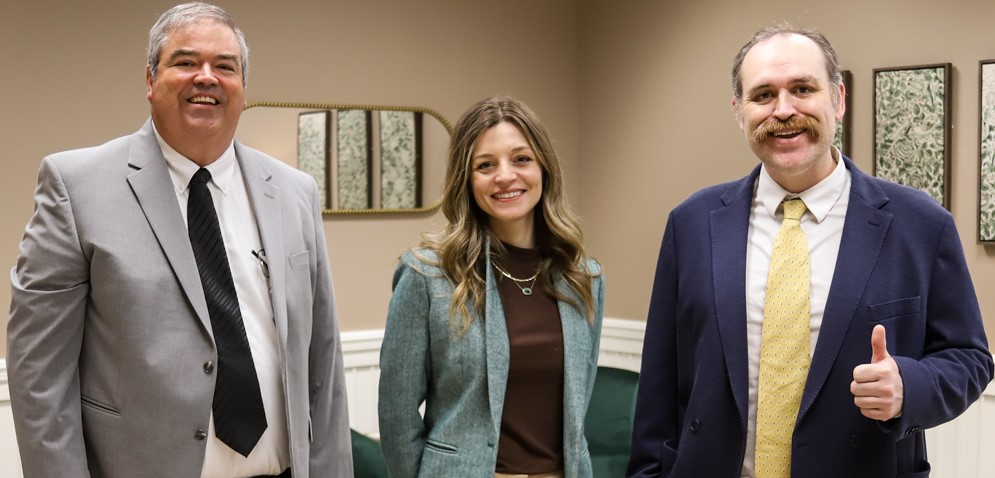
Panola College Visit
From left to right: Dr. Kevin Rutherford, President Dr. Jessica Pace, William Parent |
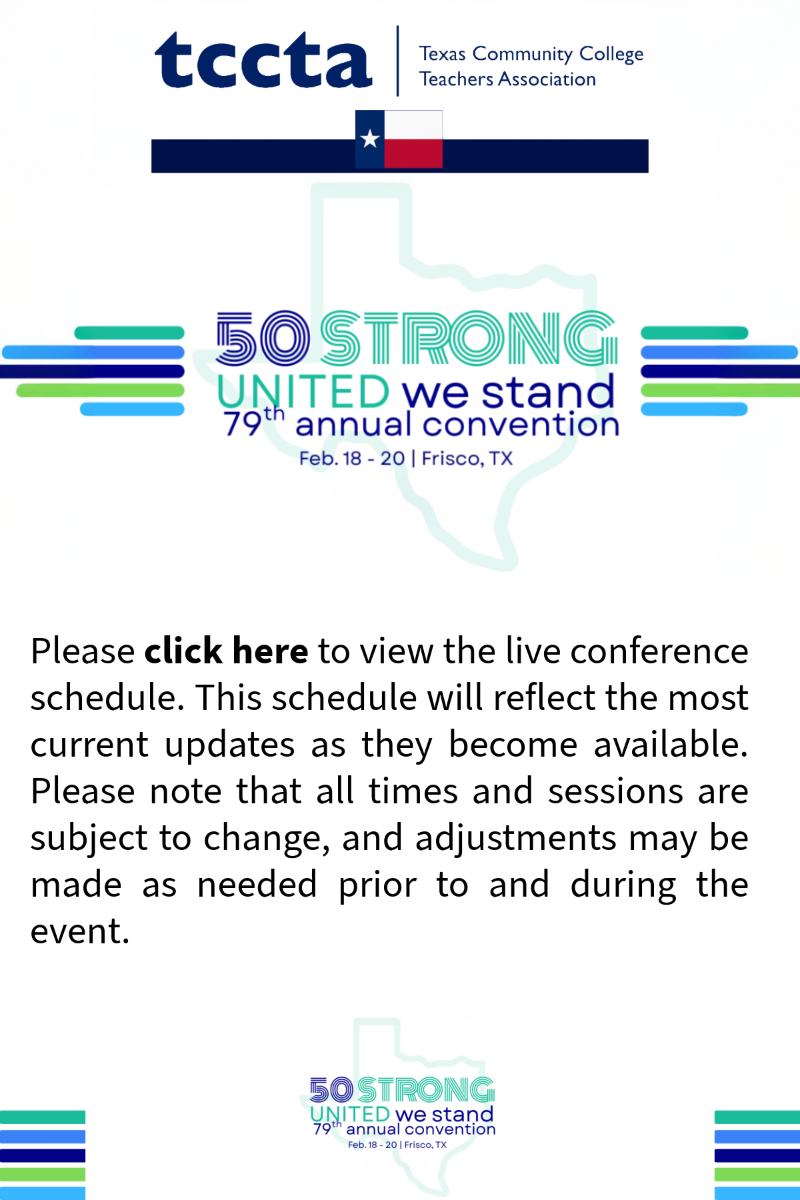
🎉 79th Annual TCCTA Convention
“50 Strong: United We Stand”
February 18–20, 2026 | Embassy Suites by Hilton | Frisco, Texas
The Texas Community College Teachers Association proudly invites you to the 79th Annual TCCTA Convention— a statewide celebration of collaboration, community, and the enduring strength of Texas educators.
🌟 About the Theme
As Texas’ 50 community college districts continue to serve diverse students and communities, we are reminded that our strength lies in unity.
“50 Strong: United We Stand” reflects our shared mission — to work together, lift one another up, and advocate for the power of community colleges across our great state.
Through collaboration, connection, and collective action, we remain stronger together.
🏫 Why You Should Attend
-
Connect & Collaborate with colleagues from all 50 districts across Texas.
-
Engage in sessions that empower you to lead, teach, and innovate.
-
Learn from inspiring keynote speakers and thought leaders.
-
Celebrate the impact of community colleges and the educators who make it possible.
📍 Location
Embassy Suites by Hilton Frisco Hotel & Convention Center
Frisco, Texas — a dynamic, welcoming city full of energy, entertainment, and inspiration.
TCCTA Annual Banquet Dinner - Buy your tickets before they're all sold out!
CLICK HERE TO PURCHASE BANQUET AND CONVENTION TICKETS
🗓️ Save the Date
February 18–20, 2026
Registration is open at www.tccta.org
💬 Stand Strong with Us
Join hundreds of educators, leaders, and advocates as we unite to strengthen Texas community colleges.
Together, we are 50 Strong. United we stand!
|
Experiences of Neurodivergent Faculty Members in Higher Education
By: Meredith L Martin, PhD
The conversation around neurodivergence and the classroom often focuses on students who are or identify as being neurodivergent, having mental disabilities, or have a mental illness. Academic and non-academic literature on the subject includes insightful information about how to understand and address the needs of neurodivergent students. The most beneficial aspect of this literature is how well it describes differences in neurodivergence and how to adapt to variations in nuances of experiences and perceptions. There is, however, another side to the conversation that does not get as much attention and that is the other half of the classroom relationship - the faculty members who also live with neurodivergence, mental disabilities, and mental illness.
Neurodivergent faculty members experience similar challenges as neurodivergent students when it comes to stigma and potentially difficult accommodation processes. They also have the added layer of balancing institutional expectations with the specifics of their neurodivergent conditions. Before diving into those challenges and experiences, I want to frame this conversation by providing a definition for what I mean by the term “neurodivergence,” which is an umbrella term that describes individuals whose brains operate different from the “norm” or different from those that society sees as neurotypical because of a wide range of conditions. Examples of neurodivergence includes conditions like autism, bipolar and similar disorder, post-traumatic stress disorder (PTSD), complex post-traumatic stress disorder (C-PTSD), attention deficit disorder (ADD), attention deficit hyperactive disorder (ADHD), and so on. It is important to note that people with these conditions might use other terms to describe themselves and those will change based on personal preference, but for this conversation I feel that neurodivergence incorporates the largest number people possible.
There are challenges that neurodivergent faculty face and one of the most impactful are those related to stigmas society holds about people who are neurodivergent. An article by Laura N. Sarchet titled “Experiences of Disabled and Neurodivergent Faculty in Higher Education: A Systematic Literature Review” published in a 2024 issue of the Journal of Disability Studies in Education summarizes academic literature that describes experiences by faculty members who are neurodivergent. One of the themes in the literature, according to Sarchet’s analysis, is how people treat neurodivergent faculty because of the stigma attached to their condition. In colleague-to-colleague interactions, faculty members described stigma-related experiences ranging from being treated differently in meetings to unintended microaggressions. In the classroom, faculty members reported experiences where students who are aware of a neurodivergent status of a professor expressed a belief that the professor lacks credibility. In response to these experiences and in an effort to reduce negative experiences, neurodivergent educators might present themselves as neurotypical by conforming to expectations that might not be in service to their well-being, hide their neurodivergent identity, or work harder to prove that they deserve their place in the education system and their expertise in their disciplines. Often times neurodivergent educators who disclose their conditions have to spend extra time self-advocating or educating those around them about their conditions. Self-disclosure also often comes as great risk to some individuals who find that their neurodivergent status impacts their ability to move forward in their careers or shift into positions with more responsibilities.
Another challenge neurodivergent faculty members face is balancing institutional expectations, which lean towards expectations of neurotypical individuals, with the aspects of specific neurodivergent conditions. For example, faculty members who experience heightened social anxiety might take extra steps or do extra emotional/cognitive labor to manage that anxiety when facing large, campus-wide meetings. In many instances, as Sarchet points out, neurodivergent faculty members who may not have official accommodations might go through processes to self-accommodate. For some neurodivergent individuals that might look like coming into work a couple of weeks early to prep courses so that they can focus on the emotional labor of managing neurodiverse conditions during busy in-service weeks or creating support systems with trusted colleagues who can provide encouragement or act as buffers when needed. For many neurodiverse faculty members, self-accommodation takes extra time and might put a strain on already limited emotional resources.
Despite the challenges of stigma and balancing institutional expectations with neurodivergent conditions, it is important to remember that neurodiversity can impact how faculty members teach and relate to students. Since neurodiversity is about how the brain processes information, that often shifts how an individual perceives the world around them. In many instances those different perceptions lead to brilliant insights about their subject matters, teaching methods, and even in how they are able to explain complex topics to students. Neurodivergent faculty members can lean into their own experiences as neurodivergent students and become positive influences and mentors to students who are also working towards similar goals.
As a faculty member who is also neurodivergent, I have experienced many of these challenges both in and out of the classroom. Because of those experiences I want to share some of the strategies that I use to create a healthy and supportive work environment for myself, colleagues, and students. First, I do the work to communicate effectively, openly, and honestly. I recommend finding trusted individuals who can provide encouragement and support. Communicate regularly about situations and experiences as they arise. Consider creating a language system or a code that allows for the communication of important neurodivergent states and work out plans of action to go with those codes. For example, if a certain neurodivergent condition includes sensory overload, overstimulation, or feeling overwhelmed, it might help to pick a word or phrase that quickly communicates that emotional or cognitive state and cues other people in the conversation to a plan of action, such as leaving the conversation for a few moments and going to safe, quiet space for a few moments to calm the limbic system. When it comes to self-disclosure, consider if the disclosure will be helpful or harmful.
Second, incorporate self-care into the workspace, including what my therapist calls the “ugly” self-care (i.e. setting boundaries). If possible, create spaces that support and enhance the positives of neurodiversity. Office spaces sometimes have harsh lighting that leads to overstimulation – consider bringing in lamps or getting as much natural light as possible. Keep healthy snacks in the office or extra medications on hand. Create physical spaces that encourage productivity and allow for the special insights that neurodiversity often allows for. Set boundaries when needed and communicate needs with chairs and deans (like taking a mental health day to recover from a particularly stressful event).
Lastly, lean into routine. My father taught me that living with neurodivergence often means battling internal struggles that drain energy and it is tempting to let things slide when we simply “don’t feel like it.” I do believe in listening to oneself and honoring when attention needs to go toward maintaining mental health, but there are also times when routine allows me to maintain stability and mental health. I have a routine that I follow weekly, which includes chunks of time that I dedicate to my students and reflecting on how to be better at my job. In times of struggle, staying dedicated to the routine is what kept me going. |
Hello Members,
The Resolutions Committee is in receipt of a proposal to amend the TCCTA Constitution. The proposal consists of five suggested amendments to the Constitution. For the proposal to move forward, 25 members are needed to sign the petition. This must be completed on or before November 15, 2025 in order for it to be discussed at the 2026 Convention.
The amendments are attached. If you support moving the proposal forward to be discussed at the 2026 Convention, you may sign the petition below.
Sign the Petition Here
Thank you for your consideration.
-Patrick Gilbert |
Proposed Amendments to the Constitution and Bylaws |
• Constitution - Article III, Section 5. Institutional Members. Any community, junior, or technical college in Texas which has been granted membership or candidacy for membership in the Commission on Colleges of the Southern Association of Colleges and Schools by a recognized accrediting agency is eligible for institutional membership in the Association.
Explanation –
Removing the phrase “in Texas” from Article III, Section 5 would allow institutions outside of Texas to become institutional members. TCCTA will always remain a Texas-based organization; however, given the Association’s history, size, and influence — and the absence of a comparable organization in other states — we are uniquely positioned to expand our reach and become a regional, if not national, leader. TCCTA already works with institutions that operate beyond Texas, so expanding our membership would allow us to broaden our impact and demonstrate the value of TCCTA to institutions across the country.
As a result of SB 530, the Southern Association of Colleges and Schools Commission on Colleges (SACSCOC) will no longer be the default accrediting body for Texas public postsecondary institutions. Therefore, it is necessary to remove the phrase “in the Commission on Colleges of the Southern Association of Colleges and Schools” from Article III, Section 5 and replace it with “by a recognized accrediting agency,” consistent with the language used in Senate Bill 530.
Source: https://www.capitol.state.tx.us/BillLookup/Text.aspx?LegSess=89R&Bill=SB530#
______________________________________________________
• Constitution - Article V Section 1. Fiscal Year. The fiscal year of the Association shall begin April 1 September 1 each calendar year and shall end March 31 August 31 of the next calendar year.
Explanation –
This amendment proposes changing the Association’s fiscal year from its current period of April 1 through March 31 to September 1 through August 31. Aligning the fiscal year with the Association’s membership year will improve operational efficiency and support more effective strategic and financial planning. A fiscal year that corresponds with the membership cycle allows the Association to more accurately project revenue and expenses, thereby strengthening the budgeting process and overall fiscal management.
______________________________________________________
• Constitution - Article V Section 2. Membership Year. The membership year of the Association shall begin September 1 each calendar year and shall end August 31 of the next calendar year. Membership shall be effective September 1 each year for members whose dues are paid by October 15; thereafter, membership shall become effective upon payment of dues.
Explanation –
The following sentence is unnecessary and should be removed: “Membership shall be effective September 1 each year for members whose dues are paid by October 15; thereafter, membership shall become effective upon payment of dues.” Providing retroactive membership offers no benefit to either the Association or its members.
____________________________________________________
• Constitution - Article VI Section 3. Term of Office. Elected officers of the Association shall be installed effective April 1 September 1 of even numbered years following their election in even numbered years. If the election should be held subsequent to April 1 September 1, then the elected officers shall be installed effective at the time of their election. Officers shall serve two-year terms which will end until March 31 of the calendar year following their electionAugust 31 of even numbered years or until their successors have been elected and qualified.
Explanation –
This amendment proposes revising the term of office for elected officers so that terms begin on September 1 of even-numbered years and conclude on August 31 of even-numbered years. Aligning officer terms with the academic and membership year will strengthen organizational stability, enhance strategic planning, and allow newly elected officers to assume their responsibilities at the start of a full operational cycle.
This timing is particularly important for TCCTA, as much of the Association’s work—including budgeting, committee appointments, legislative advocacy, and convention planning—follows the academic calendar used by Texas community colleges.
Establishing biennial terms that align with this cycle will provide continuity in leadership during legislative sessions and ensure smoother transitions between outgoing and incoming officers. In addition, having two-year terms will allow officers enough time to learn their roles and make meaningful contributions.
______________________________________________________
• Constitution - Article VII Section 1. State Office. A state office for the Association shall be established and maintained in the City of Austin, Texas.
Explanation -
TCCTA has not maintained a traditional physical office for several years, dating back to the tenure of Executive Director Richard Moore. Instead, the Association currently utilizes a storage unit in Austin as its “state office.” Having a state office was a huge expense ($6,000.00+ per month) and represented a significant portion of the budget. Advances in technology have significantly transformed how organizations operate, enabling TCCTA to conduct its business efficiently without the need for a permanent physical office. Therefore, Article VII, Section 1 should be repealed.
• Bylaws - Article III, Section 1. Nominations. (B) Nominations by Petition. Names of other candidates may be put before the membership upon submission by them, or in their behalf and with their written consent, of petitions bearing the signatures of at least 75 professional or associate members of the Association. Such nominating petitions shall be submitted not later than December 1 preceding the annual convention of the Association to the Chair of the Nominating Committee. Upon verification of the validity of the signatures, the names of candidates thus nominated shall be included on the official ballot, and biographical and professional data concerning such candidates shall be included in the TCCTA Messenger prior to the convention.
Explanation – Article II of the Bylaws explicitly grants voting privileges to both professional and associate members. The nomination of candidates by petition is an integral part of the Association’s democratic and electoral process and directly affects matters that ultimately come before the voting membership.
Permitting associate members to sign nominating petitions is consistent with their established right to participate fully in elections and business transacted by the organization. Excluding associate members from the petition process would create an inconsistency within the bylaws by allowing them to vote on candidates while denying them the ability to support or propose candidates for consideration.
Accordingly, including associate members among those eligible to sign nominating petitions ensures fairness, consistency, and alignment with the intent of Article II, which recognizes associate members as voting members of the Association.
• Bylaws - Article IV Quorum. A quorum for In the general session of the annual convention of the Association, a quorum shall consist of the number be twenty-five percent of the professional members and/or associate members in attendance, but not less than 200 present at the convention.
Explanation – The current quorum requirement establishes a fixed minimum of 200 members present at the general session of the annual convention. In recent years, overall convention attendance has declined, and not all registered attendees are able to participate in the general session. As a result, the Association has at times struggled to meet quorum, potentially delaying or preventing the conduct of essential Association business.
This amendment introduces greater flexibility by tying quorum to a reasonable proportion of the voting membership rather than a fixed number that may no longer reflect current participation patterns. A percentage-based quorum maintains democratic legitimacy while ensuring the Association can conduct business efficiently and responsibly, even when attendance fluctuates.
The proposed change better aligns the quorum requirement with actual member engagement, supports continuity of governance, and reduces the risk of organizational paralysis due to circumstances beyond the Association’s control. |
Bridging the Gap: Practical Literacy Strategies
for Teaching Neurodivergent Students
By: Erin Hill |
Some years ago, I taught a young woman in English 1301 who, despite her creativity and intelligence, really struggled in class, especially with managing due dates and deadlines. She confided in me toward the end of the semester that due to her autism spectrum disorder diagnosis, managing her schoolwork on her own now that she had graduated from high school and no longer had special education teachers and social skills coaches was more difficult than she had realized.
“The next time I take English 1301,” she told me wistfully, “I am going to do things differently.”
I had a similar realization during our conversation, that the next time I had a student on the spectrum, I too was going to do things differently.
My student with ASD was not alone in her challenges trying to navigate academic work without the structure of an IEP and the familiarity of a public school system. More neurodivergent students are enrolling in college every year, and community colleges are at the front lines of this shift. These students bring fresh perspectives, extraordinary abilities, and new ways of thinking but their college completion rates remain far lower than those of their neurotypical peers.
As Temple Grandin, the beloved professor and Autism advocate, has said, “The worst thing a parent can do is nothing.” I’d argue the same is true for educators. The worst thing we can do is to ignore the growing number of students whose brains work differently (and often brilliantly!) and to fail to make even basic adjustments that could make all the difference in their success.
Bridging What Gap?
When we think about “literacy,” we usually think about reading and writing. But one of the dictionary definitions of literacy is “competence or knowledge in a specified area.” For many neurodivergent students, especially those on the autism spectrum, the literacy gap isn’t about reading words on a page; it’s about social and relational literacy.
These students may struggle to interpret tone or body language, to read a room, or to follow the unwritten rules of college culture. They often process more sensory and cognitive input than neurotypical students. Some studies suggest as much as 40% more even at rest which means that just being in a classroom can feel like trying to study in the middle of a rock concert.
Our job, as college educators, is to bridge that literacy gap: to translate academic and social expectations into ways that help neurodivergent students access, not just endure, higher education.
Neurodivergence 101
Before we can teach neurodivergent students well, we must understand what the term means. Neurodivergent refers to individuals whose neurological development and functioning differ from the societal or medical norm. This includes conditions like autism, ADHD, dyslexia, OCD, and more.
Autism spectrum disorder is a prominent diagnosis within that larger umbrella of neurodivergence. (The DSM5 manual updates in 2013 changed the diagnosis formerly known as Asperger’s Syndrome to ASD.) The National Institute of Mental Health reports that about 1% of the world’s population is ASD, which equals around 75 million people. That’s something like 1 in every 36 children and 1 in every 45 adults.
In contrast, someone who is neurotypical falls within the average range of functioning and thinking. The neurodiversity paradigm, the framework that supports these terms, views these variations not as deficits to be “fixed,” but as natural forms of human diversity.
Some people often assume they can spot neurodivergence by surface traits like awkward eye contact or a particular verbal fluency, but that’s a mistake. Every neurodivergent person presents differently. Girls and women, for example, are often underdiagnosed because they “mask” symptoms so effectively. And it isn’t just women who feel the need to mask their symptoms. Many neurodivergent people try to blend in to avoid bullying, rejection, or negative judgments.
Tony Attwood, a British psychologist who has written extensively about Asperger’s Syndrome, once explained the toll that masking can take on a neurodivergent person, noting, “It is emotionally exhausting to constantly observe and analyze social behavior, trying not to make a social error or be perceived as different.” Attwood estimates that up to 85% of those with autism also have an anxiety disorder. This anxiety and exhaustion carry into adulthood, and many of our neurodivergent students arrive in our classrooms carrying trauma with them, plus tenacity.
Community College: The Front Door of Opportunity
We have some data about ASD students pursuing higher ed after high school from the National Longitudinal Transition Study-2. Around 47% of young people with ASD go on to a post-secondary program within 6 years of high school graduation, but only 35% of those who enrolled in those programs actually earn a degree.
Community colleges are uniquely positioned to serve neurodivergent students and roughly 81% of those college students with ASD referenced above attend community colleges, yet only about a third of those students, our students, complete a degree.
The reasons are complex: the sudden loss of IEP support, difficulty self-advocating, executive functioning challenges, and social or sensory overwhelm are some of the reasons for failure to graduate or complete a program. Many neurodivergent students want to succeed, they just don’t always know how to navigate the invisible systems of college life.
For community college faculty, the challenges are real too. We’re already stretched thin. We may have little training in neurodiversity or feel unprepared to handle behavioral issues, emotional regulation, or accommodation requests. But this is also an opportunity. When we learn how to teach neurodivergent students more effectively, we become better teachers for all our students. When our community colleges better support neurodivergent students, they better support all students.
What Doesn’t Work
Let’s start by clearing out a few common traps that it’s wise to avoid when learning about and teaching neurodivergent people.
Students on the spectrum often crave structure but resist control. Sometimes they need to be right, even if they’re not. A battle of wills, however, only increases anxiety and shuts down learning, whether in the classroom or online. It’s important for community college instructors to understand that sometimes the students who are most in need of help and support may also be the students most difficult or off-putting to help.
A 19-year-old college student may read, write, and think at a college level but emotionally process like a 14-year-old. Adjust expectations for maturity without lowering academic expectations because our neurodivergent students may not be processing or understanding at the age on their birth certificate.
Poor handwriting or nontraditional formatting isn’t a moral failing and doesn’t have to an academic failing either. Many neurodivergent students struggle with fine-motor coordination or formatting minutiae. We can focus on ideas and content before form without compromising SLOs.
When we have students on the spectrum in our classes, we may need to change the way we teach and try some new approaches. As Temple Grandin reminds us, “Good teachers understand that for a child to learn, the teaching style must match the student’s learning style.” Instead of bemoaning the extra work, we can recognize that these pedagogical remodels actually help us to improve too.
What Does Work: Six Practical Strategies
1. Announce Yourself as an Ally.
Let students know explicitly that your classroom is a safe place to ask questions, to need clarification, or to learn differently. Sometimes the most powerful accommodation is an open invitation to communicate.
2. Teach from the Specific to the General. Autistic and ADHD thinkers tend to process information concretely. They often excel at detail but struggle with abstraction. Grandin describes this approach as “interrupted inductive reasoning with deductive reasoning out of reach.”
Regardless of the subject matter we teach, we can help students build bridges from concrete to abstract. Grandin’s tips for improving reading comprehension across disciplines for ASD students are to 1. Start with the concrete, 2. Mix in abstract questions, 3. Provide a variety of examples, and 4. Deconstruct complexity. Repetition and structure are our secret teaching weapons.
3. Harness Intrinsic Motivation.
Grandin also notes, “Students on the spectrum need to see concrete examples of really cool things to keep them motivated to learn.” If a student loves American history or video games, use those interests as entry points for writing prompts or research topics. Interest sparks focus; focus sparks learning.
In one of my composition classes this semester, one of my students on the spectrum actually decided to research and write about the topic of invisible disabilities after a class discussion in which he shared his diagnosis with other students in the class and learned that they were supportive and interested in his situation. He has harnessed his lived experience into successful class work.
4. Model Flexibility and Teach It. We talk a lot about teaching flexibility and we probably expect flexibility from students when problems arise, but students learn it best when we model it as well, even at the community college level. Be willing to adjust a deadline, vary an assignment format, or find alternate ways to demonstrate mastery. Flexibility from us helps students practice flexibility themselves.
5. Hold High Expectations -- with Support. Neurodivergent students rise to expectations when they feel supported. Structure and scaffolding make high standards attainable. When we offer clear rubrics, step-by-step models, and explicit feedback, our neurodivergent students are more likely to be successful.
I saw this successful approach firsthand as a parent of a student on the spectrum when my own ADHD/ASD son was taking an Introduction to Sociology at the campus where I teach. His neurodivergent brain always struggled with turning in work on time as a high school student which meant I experienced pretty consistent secondhand stress as I tried to help him manage his calendar.
When he started taking community college classes, I told him that he was going to have to turn over a new leaf and helped him connect with some on-campus resources. Still, that old stress returned at the beginning of the semester when he told me that he was already behind in his SOCI class because he hadn’t turned in the weekly chapter report the day before and then learned from the prof that no late work was accepted. I sighed (to myself) and thought that it was going to be a long semester for both of us.
But imagine my surprise and joy the following week when I came home to find my son working on his weekly chapter report before it was due, a report he turned in on time. When I asked him what had changed, he told me, “Well, when I realized I couldn’t turn in any late work, I knew I had to get the assignment done.”
So simple, yet so profound. It helped, too, that the Sociology instructor’s instructions and policies were clear and consistent. Every week students had to write a chapter report and it was always due at the same time. That semester, my son was able to get his work done and learn something about himself in the process.
Changing the Culture
In NeuroTribes, his landmark history of Autism, journalist Steve Silberman writes that autism’s greatest hardships “are not symptoms but hardships imposed by a society that refuses to make basic accommodations.” That’s as true in community colleges as anywhere else.
As community college instructors, we can start to change that culture in our own classrooms by modeling acceptance. When we respond to a student’s outburst with calm curiosity instead of judgment, our other students learn empathy. When we highlight the strengths of neurodivergent thinkers: creativity, persistence, systems thinking, we teach everyone that difference is not deficiency.
Silberman found that the best teachers of neurodivergent students “were willing to meet them halfway instead of insisting that they act like everybody else.” That’s the heart of this gap bridging work: meeting students halfway and showing the rest of the class how to do the same.
An Opportunity, Not an Obligation
Teaching neurodivergent community college students isn’t a burden, it’s an opportunity. And that opportunity motivates us to build clear structures and routines. It challenges us to communicate assignment instructions more precisely. It encourages empathy, flexibility, and creativity in our students and in ourselves.
Over the last twenty years since my now young adult son first received his various ADHD/ASD diagnoses and started school, and then struggled in school, then struggled some more, I’ve tried to become the kind of teacher I always hoped he’d have: one who sees the student first, not the diagnosis. I learned from the wonderful teachers who helped to shepherd him, to cheerlead his efforts, to praise his successes, and to listen to his frustrations about how to connect with my own neurodivergent students. Frankly, I’m a better teacher because of him and because of them.
The future of higher education and community colleges will be increasingly neurodiverse. Our classrooms already reflect that. The question is whether our teaching will rise to meet them. |
TCCTA has an updated website!
Give us your feedback on the new site: info@tccta.org |
|
Once you’ve had a chance to review the candidates, please visit our State Officers Election Google Form and cast your vote! You also have the option to write in a candidate.
Voting will remain open through the convention, and the winners will be announced at the conclusion of the 79th Annual Convention.
Good luck to all the candidates! |
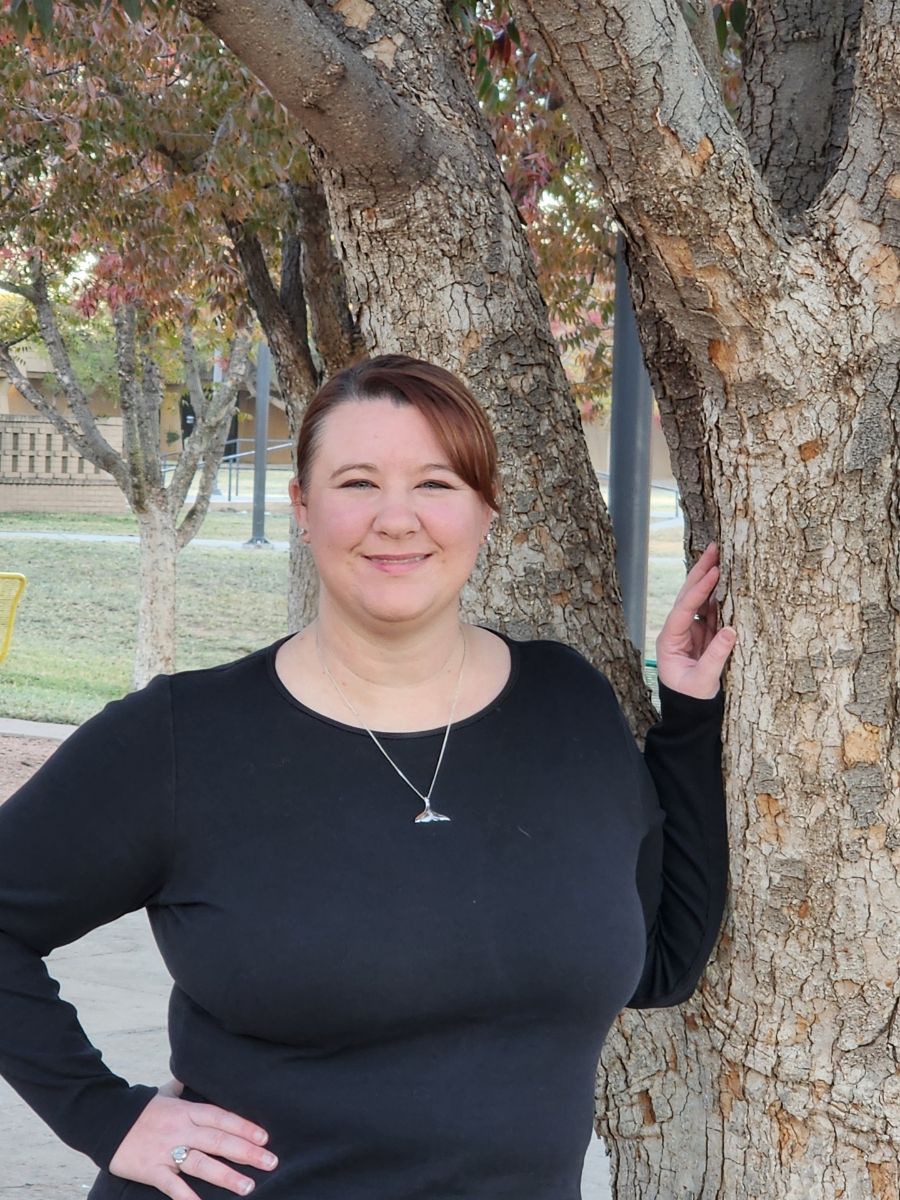
President-Elect — Rachel Hunt
Over the past five years, I have actively contributed to institutional effectiveness, academic quality, and statewide professional engagement through several leadership roles. I played a key role in major college-wide initiatives, including the Pathways redesign, Angelina College’s participation in Achieving the Dream, and service on the Scholarship Committee, Curriculum Committee, Beautification Committee, and as the Lead for the Associate of Arts in Teaching (AAT) program. I also served as Co-Chair for the CASP Conference and held multiple executive leadership positions within TxCRLA, including Vice President and President, supporting statewide collaboration in developmental education and the professional growth of faculty. In addition, I strengthened academic program alignment and future educator preparedness through active service on the Stephen F. Austin State University Educator Preparation Program Advisory Council and as a member of the East Texas Teacher Pathways partnership. These roles expanded collaboration with regional school districts and university partners while ensuring strong transfer pathways and high-quality preparation for AAT students. I expanded professional development and peer engagement across Texas community colleges through my role as Chair of the TCCTA Membership Services Committee, increasing faculty participation, statewide visibility, and opportunities for cross-campus collaboration. These experiences reflect a sustained commitment to institutional service, academic leadership, and the advancement of student success and faculty engagement at both the college and state levels.
I appreciate the opportunity to be considered and remain committed to supporting the mission, values, and continued growth of TCCTA. I look forward to contributing wherever my experience and strengths can be most useful to the Association and its members.
Please comment on your own vision regarding the future of our Association. What specific changes do you think are needed in the manner in which the organization relates to its members and in the general organizational philosophy and traditional practices of the Association?
My vision for the future of TCCTA is to strengthen our role as a statewide leader in professional learning, advocacy, and community building for Texas community college educators. A key priority is reaching and engaging new faculty and staff across the state, ensuring that they view TCCTA as an essential and supportive professional network. We can deepen member engagement and build stronger membership by offering more accessible, year-round professional development and by modernizing our communication strategies. Strengthening collaboration with statewide partners and thoughtfully updating traditional practices will help us remain relevant and responsive to the evolving needs of our members. Overall, I envision an Association that honors its legacy while embracing innovation to support faculty and advance student success across Texas. |
Vice President — Terry Gilmour
Honors Program - Director, Advisor and Division 1 Coordinator - Phi Theta Kappa, American Political Science Association Governing Council and Chair of the Teaching & Learning Policy Committee (2020-2023), Secretary/Treasurer for the Southwestern Political Science Association (2020- present), Member of the Legislative Affairs Committee - TCCTA.
As a member of the executive council for the American Political Science Association which represents over 11,000 members, I had the opportunity to be the only community college council member and worked hard to be sure we were relevant. For the 2023 annual meeting, we had to navigate a hotel workers strike causing us to move the venue completely to the convention center in Los Angeles. I chaired the Teaching & Learning Policy Committee and have since chaired the Teaching & Learning Conference (2025) so I have experience. I have also been on the governing board for the Southwestern Political Science Association and we have been working to revitalize that conference as well under the Southwestern Social Science Association umbrella, having seen a decline in participation. I would be honored to represent the West Texas area of Texas.
Please comment on your own vision regarding the future of our Association. What specific changes do you think are needed in the manner in which the organization relates to its members and in the general organizational philosophy and traditional practices of the Association?
I have been a member of TCCTA for the past 25+ years and have served on the Legislative Affairs committee three different times including the present. I have attended all of the annual meetings and actively participate in the government section panels. I can remember when TCCTA was a robust and vibrant conference and I have witnessed its decline, especially in terms of numbers attending the conference. Texas is so fortunate to have its own association representing community college faculty as compared to many of the other states, and we need to work hard to be sure that it remains a voice for community colleges. |
Treasurer — Don F. Davison
Please comment on your own vision regarding the future of our Association. What specific changes do you think are needed in the manner in which the organization relates to its members and in the general organizational philosophy and traditional practices of the Association?
I think the most important goals for the organization are to continue our efforts to increase membership, and maintain our lobbying efforts. And with our lobbying efforts, to coordinate them among TCCTA schools.
If re-elected, I will continue the work of shifting the financial statements from a cash basis of accounting to an accrual basis, continue the development of an accurate TCCTA budget, and oversee the proper allocation and safeguarding of the Association's assets. |
Secretary — Doug Richey
Faculty Senate - Treasurer, Secretary, Vice-President, President, TCCTA Campus Representative, TCCTA Member for 48 years
Please comment on your own vision regarding the future of our Association. What specific changes do you think are needed in the manner in which the organization relates to its members and in the general organizational philosophy and traditional practices of the Association?
Diligently work to involve enthusiastic members to serve in leadership roles to engage with the Executive Committee, Campus Representatives and all eligible community employees to build a large, cohesive and participatory organization promoting the role and importance of the community college.
If elected, I will serve passionately our members and colleges |
|
|









.jpg)