Looking for news & events? Scroll down! |
NC Global Health Event Recap
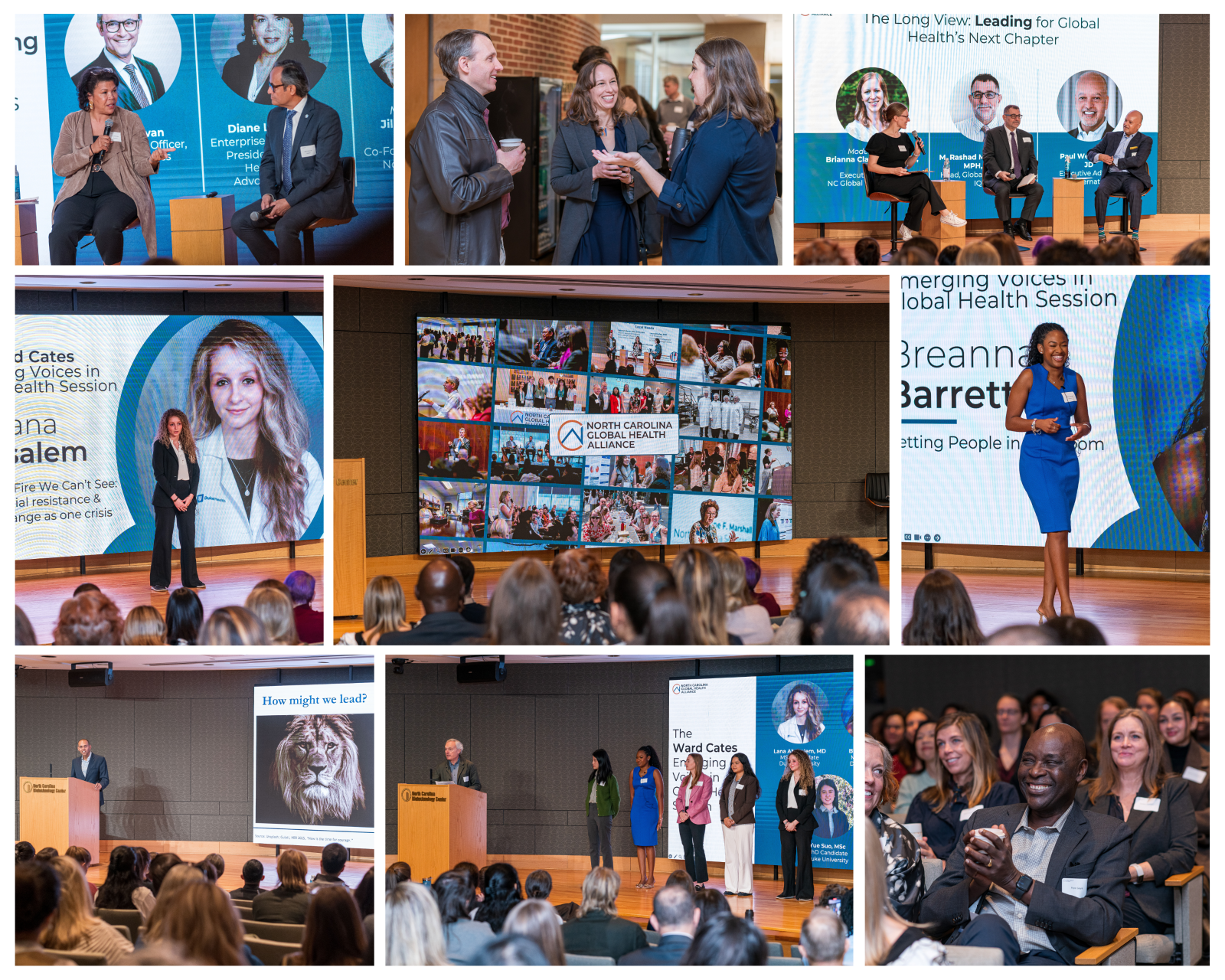
The 2025 North Carolina Global Health Alliance Fall Event brought our community together at a moment when global health is rapidly shifting, and the energy in the room was undeniable! More than 150 practitioners, students, policymakers, and partners gathered to reflect on an era of transition and to imagine a path forward rooted in collaboration, courage, and hope.
Throughout the morning, speakers challenged us to confront the complexities of global health today: evolving disease burdens, mismatched funding priorities, shifting geopolitical realities, and the urgent need for truly community-driven solutions.
Many lessons have stayed with us:
-
-
- Dr. Rashad Massoud reminded us that quality improvement often thrives in the most constrained environments. “Often, the less well resourced the system is... the more likely we are to get better results.”
- Paul Weisenfeld shared leadership lessons for turbulent times: 1. Be the rock in the storm, but be authentic; 2. People crave information and communication in an environment of uncertainty, and remember, telling people 'I don't know' is communicating; and 3. don’t be tied to your structure, you have to be agile and ready to pivot.
- Diane Lynn issued a call to action: “Do what you can.” Her story of Ukrainian nurses training in North Carolina, and immediately sharing new knowledge back home despite the burden of guilt, was a powerful reminder of what courage looks like in practice.
- Vafa Akhavan urged us to cut through the noise, focus on the people we serve, and remember his father’s wisdom; decide who you want to be, live in a way that reflects it every day, and have the courage to face the consequences of living that life.
- Dr. Krishna Udayakumar closed the day with an honest yet hopeful look at the global health of the future. Our systems were built for the crises of 25+ years ago, our needs have evolved, but much of our spending hasn’t and it’s time to act boldly and align strategies with today’s realities.
Storytelling emerged as a central theme, echoed most powerfully by our Ward Cates Emerging Voices in Global Health speakers: Dr. Lana Abusalem, Breanna Barrett, Anoushka Das, Yue Suo, and Lucy Tantum. These five rising leaders delivered TED-style talks on antimicrobial resistance and climate change, stigma reduction, low value care, creative evaluation, and the importance of centering - and truly hearing - lived experience. Their optimism, insight, and courage reminded us that the future of global health is not only bright, it is already taking shape.
We’re grateful to everyone who joined us, contributed to the conversation, and helped create such an honest and hopeful space. Thank you! |
|
Thank you to our sponsors!
RTI International
Atrium Health
Duke Sanford School of Public Policy
Mastro Global LLC
NC Biotech Center
Head Global LLC
Don't forget! Head Global has offered our conference attendees a 30% off discount code on all their offerings; from LinkedIn reviews to career coaching, don't miss this opportunity! Didn't write down the code? Email us at members@ncglobalhealth.org |
Put your hands together for
Impact Global Health Alliance
NCGHA member organization Impact Global Health Alliance was recently selected as an awardee of Melinda French Gates' Action for Women's Health. They were identified as one of 80 awardees from over 4,000 organizations from 119 countries, offering solutions across the lifespan for women. This investment will help them grow their impact, reaching more mothers and their children worldwide. Their goal is a world free of unnecessary suffering, especially for women and children. Read more about this exciting news here. |
Join us in welcoming our newest member
World Pediatrics
World Pediatrics is a nonprofit organization that transforms access to advanced pediatric healthcare by delivering life-changing care to children in need, empowering local medical professionals, and strengthening health systems for long-term sustainability. Since its founding, World Pediatrics has connected more than 28,000 children from over 40 countries with critical care, training, and resources. Their mission is to heal more children, in less time, by transforming access to advanced pediatric healthcare. Read more here! |
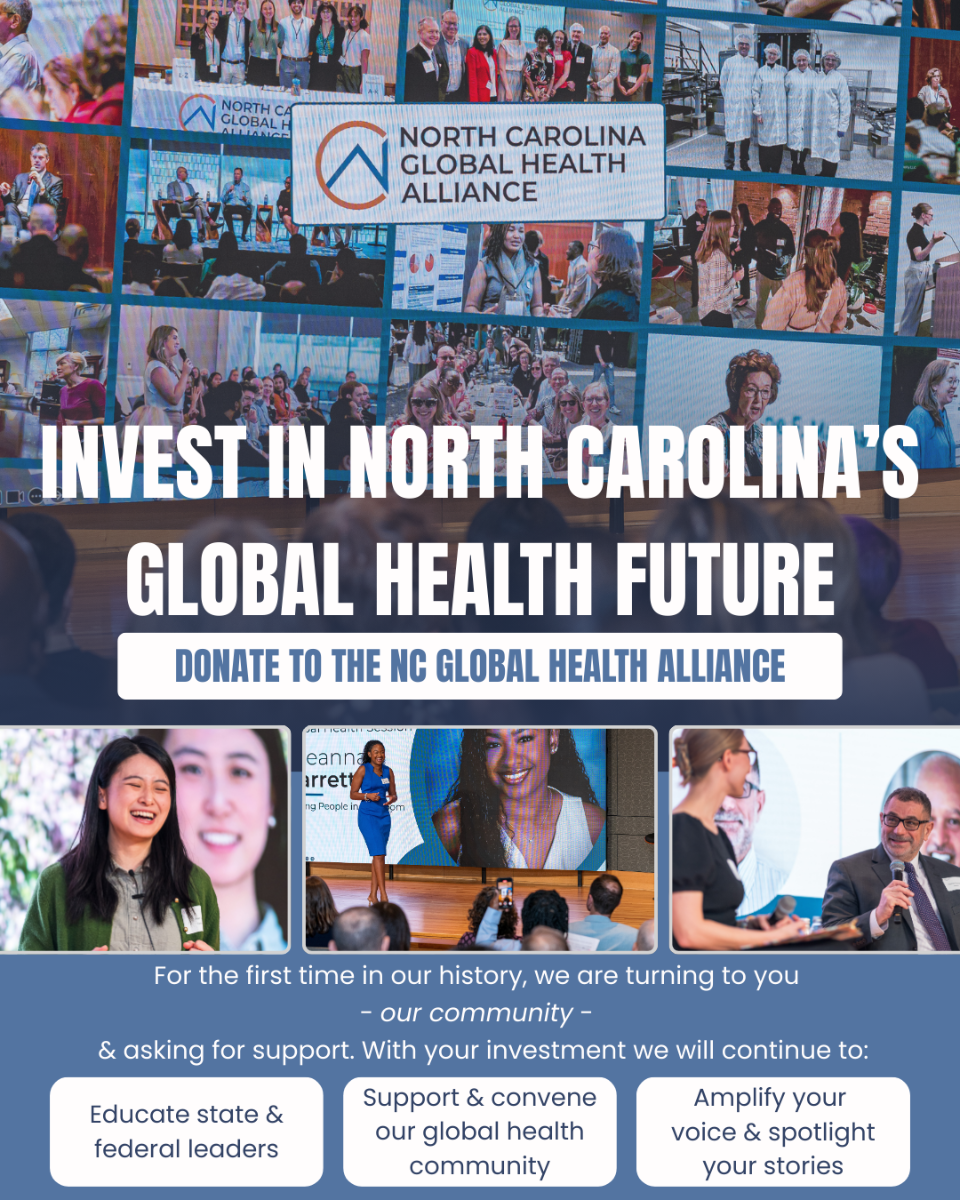
Since January 2025, following sweeping federal funding cuts and the dismantling of USAID, our North Carolina global health community has faced tremendous challenges. In response, the NCGHA has stepped up as a leading voice for global health.
Faced with an unprecedented funding landscape, we are coming to our community for the first time in our history to ask for your support. We invite you to invest in the North Carolina Global Health Alliance and help ensure North Carolina's Global Health Future.
Donate to the North Carolina Global Health Alliance |
Duke Global Health Institute
Global Health After the Breakpoint: Evidence for What Comes Next?
Tues, Dec 2| 10:00 am - 11:30 am ET | Webinar
2025 has been a breakpoint for global health. Aid donors have slashed billions in funding, triggering catastrophic impacts. Amid these cuts, the global health system faces cascading shocks including geopolitical fragmentation, a retreat from multilateralism, climate-driven crises, massive human displacement from conflicts, and debt crises in many low- and middle-income countries that limit domestic health investments. There’s no going back to the ‘old’ global health. But what should come next? This webinar, jointly sponsored by the Duke Center for Policy Impact in Global Health, Itad and PLOS Medicine, dives into the evidence: What parts of the current system are delivering real impact—and what’s failing miserably? What should we preserve, overhaul, or abandon altogether? Join us for a timely, evidence-driven discussion on how to rebuild global health for a more resilient, equitable and sustainable future. Register here. |
Consortium of Universities for Global Health
Virtual Global Health Week
Dec 2 - 4 | Virtual
Join CUGH for a series of 16+ interactive online webinars. Engage with global thought leaders and explore innovative solutions to address the most pressing global health challenges of our time. Read more and register here. |
Consortium of Universities for Global Health
Conference: The Future of Global Health
April 9 - 12 | Washington DC
Join CUGH for their annual conference to address current and future threats to global health, sustainable development, and identify how global health can be more impactful, equitable, and effective. The event includes 220+ speakers, 500+ abstracts, 45+ sessions, 12+ workshops, special sessions, a film festival, and more. Check it out here. |
NOTUS article on North Carolina & Federal Cuts
The NCGHA recently spoke to a reporter from NOTUS about how federal cuts have disproportionately impacted North Carolina and North Carolina's 4th Congressional District. Read about it here. |
New film & article on the impacts of USAID closure
"Rovina's Choice" Documentary
The New Yorker recently shared a short documentary, “Rovina’s Choice,” which tells the story of the ongoing effects of the sudden end of US foreign aid through the plight of one mother in Kenya trying to save her daughter from sickness and starvation. AVAC worked with the documentary team, as well as American and local journalists, to tell the story. The video is accompanied by an article written by former Assistant Administrator of the US Agency for International Development (USAID) Dr. Atul Gawande. Read & watch here. |
North Carolina Institute of Medicine
NC Medical Journal: Halfway to Healthy NC 2030
2025 marks the halfway point in the decade—halfway between the original release of the Healthy North Carolina 2030 report and the deadline for the state’s health improvement targets. Just released, Volume 86, Issue 3 from the North Carolina Medical Journal explores the Healthy North Carolina 2030 report, progress made over the last 5 years, and challenges that remain as we approach the end of the decade. In this issue you will also find original research on COVID-19-driven changes in contraception placement, impacts of race and poverty on health in the southern Appalachian region, and diabetes-specific barriers to care among Hispanic Americans. |
Looking for job opportunities? Don't forget to follow us on LinkedIn! |
|
|