Prentiss Charney fellows, Smithsonian, events, and more
If you're having trouble viewing this email, you cansee it online.
Coordinated by Rethinking Schools and Teaching for Change.
Prentiss Charney Fellows
Introducing the 2026–2027 Cohort
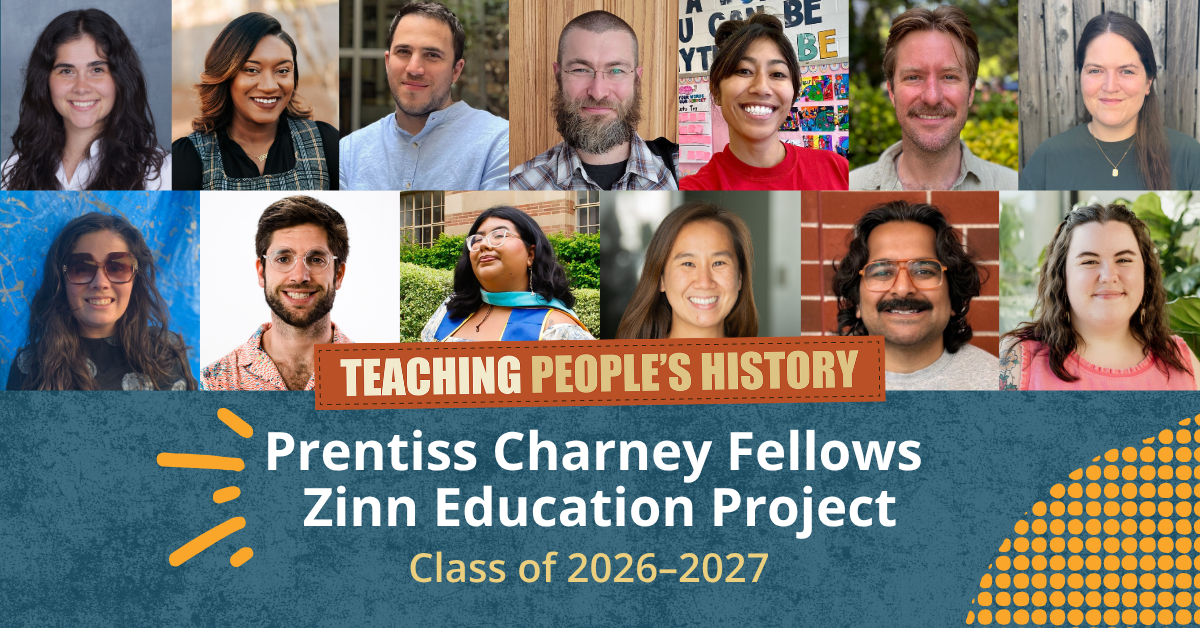
We are thrilled to announce our third cohort of Zinn Education Project Prentiss Charney Fellows — 13 passionate and committed education activists. The fellowship offers support for a cohort of people’s history educator leaders to study, learn, and organize together.
The fellows will meet for six sessions over the course of 18 months, beginning in August 2026. This cohort will focus on writing K–12 curriculum. Fellows will meet to elaborate and receive feedback on their projects, and work to field test, publish, and share their curricula.
What unites their projects — and all Zinn Education Project lessons — is the conviction that young people should be given opportunities to comment and act upon the world they have inherited. Students are not passive recipients of historical knowledge; like all of us, they are historical actors with the power to read the world and bend its course toward justice.
Below are the educators selected for this third cohort of the fellowship.
Mueze H. Bawany, HS English and seminar teacher, Chicago, Illinois
Francesca Caruncho, 3rd-grade teacher, New York, New York
Eric Fishman, HS humanities teacher, Boston, Massachusetts
De’Ana Forbes, HS history and African American studies teacher, Lilburn, Georgia
Ross Irons, ES dual-language English language arts teacher, Washington, D.C.
Julia Kirkpatrick, HS English language arts teacher, Portland, Oregon
Kate Merwin, MS social studies teacher, Tacoma, Washington
Mel Molina, HS ethnic studies and history teacher, Los Angeles, California
Kurt Ostrow, MS/HS English teacher, Philadelphia, Pennsylvania
Alexandria Rigonan, HS history teacher, Detroit, Michigan
Courtney Wai, education and public programs manager, Densho, San Antonio, Texas
greg wickenkamp, doctoral student and youth worker, Iowa City, Iowa
Hannah Zieve, HS history teacher, Philadelphia, Pennsylvania
Educators are at the center of battles over what U.S. history children will learn and the future they will create. We face a new McCarthyism: book bans, laws restricting what educators can teach about white supremacy, efforts to conscript school personnel into anti–LGBTQ+ persecution, and more. The goal is to enforce an unjust, unsafe status quo. The stakes could not be higher.
The right wing uses its immense wealth and the complicity of the mainstream press to fan the flames of bigotry and repression. To fight back, the Prentiss Charney Fellowship builds a network of educators who teach, write, and organize. We have far more applicants for the fellowship than we have funds to support it.
We also celebrate the work of prior Prentiss Charney Fellows. Here are stories from the fellowship’s previous years.
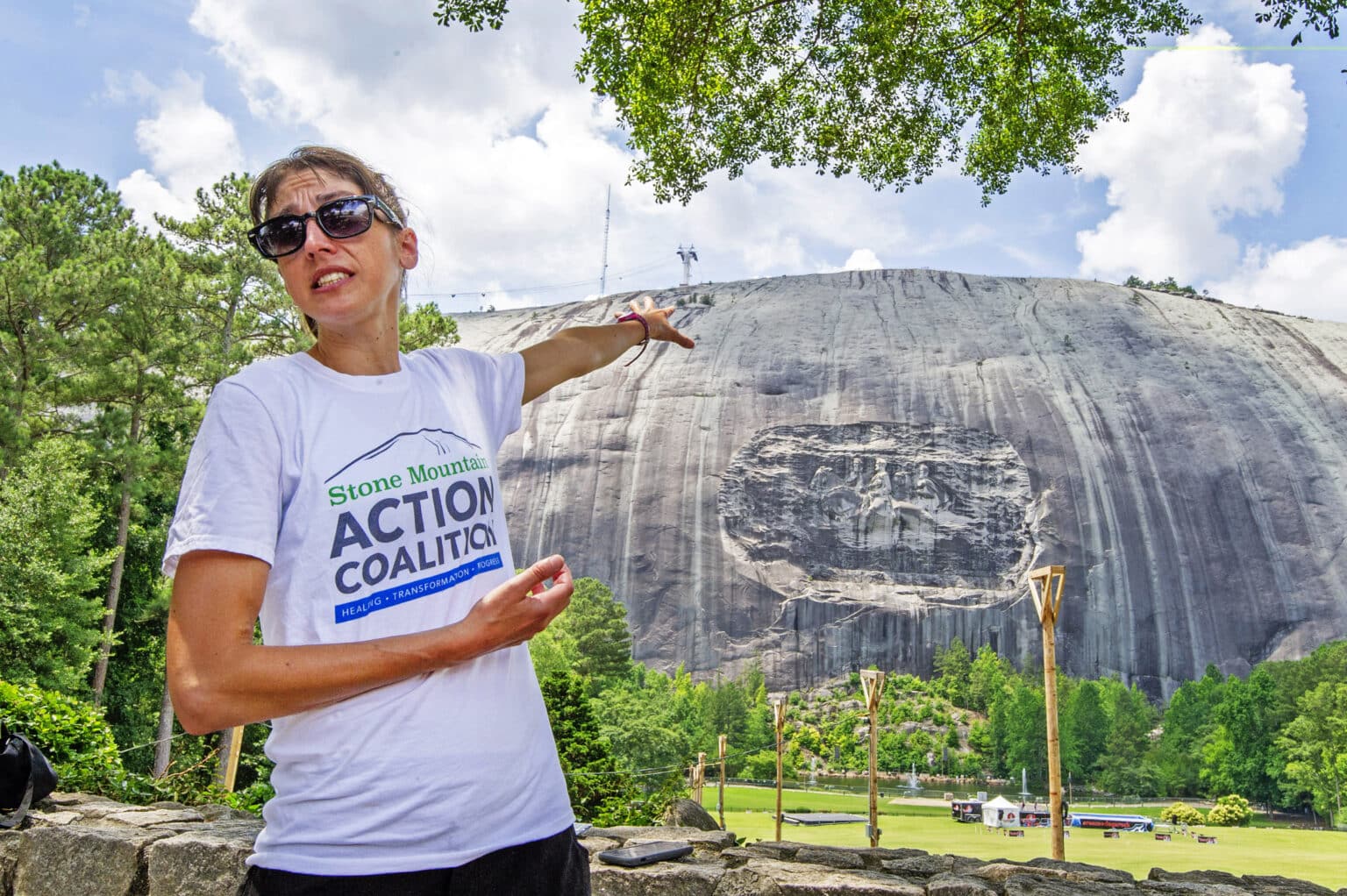
Sally Stanhope helped students investigate how citizens of Shermantown, an African American community in the shadow of the world’s largest Confederate monument, mobilized a variety of tactics to thrive despite threats to their community’s safety and wellbeing.
Tamyka Morant developed a unit on globalism examining Black pride movements across the Americas and Caribbean, documenting how justice-centered pedagogy cultivates critical consciousness and supports collective liberation.
Looking back on their time in the fellowship, past fellows reflect on what the experience has meant to them:
I’ve learned through my fellowship that there is a deep yearning for justice, equity, and solidarity among educators. — Sundjata Sekou, Irvington, New Jersey
The fellowship has focused my thinking and strengthened my resolve.— Nicolle Fefferman, Valley Village, California
We are not just teaching students skills, we are teaching them to be bold and imaginative leaders with the courage to build a society we all deserve. — Suzanna Kassouf, Portland, Oregon
My participation in the fellowship has been energizing, focusing, and community-building. It gave me time to step back from my “day-to-day” of leading my school and refine my purpose for doing the work that I do. — Zachary Roach, Camden, New Jersey
My participation as a fellow has empowered me to view my work through a lens of hope. This is the first time I’ve been invited into a space of true connection with like-minded educators. Finally I know for sure I’m not alone. — Hope Koumentakos, Silver Spring, Maryland
We are lucky to teach, learn, and organize alongside the Prentiss Charney Fellows. Consider a donation to continue and expand the fellowship in memory of education activist and union leader Michael Charney, and leading Ohio education lawmaker C. J. Prentiss.
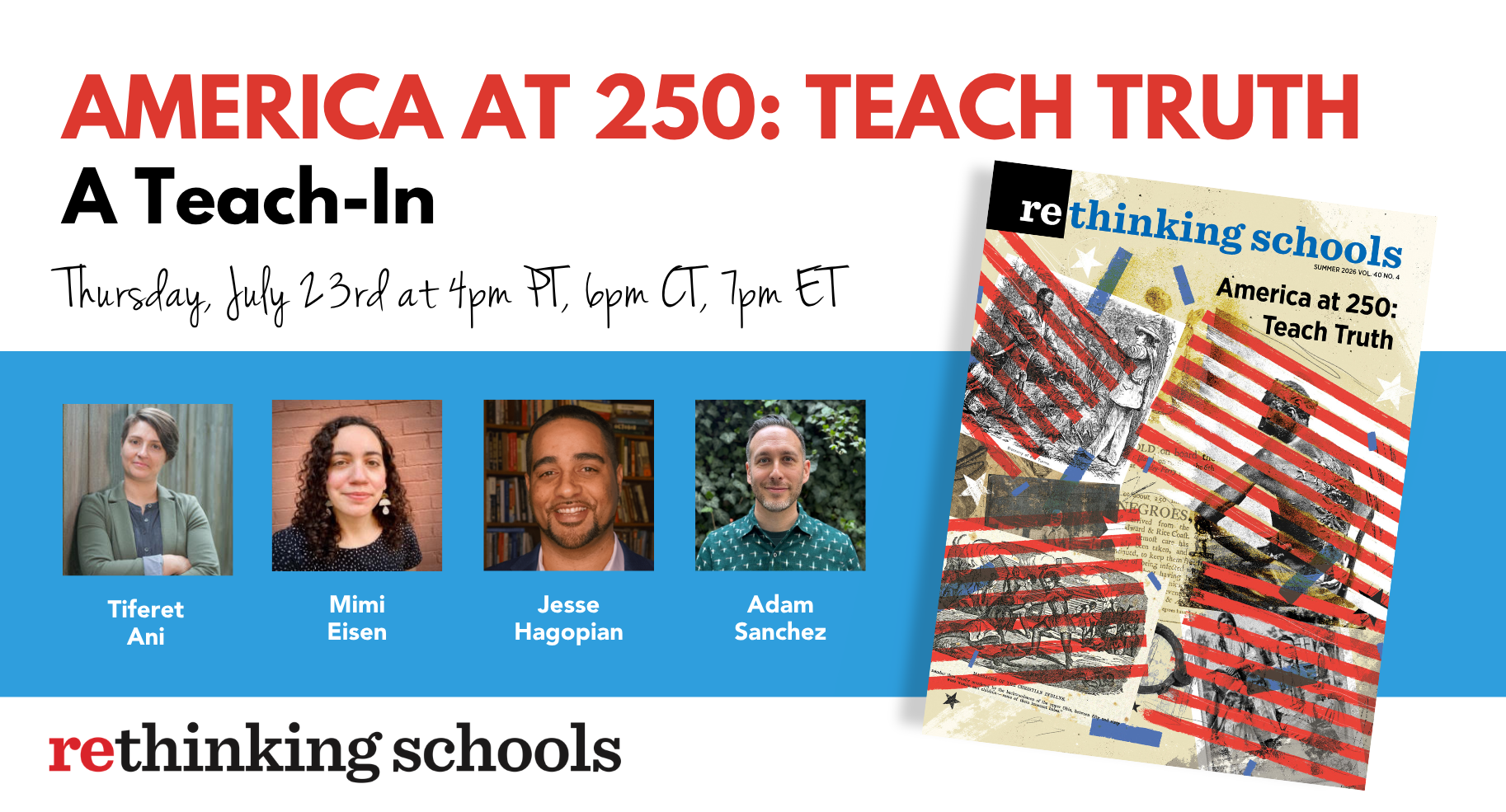
On Thursday, July 23 at 7pm ET, join Rethinking Schools editors and contributors for a teach-in on teaching truthfully about the American Revolution during the 250th anniversary of the signing of the Declaration of Independence. This conversation will focus on teaching strategies and critical questions that unearth the voices of dissent from the U.S. past and present.
Attendees will learn more about equipping students with tools for a truthful examination of the American Revolution so we can collectively shape a more just future.
Are educators at your school or district looking for meaningful professional development and a supportive learning community?
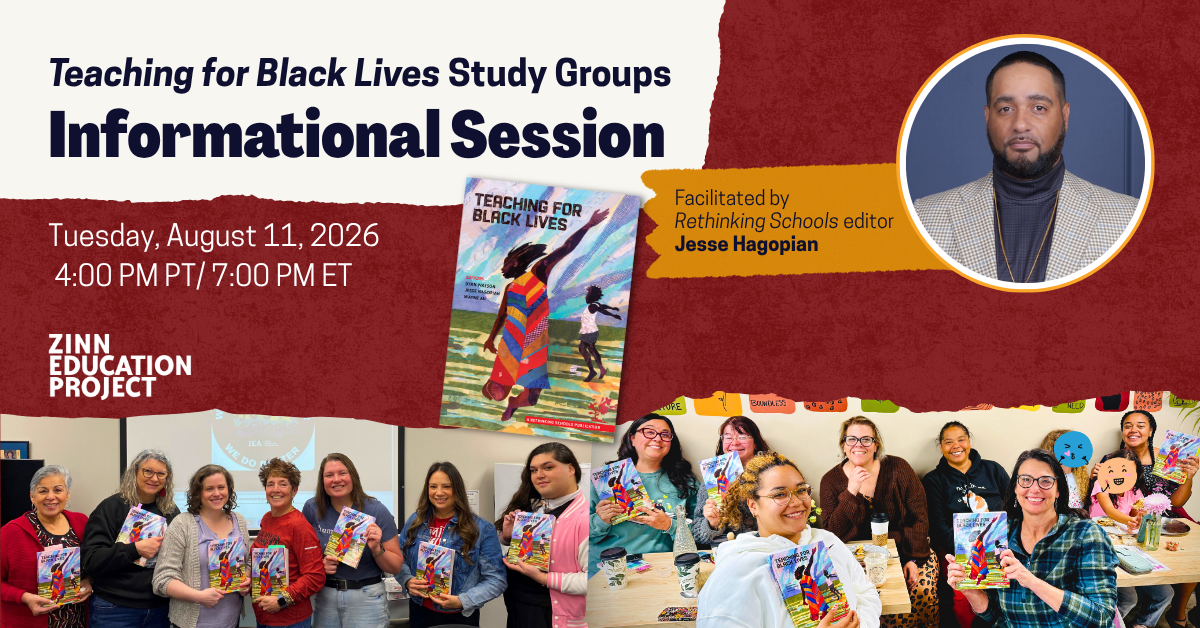
Join us on Tuesday, August 11, for a 50-minute informational session where you’ll learn how to form a Teaching for Black Lives study groupin your school, district, or statewide.
Each group receives:
Teaching for Black Lives book copies
Rethinking Schools subscriptions
Study guides
Access to a network of social justice educators
and more!
Hear from study group coordinators, ask questions, and meet other educators in small groups. Facilitated by Jesse Hagopian, Teaching for Black Lives co-editor and Rethinking Schools editor. Learn more and register.
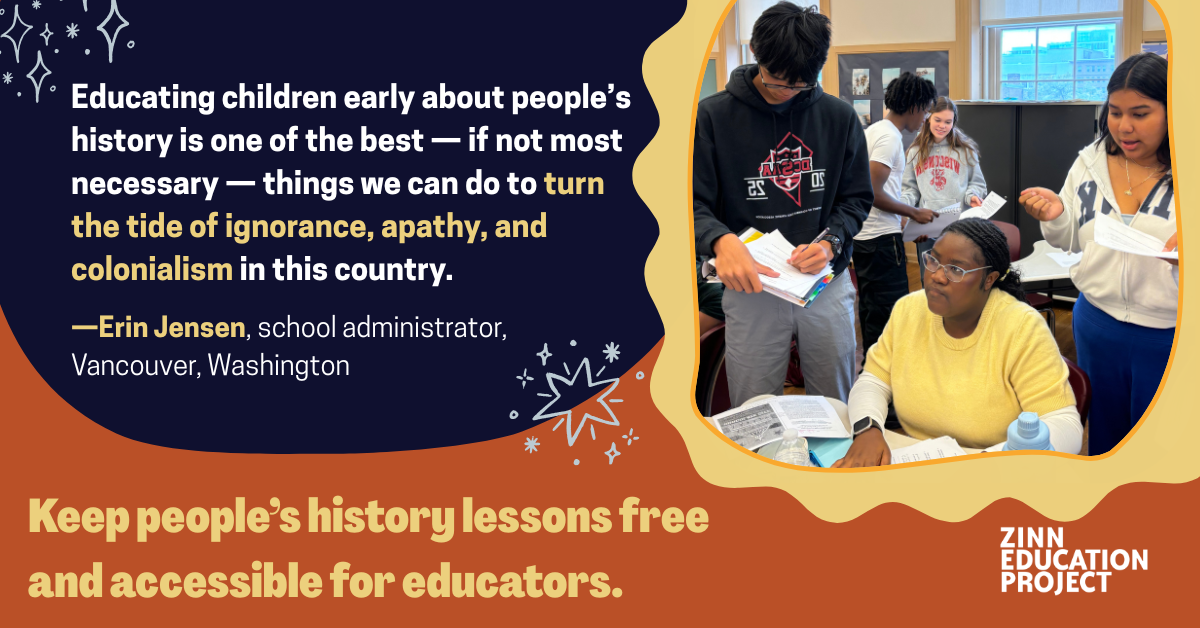
Teachers are under attack for teaching truthfully about U.S. history. Please donate so we can continue to offer free people’s history lessons and resources, and defend teachers’ right to use them.