If you're having trouble viewing this email, you cansee it online.
Coordinated by Rethinking Schools and Teaching for Change.
Lessons for Earth Day
On the first day of spring this year, March 20, Yuma, Arizona, recorded the hottest March temperature in U.S. history: 112 degrees. There is much to say about how frightening this is and what the implications are. But one thing to emphasize is the urgency of engaging our students in a climate justice curriculum.
Climate justice, not merely climate literacy. We need to help students search for the causes of the crisis — and uncover its long history. Students can learn to think systemically and to recognize that the climate catastrophe is not the product simply of bad policies, but has its roots in a system that prizes profit above humanity and nature. Inequality is at the heart of this crisis — with the worst consequences falling on those who had the least to do with causing it.
But climate justice education is also activist and hopeful, emphasizing the accomplishments of people of conscience and social movements throughout history, and inviting students to see themselves as changemakers.
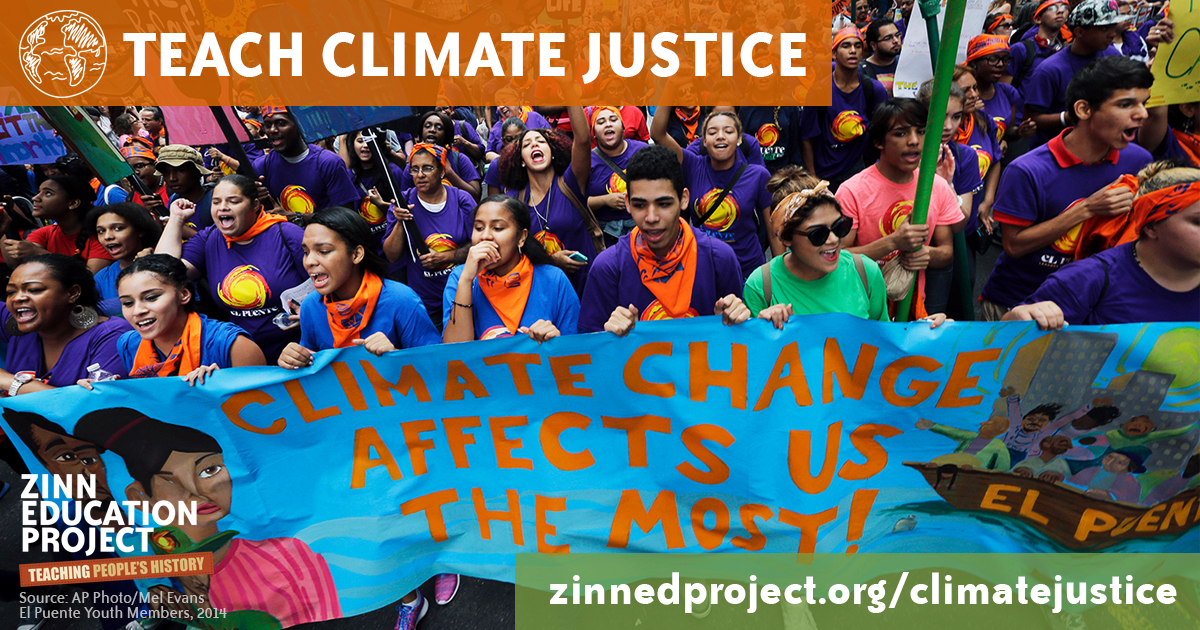
At our Climate Justice Campaign, we have lots oflessons and resources to help bring this curriculum to life in classrooms. Here, below, are a few.
In this trial role play, students represent different “defendants,” from fossil fuel companies to governments, consumers, and the global capitalist system. All are charged with causing the climate crisis. As they debate responsibility, participants explore interconnected factors and consider what justice might look like.
This is one of those lessons teachers dream about where students are walking out the door still discussing and debating.
— Brett Benson, middle school teacher, Omaha, Nebraska
This playful, always-engaging activity helps students grasp the essential relationship between climate change and capitalism.
This was empowering for everyone involved about strength in numbers, recognizing true motives, thinking outside the confines of the system, and organizing.
— Ann Finkel, middle school science teacher, Brookline, Massachusetts
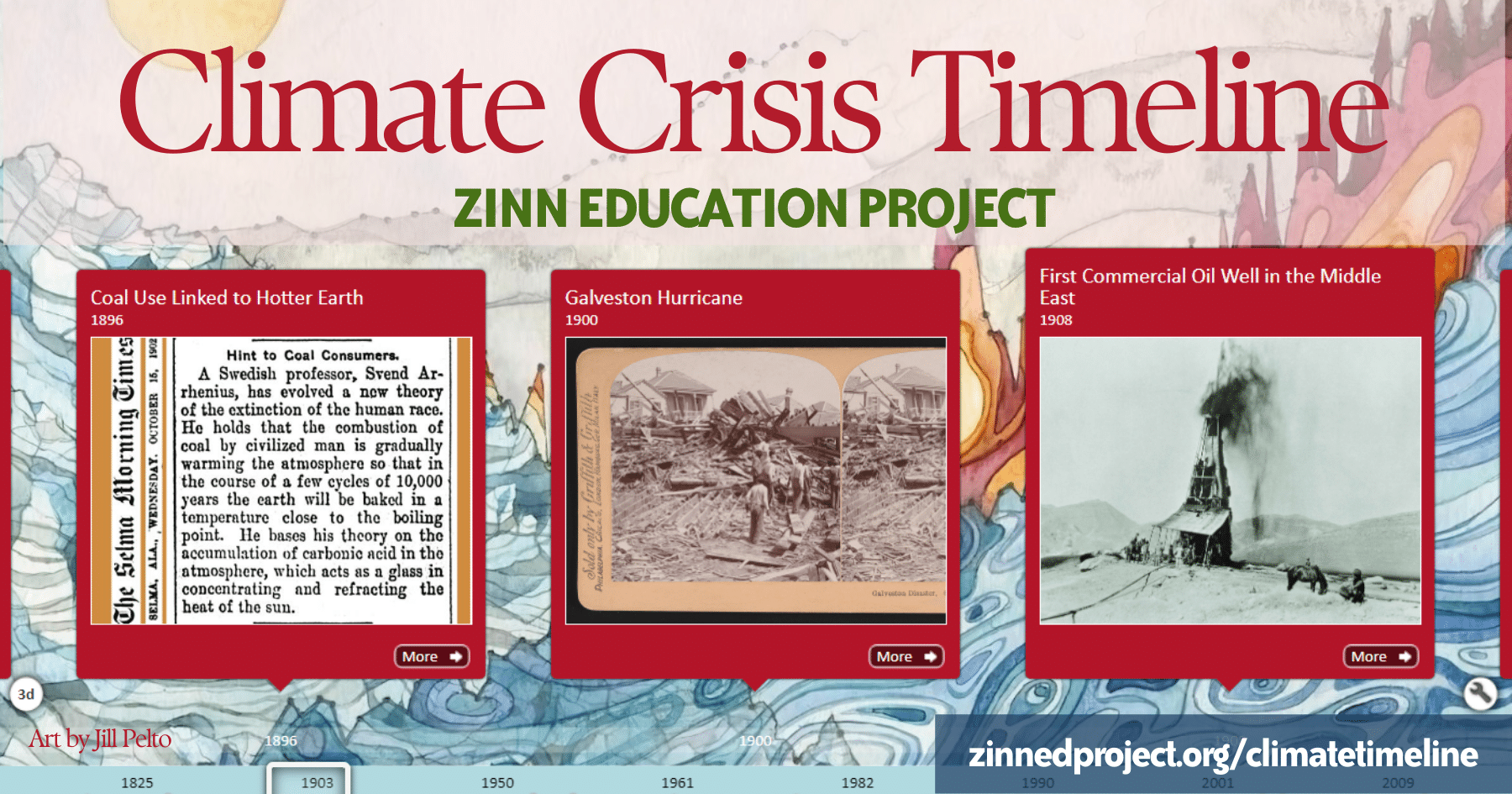
The Climate Crisis Timeline is a vital resource for history classes. It traces the roots of the climate crisis from European colonial expansion and racial capitalism, to present-day fossil fuel industry and government projects that exploit the Earth for profit. It also highlights the resistance movements that inform climate justice work today.
Since February 28, thousands of people have been killed in the war in Iran and throughout the Middle East. This war devastates ecosystems, with U.S. military activity releasing toxins, polluting air and water, contaminating soil and water, and harming wildlife.
All the weapons that have been produced have had carbon footprints — the missiles that fly, the jets, the tanks that are burned, the oil fields that are being attacked and the gas fields that are being burned. All of these are producing a lot of greenhouse gas emissions. They are going to impact us in the long term.
We are not just teaching students skills, we are teaching them to be bold and imaginative leaderswith the courage to build a society we all deserve. — Suzanna Kassouf
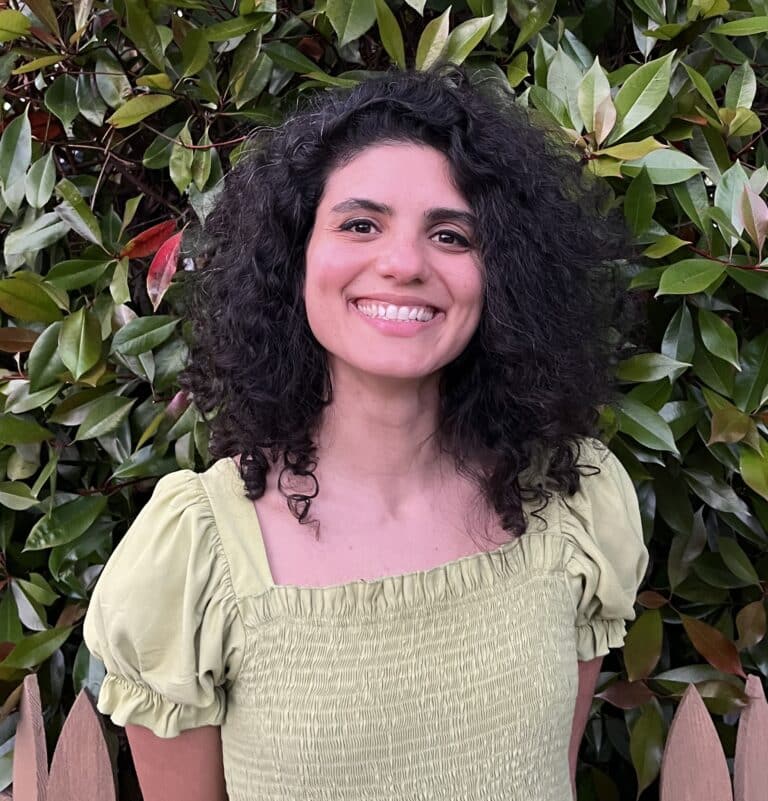
Suzanna Kassouf, social studies teacher in Portland, Oregon, co-edited the Rethinking Schools publications TeachingPalestineand Teaching for Environmental Justice (forthcoming).
She co-founded the youth-led climate justice organization Sunrise Movement PDX.
The Zinn Education Project is accepting applications for the 2026–2027 Prentiss Charney Teacher Fellowship through May 1. Learn more.
Study Group Info Session
Teaching for Black Lives
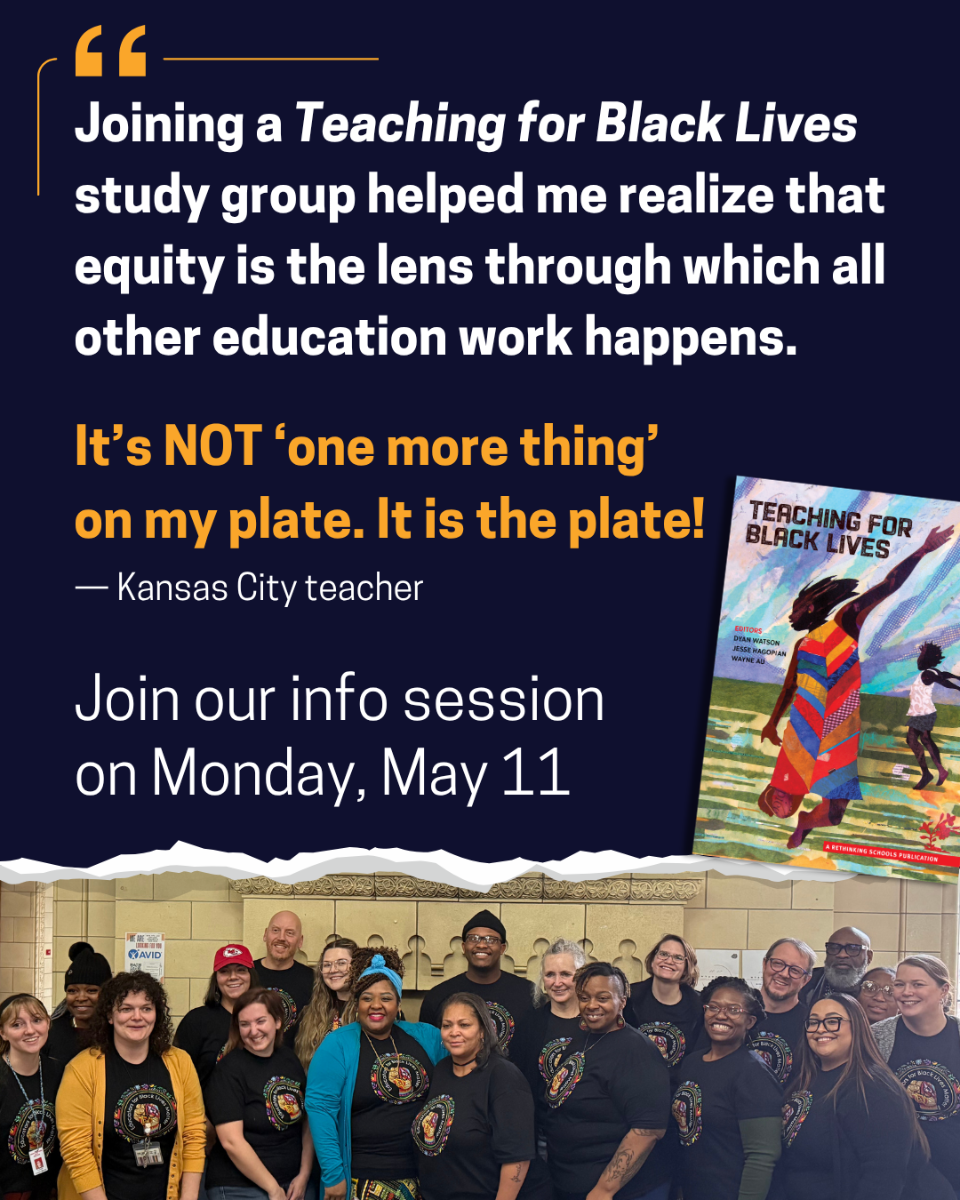
On Monday, May 11, Jesse Hagopian, Teaching for Black Lives co-editor and Rethinking Schools editor, will facilitate a 45-minute informational session for educators interested in forming a Teaching for Black Lives study group in their school, district, or statewide.
Join us to learn about the benefits and logistics. There will be time to ask questions and meet other educators in small groups.
Participants will hear from study group coordinators, Sharae Green, middle school teacher in Elk Grove, California, Haileigh Mejia, middle school special education teacher in Iowa, and Nicole Seymour, early education programs consultant in California. Learn more and register.
New Rethinking Schools Book
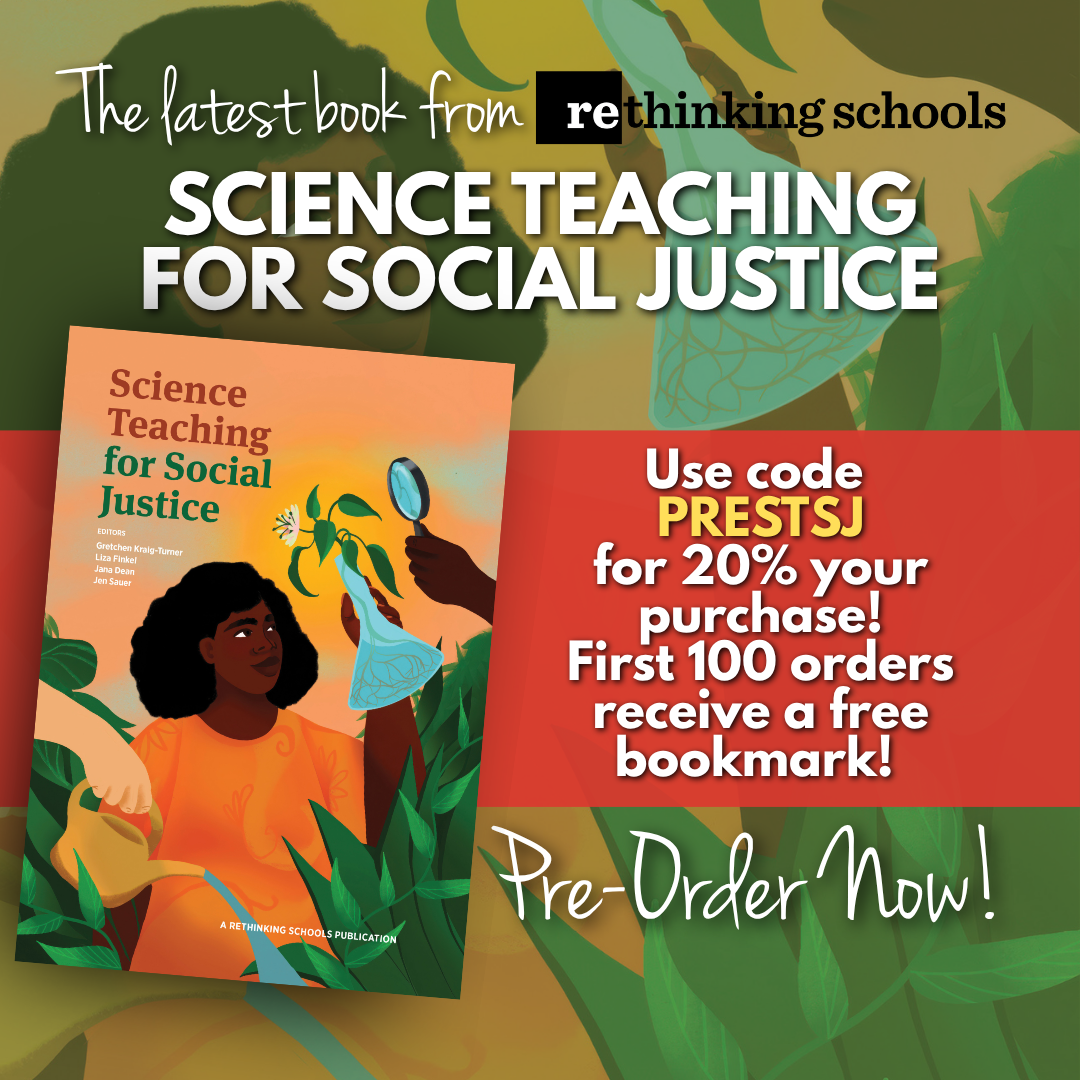
Science Teaching for Social Justice
Science Teaching for Social Justice shares stories of educators and students who explore how social and political systems shape science. These stories help students dig into ways science is used both as a tool of oppression and as a means of liberation.
From preschool to graduate studies and across disciplines, this book contains lessons that empower students to use science as a tool for equity and justice.
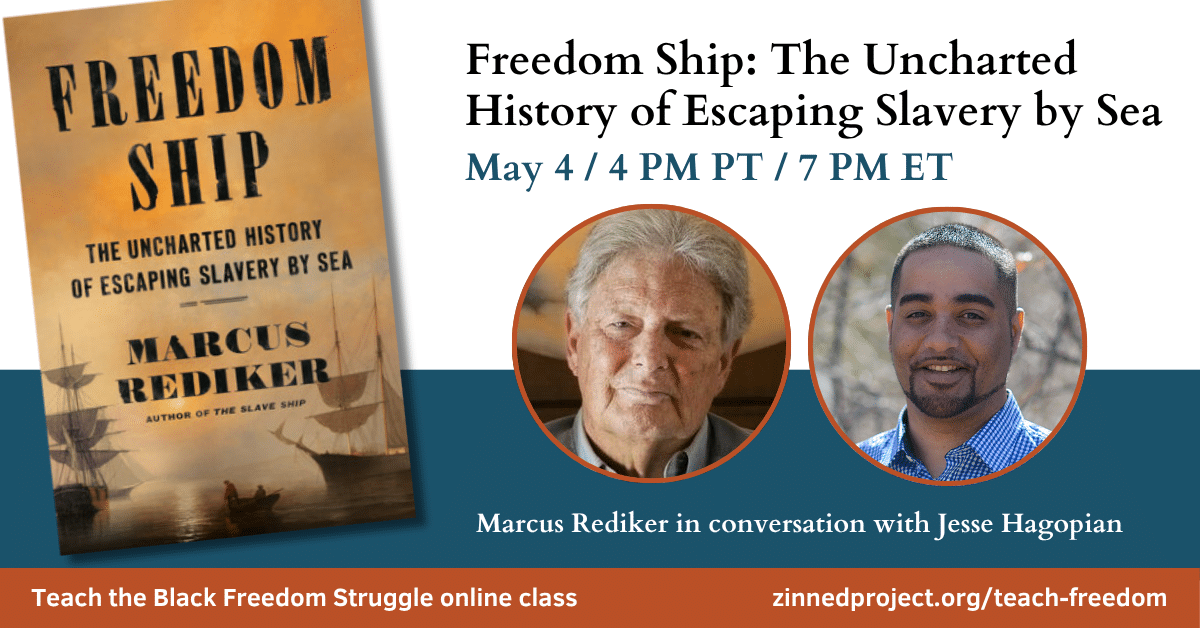
Check out these events hosted by the Zinn Education Project, our coordinating organizations (Rethinking Schools and Teaching for Change), and our colleagues. All events are online unless noted otherwise.
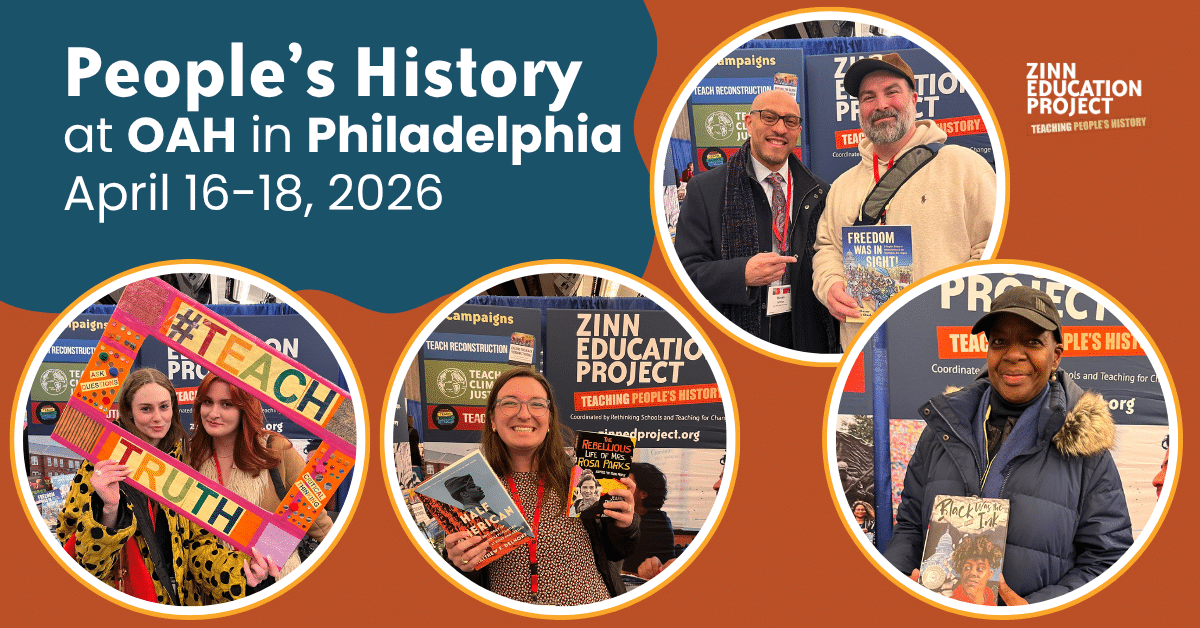
We will provide information about our resources for teaching truthfully about the American Revolution, our Reconstruction report, our Teach Climate Justice campaign, and all of our people’s history lessons.
If you are attending the conference, stop by our exhibit (#106) to take a photo with our #TeachTruth frame, record comments in our story booth, and pick up a free Teach Banned History button.
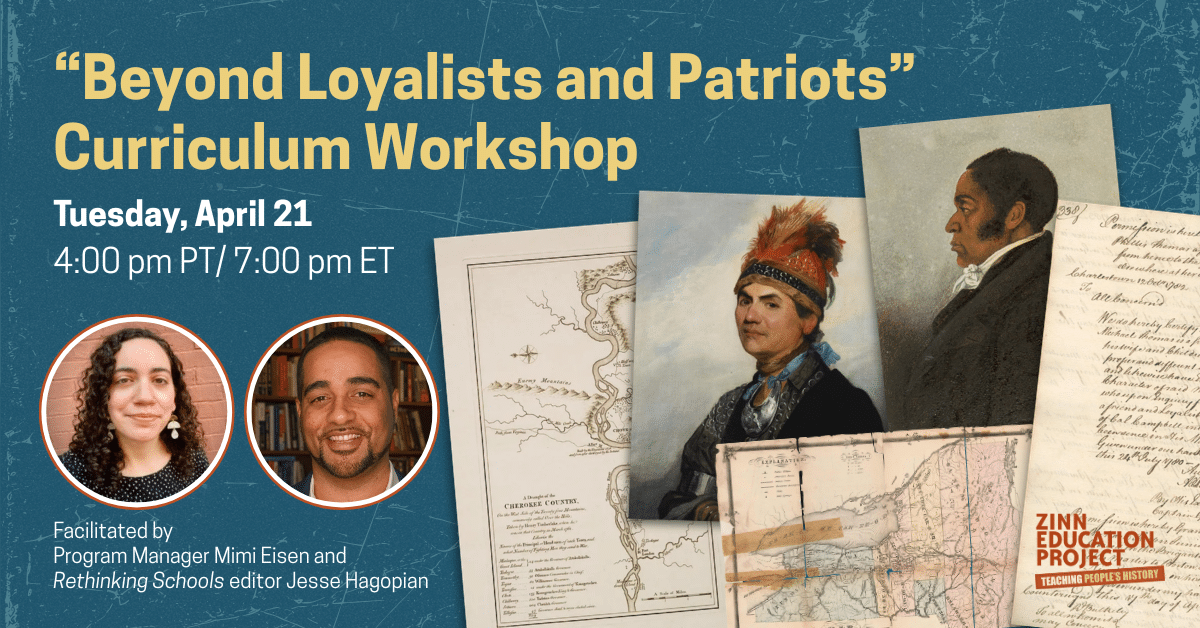
On Tuesday, April 21, join Zinn Education Project program manager Mimi Eisen and Rethinking Schools editor Jesse Hagopian to pilot a new high school lesson for teaching the people’s history of the American Revolution.
Through a mixer activity, participants will surface choices and outcomes navigated by an array of Indigenous and Black people in the Revolutionary period — and examine what freedom meant to those excluded from it at the U.S. founding.
To prepare, we offer free resources on labor history, boycotts, and strikes, including selected “This Day in People’s History” stories, and our #TeachTruth campaign resources.
May Day is a good day to remind ourselves, and our students, that people make history.
ASL interpretation and professional development certificates provided.
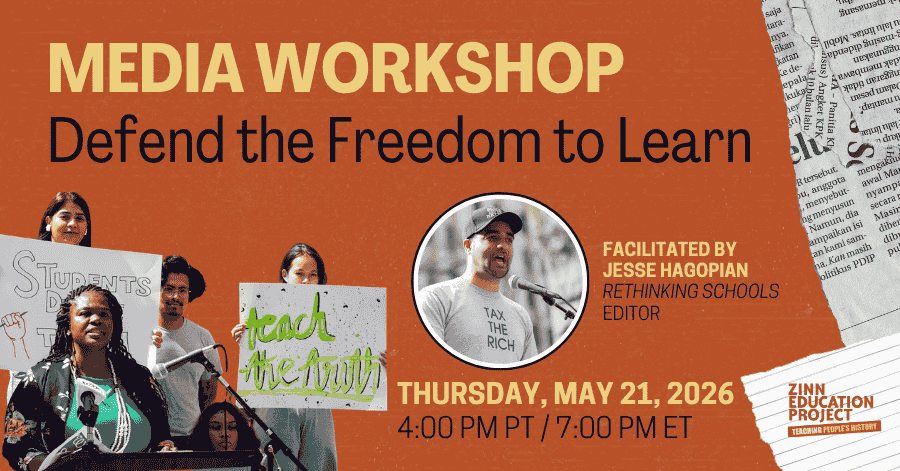
Join us for a Media Workshop onThursday, May 21, 2026.
This is a participatory and informative workshop on effective media strategies — with time to practice responding to Teach Truth FAQs and American Revolution FAQs in small groups. Facilitated by Rethinking Schools editor Jesse Hagopian. Learn more and register.
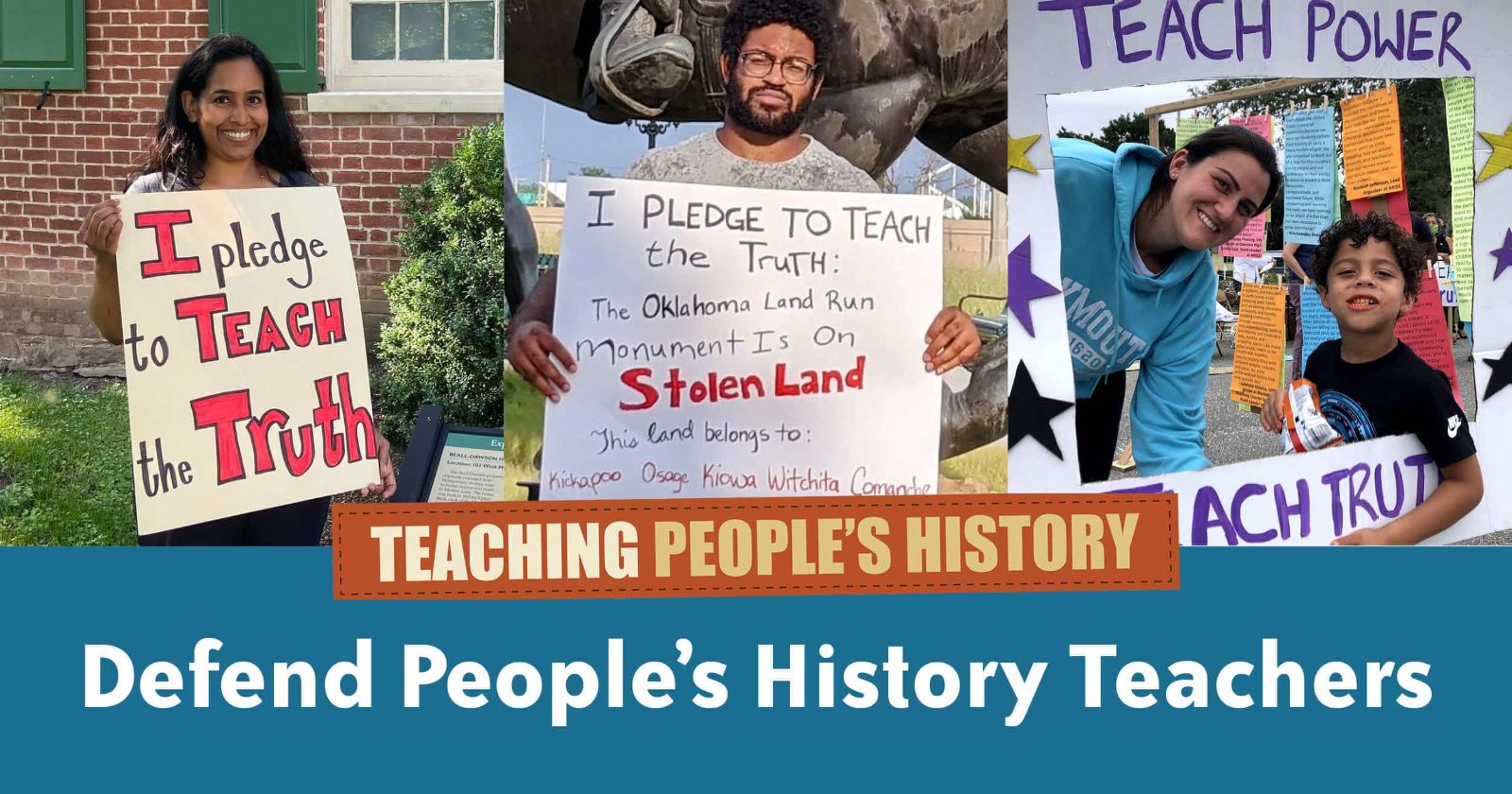
Teachers are under attack for teaching truthfully about U.S. history. Please donate so we can continue to offer free people’s history lessons and resources, and defend teachers’ right to use them.