Hi Taylor,
Summer has come and gone, and a new school year and a new season are here. As we settle into our fall routine, we are reminded how quickly things change.
However, there is one thing that won't change: our commitment to advocating for you and the millions of people globally who suffer from complex chronic diseases.
Speaking of complex chronic diseases, ME/CFS is a condition marked by an array of symptoms that overlap with other conditions, such as Long COVID, Fibromyalgia, and those characterized by neuroinflammation. The similarities in symptoms are likely driven by parallel mechanisms such as immune dysregulation, autonomic dysfunction, and chronic inflammation.
That is why we think you will find the breakdown of this new ME/CSF paper interesting, even if you have not been diagnosed with the condition.
Let’s dive in.
Heightened Innate Immunity May Trigger Chronic Inflammation, Fatigue, and PEM in those with ME/CFS
A new paper from the Zuker Lab at Columbia University revealed an array of new pathophysiological changes that occur in patients with ME/CFS compared to healthy controls. Here is what you need to know.
The Methods
The study recruited 56 patients with ME/CFS and 52 healthy controls. Each person who participated donated blood samples before and 24 hours after participating in “two maximal exercise test challenges”. The blood samples were compared to healthy age-matched and sex-matched controls, and analyzed for the relative abundance of:
-
Lipids
-
Cytokines
-
Metabolites
-
Plasma proteins
This survey study revealed new insights into what may be driving the symptoms of the debilitating chronic fatigue and post-exertional malaise.
Let’s begin with the centerpiece of the paper, the heightened innate immune response in ME/CFS patients.
Innate Immune Responses Are Exaggerated
Immediately after the blood was collected, it was stimulated with molecules engineered to make the white blood cells think they were under attack by a bacterial, viral, or fungal pathogen. This stimulates the innate immune response to make pro-inflammatory cytokines. But what is innate immunity? |
|
To mimic bacterial infections, the researchers used molecules like Staphylococcus aureus enterotoxin type B (SEB) or lipopolysaccharide (LPS). For fungal and viral infections, they used heat-killed Candida albicans (HKCA) and polyinosinic:polycytidylic acid (poly I:C), respectively. Poly I:C is structurally similar to the double-stranded RNA genome found in human viral pathogens. The most well-known is Rotavirus, which can cause gastroenteritis in infants and young children.
|
|
Innate Immunity Defined
Your immune system has many tools at its disposal. Some of those tools require prior exposure to a pathogen to be effective, like antibodies. However, other immune system tools work without prior exposure, like built-in alarm systems that are fully assembled and functional even before you’re born. For instance, unlike an antibody that binds a very specific region of a single protein found only on one species of bacteria, your innate immune sensors detect molecules that are conserved across many species of bacteria. A different group of sensors can also broadly detect other classes of pathogens, including viruses, parasites, and fungi. The result of innate immune sensor stimulation is the production of inflammatory mediators.
The Results
Back to the paper. The researchers measured the amount of inflammatory mediators produced in response to the perceived pathogenic threat. This allowed them to discover that white blood cells collected from ME/CFS patients, before and after exercise, made significantly more pro-inflammatory cytokines than healthy controls (Figure 1A-F). This data supports previous studies identifying that the baseline level of inflammation is significantly higher in ME patients than that of healthy controls.
Collectively, these data suggest that a dysregulated innate immune response could be the cause of some ME symptoms. While it's unknown why immune cells are hypersensitive to these inflammation activators, it could be due to one of the three explanations or a combination thereof.
-
Inability to control latent infections, like EBV
-
Constant stimulation of the innate immune response
-
An internal immune suppressor that is dysregulated, such as the brainstem’s caudal nucleus of the solitary tract (cNST) (discovered in mice by the same research group).
While identifying the cause of this dysregulated innate immune response was beyond the scope of this particular paper, other key observations might hint at the driver of a hyperactive innate immune response (the second key observation below).
Other Key Observations
By examining blood samples from ME/CFS patients, researchers uncovered several key observations that highlight the complex interplay of inflammation, gut dysfunction, and cellular processes, offering potential clues to the underlying causes of this chronic illness. These findings include:
1. New Metabolomic and Proteomic Markers of Inflammation: The study identified novel markers in the blood (metabolites and proteins) associated with inflammation, specifically linked to triglyceride (a type of fat molecule) accumulation, disrupted extracellular matrix (ECM) homeostasis, and reduced cell-cell adhesion. These markers, including reduced levels of tetranectin, CD93, and COMP, and elevated HTRA1, suggest that inflammation in ME/CFS may be driven by processes involving fat buildup and breakdown of tissue structure, which were not previously well-characterized in those with ME/CFS. For instance, in your intestines, a disrupted ECM, a structural scaffold outside of cells in tissue, and a reduction in the ability of your cells to ‘stick’ to each other could result in bacteria, toxins, or undigested food particles leaking more easily from the gut into the blood. This brings us to the second major finding of the paper.
2. Altered Microbial Metabolites in Plasma: The study identified altered levels of microbial metabolites (leucate, DAP, and PPA) in the blood of ME/CFS patients, which are linked to gut dysbiosis and/or increased intestinal permeability. These specific metabolites are associated with systemic inflammation, suggesting a role of gut-related alterations in the pathophysiology of ME/CFS.
3. Sex- and Age-Specific Immune Responses: The study observed that white blood cell stimulation led to higher levels of pro-inflammatory cytokines in ME/CFS patients compared to healthy controls, with effects varying by sex and age. This finding, predicted to be influenced by 17β-estradiol (E2) as a regulator of inflammation that decreases with age, provides insight into how immune responses in ME/CFS may differ based on demographic factors.
4. Bidirectional Mitochondrial and Peroxisomal Dysfunction: While mitochondrial and peroxisomal dysfunction were previously reported in ME/CFS, this builds on a novel "vicious cycle" hypothesis where peroxisome dysfunction (navy blue box below) induces mitochondrial dysfunction, and vice versa. This bidirectional relationship provides a new mechanistic explanation for how energy production issues might persist and contribute to symptoms like fatigue and PEM.
|
|
A peroxisome is a small, membrane-bound organelle in your cells that acts like a cleanup crew, breaking down fatty acids and toxins while producing and neutralizing hydrogen peroxide to protect against oxidative damage. In the context of ME/CFS, it's crucial for mitochondria because peroxisomes handle the initial breakdown of very long-chain fatty acids into shorter forms that mitochondria can then fully process for energy production.
|
|
5. Exercise-Induced Complement Activation and Calcium Signaling: The researchers found that inflammation worsens after exercise in ME/CFS patients, driven by complement activation and altered calcium signaling. This prolonged immune response, potentially leading to tissue damage and immune cell activation, provides a new perspective on the biological basis of PEM.
|
| Complement refers to the complement system, a key part of your innate immune response made up of about 30 different proteins circulating in your blood and tissues. These proteins normally stay inactive but can rapidly activate in a chain reaction (cascade) when triggered by infection, injury, or exercise-induced stress, leading to inflammation, attraction of immune cells, and potential tissue damage if overactivated—as seen in ME/CFS patients after exertion, where it worsens post-exertional malaise (PEM) by amplifying immune overreactions. |
|
Clinical Trial Candidates
The following are promising interventions because they target specific biological irregularities identified in ME/CFS, such as immune overactivity, gut dysbiosis, metabolic disruption, and serotonin imbalances. Unlike broad treatments, these are tailored to subgroups of patients with specific markers (e.g., low 12,13-diHOME, high GDF15, or dysbiosis), which could lead to personalized therapies. Clinical trials are crucial to test their safety and effectiveness, as many (e.g., IL-37, GDF15 antibodies, 12,13-diHOME) are novel and untested in ME/CFS, while others (e.g., metformin, rapamycin, probiotics) have early evidence from related conditions or small studies. |
Medical Disclaimer: The information in the table is for informational purposes only and is not medical advice. The listed potential interventions for ME/CFS published in the manuscript are experimental, lack full clinical validation, and may carry risks. Always consult a qualified healthcare professional before considering any treatment or supplement.
| Intervention |
What It Is |
How It Might Help |
Why It's Promising |
| Metformin |
A common drug used to treat type 2 diabetes by lowering blood sugar, but it also has anti-inflammatory effects.
|
Some ME/CFS patients have overactive immune systems or are hypersensitive to microbial triggers, leading to inflammation that worsens fatigue and PEM. Metformin can reduce inflammation by calming immune pathways, potentially easing these symptoms. It may also improve energy production in cells by supporting mitochondrial function, which is often impaired in ME/CFS.
|
Early evidence from non-controlled trials and studies in related conditions like Long COVID shows metformin’s anti-inflammatory benefits, making it a strong candidate for ME/CFS clinical trials to test its ability to reduce fatigue and inflammation. |
| IL-37 (Regulatory Cytokine |
An anti-inflammatory protein (cytokine) is naturally produced by the body to calm immune responses. |
ME/CFS patients with enhanced innate immunity may experience excessive inflammation, which can drive symptoms such as tiredness and pain. IL-37 could help by suppressing this overactivity, reducing inflammation, and potentially alleviating symptoms like PEM or cognitive fog.
|
IL-37 is not yet a standard treatment, but its role in regulating innate immunity makes it a novel candidate for trials, especially for ME/CFS patients with clear signs of immune hypersensitivity to microbial triggers. Its potential to balance immune responses needs further study. |
| Rapamycin (mTOR Inhibitor) |
A drug that inhibits mTOR, a protein that controls cell growth and immune responses. It’s used in cancer and transplant patients, but also has anti-inflammatory effects. |
In ME/CFS, an overactive mTOR pathway may contribute to inflammation and immune hypersensitivity. Rapamycin could dampen this, reducing inflammation and possibly improving energy production by enhancing mitochondrial cleanup (autophagy). This might help lessen fatigue and PEM. Anecdotal reports from ME/CFS patients suggest benefits, like a 15% improvement in fatigue and clarity.
|
An 86-person ME/CFS trial to test rapamycin revealed promising results, supported by findings that it reduces inflammation and improves mitochondrial function. However, concerns about potential viral reactivation (e.g., EBV or HSV) need careful monitoring. |
| Prebiotics (Inulin) |
A type of prebiotic, a fiber that feeds beneficial gut bacteria, is found in foods like chicory root or supplements. |
ME/CFS patients often have gut dysbiosis (imbalanced gut bacteria), which can weaken the gut lining, allowing bacteria to leak into the bloodstream and cause inflammation. Inulin promotes the growth of good bacteria like Bifidobacteria, strengthening the gut barrier and reducing inflammation, which could ease symptoms like fatigue, digestive issues, and brain fog.
|
Studies show prebiotics improve gut barrier integrity and lower inflammation in conditions like IBS, which overlaps with ME/CFS. Trials could confirm if inulin specifically helps ME/CFS patients with dysbiosis, particularly those with gastrointestinal symptoms. |
| Probiotics (F. prausnitzii) |
A beneficial gut bacterium that produces butyrate, an anti-inflammatory compound that supports gut health. |
Reduced levels of F. prausnitzii in ME/CFS patients are linked to gut dysbiosis and lower butyrate, which weakens the gut barrier and increases inflammation. Supplementing with F. prausnitzii probiotics could restore gut balance, strengthen the gut lining, and reduce systemic inflammation, potentially improving fatigue and cognitive symptoms. |
Research shows lower F. prausnitzii in ME/CFS patients with IBS, and probiotics increasing butyrate show promise in reducing inflammation. Clinical trials could test if F. prausnitzii supplementation improves gut health and ME/CFS symptoms. |
| 12,13-diHOME |
A lipid metabolite produced by gut bacteria that influences fat metabolism and inflammation. |
The study found low baseline levels of 12,13-diHOME in some ME/CFS patients (Figure 2A), indicating metabolic disruption. Supplementing with 12,13-diHOME could correct this imbalance, improve fat metabolism, and reduce inflammation, potentially easing fatigue and PEM in those with pronounced metabolic issues. |
This is a novel target, as low 12,13-diHOME levels are a new finding in ME/CFS. Trials could explore whether supplementation improves metabolic function and symptoms in patients with this specific marker. 12,13-diHOME supplements are not commercially available. |
| GDF15-Neutralizing Antibody |
A drug that blocks GDF15, a protein that increases during stress and inflammation. |
High post-exercise GDF15 levels in ME/CFS patients suggest it contributes to metabolic stress and PEM. A GDF15-neutralizing antibody could block this protein, reducing inflammation and metabolic disruption after exercise, potentially reducing the severity of PEM and fatigue. |
This is a cutting-edge approach, as GDF15 is a relatively new marker in ME/CFS. Trials could identify if blocking GDF15 helps patients with high post-exercise levels, offering a targeted treatment for PEM. |
| 5-Hydroxytryptophan (5-HTP) |
A supplement that boosts serotonin production, a brain chemical that regulates mood, sleep, and pain.
|
Some ME/CFS patients have abnormal tryptophan metabolism, which can lower serotonin levels, contributing to fatigue, mood issues, and sleep problems. 5-HTP supplementation could increase serotonin, improving mood, sleep quality, and possibly energy levels. |
Tryptophan metabolism issues are a newer focus in ME/CFS research. Trials could test if 5-HTP helps patients with low serotonin due to these abnormalities, potentially improving non-core symptoms like mood and sleep. |
| Selective Serotonin Reuptake Inhibitors (SSRIs) |
Antidepressants that increase serotonin levels in the brain (e.g., sertraline, escitalopram). |
Like 5-HTP, SSRIs could help ME/CFS patients with altered tryptophan metabolism by boosting serotonin, potentially improving mood, anxiety, and sleep. However, studies show mixed results, with some patients reporting benefits and others experiencing sensitivity to SSRIs, suggesting they may only help specific subgroups.
|
Small studies suggest SSRIs may reduce fatigue and depression in some ME/CFS patients, but rigorous trials are needed to confirm benefits and identify which patients (e.g., those with tryptophan issues) respond best, given the risk of side effects.
|
|
New ME/CFS Research Paths
For those living with ME/CFS, this new research from the Zuker Lab is a win. This is yet another high-quality study revealing that dedicated researchers are tirelessly attempting to unravel the complex pathophysiology behind this debilitating condition.
Speaking of high-quality research from talented researchers, we want to share with you another brand new study with some surprising results.
Childhood Inflammation Linked to Adult Mental Health and Heart Risks
You likely won’t be surprised to learn that chronic inflammation is associated with poor mental health outcomes. But can persistent chronic inflammation in childhood affect your mental health over a decade later?
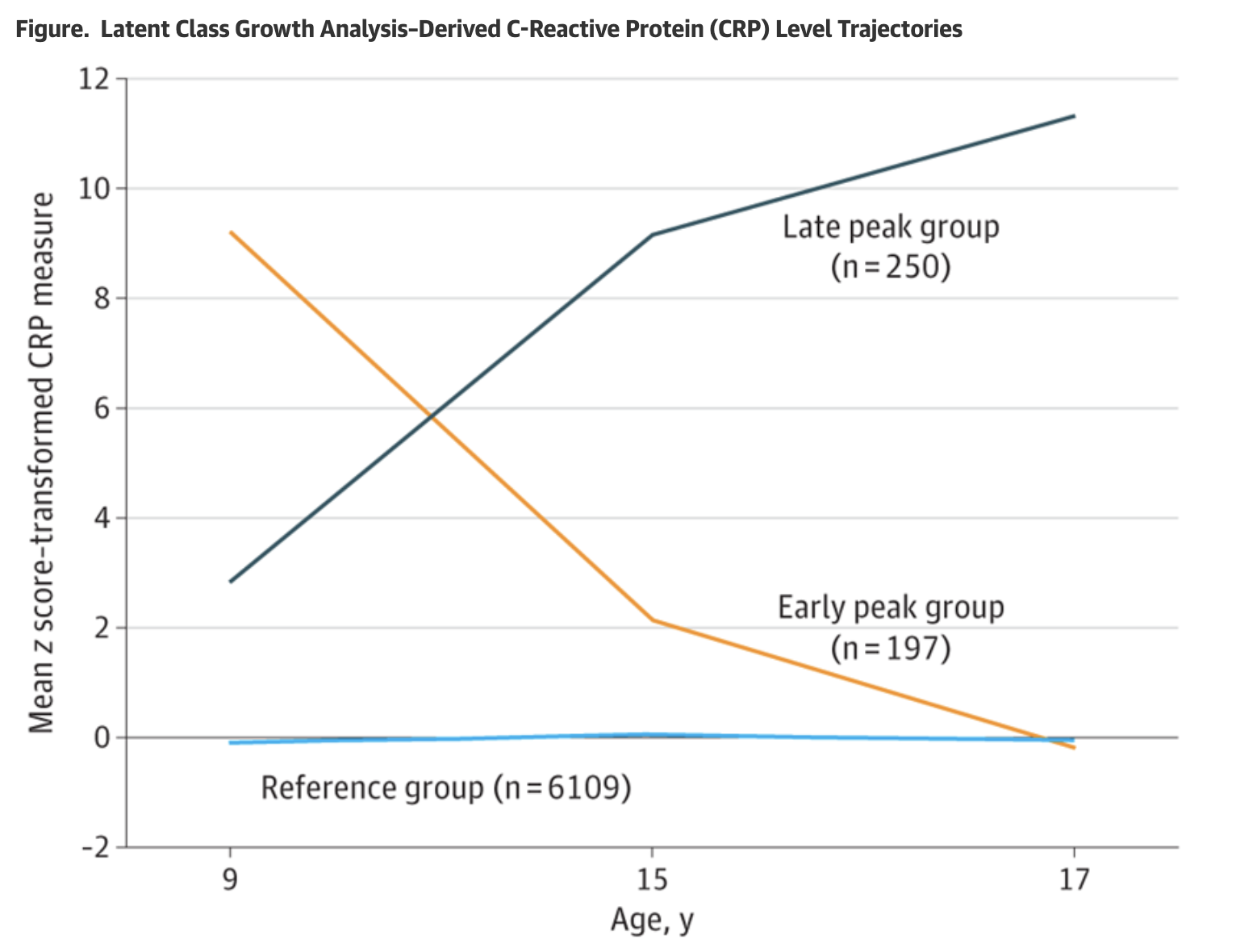
A new study from the UK tracked 6,556 children over 15 years to see if inflammation in their bodies during childhood (age 9) and teenage years (age 15 and 17) could affect their mental and cardiovascular health as young adults (age 24). The results were surprising.
The researchers measured the inflammation biomarker, C-reactive protein (CRP), at ages 9, 15, and 17. Next, they waited for the participants to turn 24 years of age and then checked their health by identifying conditions like psychosis, severe depression, anxiety, hypomania, and insulin resistance (a risk factor for diabetes and heart disease). The study found three patterns of inflammation (see image below):
-
Low inflammation throughout childhood and adolescence (6109 participants)
-
Higher inflammation that peaked at age 9 (197 participants)
-
Higher inflammation peaking at age 17 (250 participants)
|
Those with high inflammation peaking at age 9 had higher odds of developing serious mental health issues in early adulthood. Specifically, they had a 360% increased odds of developing a psychotic disorder (odds ratio [OR], 4.60; 95% CI, 1.81-11.70; P = .008), a 337% increased risk in the odds of developing depression (OR, 4.37; 95% CI, 1.64-11.63; P = .02), like psychosis and severe depression, and showed signs of insulin resistance by age 24. However, those with high inflammation peaking at age 17 didn’t show these health problems.
The study adjusted for factors like sex, ethnicity, preterm birth, BMI, family adversity, child health, and emotional problems to accurately assess the link between childhood inflammation (CRP levels) and mental/cardiometabolic outcomes at age 24. These adjustments minimized the influence of confounding variables, ensuring a clearer understanding of inflammation’s role.
What Is Contributing To The Inflammation?
You’re probably wondering what is driving this early childhood inflammation. In short, the authors mention that “early-life adversity”, genetics, and maternal and/or infant chronic infections might be the source. To study this, these variables were lumped together and represented as an index score called the “total family adversity index score.” A higher score suggests more childhood adversity than a lower score.
However, when plotting the relationship between the total family adversity index score and the amount of inflammation in the child's blood, there was a trend in the relationship between adversity and inflammation, but it did not meet the threshold of statistical significance (P=0.07, a P value of ≤0.05 is considered statistically significant).
Adverse Childhood Experiences
Adverse childhood experiences (ACEs) such as physical or sexual abuse or the death of a close family member are known to cause poor mental health outcomes into adulthood. It’s suggested that the “toxic stress” from the traumatic childhood event(s) changes the developing brain, increasing the likelihood of later developing depression, anxiety, and even PTSD as an adult.
In a related note, “toxic stress” also activates the sympathetic (fight or flight) branch of your nervous system, which will spike inflammatory responses in your body. Could the inflammation from the “toxic stress” of an adverse childhood experience be altering the developing brain to impact your mental health later in life? Despite this intriguing link, more sophisticated studies are required to tease apart these complex relationships.
Conclusion
This suggests that persistently high inflammation early in childhood might set the stage for both mental health issues in early adulthood. Understanding this link could help doctors identify kids at risk and find ways to prevent these problems later in life. |
Health Hack
Inside this video is a 5-minute health hack that is an effective way to potentially support vital organ function, enhance medication effectiveness, and alleviate sluggishness and constipation. It might also help bolster immune function and mental clarity. Discover this game-changing health hack and why it’s backed by biology - inside the short video below. |
Hope Through Science
Understanding the latest science behind chronic conditions like ME/CFS and the link between chronic inflammation and your mental health can provide hope, reminding you that many talented people are diligently trying to solve the problems faced throughout their healthcare journey.
Thank you for reading The Brain Storm! |
|
|