Learn how the inflammasome works and how close we are to a novel inhibitor
If you're having trouble viewing this email, you cansee it online.
Hi Matthew,
Numerous complex chronic inflammatory conditions exhibit striking similarities, ranging from neuroinflammation to shared immunological and cellular dysfunctions and overlapping comorbidities. We therefore adopt a unified perspective on more than 30 conditions linked to or driven by neuroinflammation.
One such dysregulated immunological pathway found in a subset of patients suffering from neuroinflammatory disease is the hyperactivation of an intracellular molecular sensor known as the inflammasome.
Before exploring promising new approaches to inhibiting this critical cellular alarm system, let us first examine what the inflammasome is and why its overactivation contributes to various neuroinflammatory disorders.
Brief Summary: Chronic conditions like Alzheimer's, Parkinson's, Lupus, and Rheumatoid Arthritis often involve excessive inflammation from the NLRP3 inflammasome, a cellular alarm that detects threats and releases pro-inflammatory signals (IL-1β and IL-18). When overactivated, it fuels tissue damage, neuroinflammation, and disease progression in subsets of patients across neurodegenerative, autoimmune, and even psychiatric disorders. Emerging evidence also links it to a subset of post-infectious, psychiatric, and neurodevelopmental conditions, though further studies are needed.
The current NLRP3 inhibitor pipeline is robust, with over 20 companies advancing more than 25 candidates—primarily oral small molecules—in Phase 1 and 2 trials. New drug candidates that are safe in humans and can cross the blood-brain barrier hold promise for slowing brain disorders like Parkinson's, with key data readouts expected in early 2026. We discuss how close we are to approval and what this might mean for many neuroinflammatory conditions.
The Inflammasome In Human Disease
As the name implies, the inflammasome promotes inflammation, specifically by activating and releasing two pro-inflammatory cytokines, IL-1ꞵ and IL-18, from within cells. From here, these two cytokines act to amplify immune responses by recruiting and activating other immune cells, promoting inflammation, and driving processes like fever, tissue damage, and (in excess) chronic disease pathology.
Numerous studies suggest the inflammasome is overactivated in the following autoimmune, neuroinflammatory, neurodegenerative, and chronic inflammatory conditions, including, but not limited to:
Systemic Lupus Erythematosus (SLE)1
Amyotrophic lateral sclerosis (ALS)2
Rheumatoid Arthritis (RA)3
Multiple sclerosis (MS)4
Sjögren’s Syndrome5
Alzheimer’s disease6
Parkinson’s disease7
Ulcerative Colitis8,9
Crohn's Disease9
Atherosclerosis10
Psoriasis11
Epilepsy12
Cancer13
Even psychiatric conditions have found evidence of inflammasome abnormalities in a subset of patients with depression14,15, PTSD16, memory loss16,17, and even autism18,19.
Let’s start by understanding the role of the inflammasome.
The Inflammasome, A Specialized Alarm System Inside Your Cells
There is an array of sensors in every cell in your body, especially in immune cells, that keep you healthy. Some are triggered when a pathogen invades your cells, and others are activated when parts of your cell become damaged. It’s the difference between an intruder invading your home (i.e, a pathogen) vs a power surge frying your electrical system and appliances (i.e., cell damage).
Many of these cellular sensors specialize in detecting either a pathogen (PAMP) or cellular damage (DAMP), but rarely both (definitions below). However, there are exceptions. One of them is a specific make and model of the inflammasome called the NLRP3 inflammasome.
The inflammasome does not detect the whole pathogen but individual components of a pathogen. These are also referred to as patterns because the molecules are present on numerous pathogens, which is why molecules that ‘trip’ the inflammasome sensor are called Pathogen-Associated Molecular Patterns (PAMPs). Likewise, when a cell is damaged, specific patterns emerge, earning the name Damage-Associated Molecular Patterns (DAMPs).
The NLRP3 inflammasome is one of five distinct inflammasome subtypes, predominantly found in immune cells. It is arguably the most clinically relevant inflammasome subtype to target with a drug, given its ability to detect over 60 different pathogen- and cell stress-related molecules (PAMPs and DAMPs) in a range of human diseases.
NLRP3 is widely recognized as the inflammasome with the broadest repertoire of activators, owing to its indirect sensing of common cellular stressors such as ion fluxes, oxidative stress, and lysosomal damage rather than specific activators from pathogens. The other four inflammasome subtypes, by contrast, are more specialized sensors with far fewer activators, typically fewer than 20 across all non-NLRP3 inflammasomes combined.
Before we explain how activation of the NLRP3 inflammasome is predicted to drive pathogenesis in many human diseases, let’s learn what neuroinflammatory conditions have been described to elicit NLRP3 inflammasome hyperactivation.
The Inflammasome’s Main Job is to Activate IL-1β and IL-18
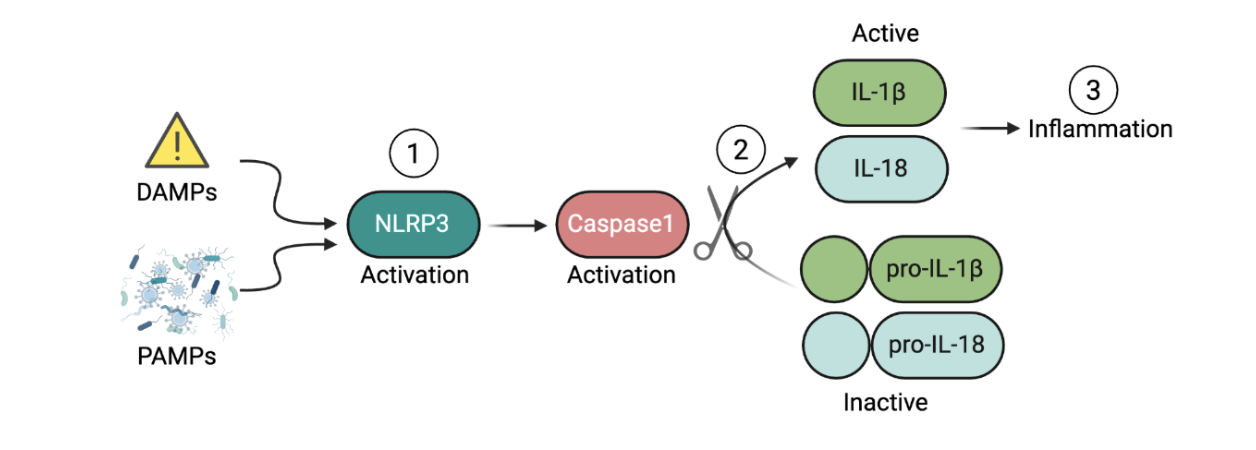
The inflammasome is incredibly complex, but we will keep it simple. Once specific triggers (below) are detected by NLRP3, a pair of molecular scissors called caspase-1 becomes activated. From here, these caspase-1 ‘scissors’ cut pro-IL-1ꞵ and pro-IL-18, converting them into their active forms: IL-1ꞵ and IL-18.
This precise cleavage by caspase-1 is analogous to snapping a glow stick to break the internal barrier so the components are mixed to activate its bright glow, turning the inactive pro-IL-1β and pro-IL-18 into their potent, active (mature) forms (IL-1ꞵ and IL-18). The now active pro-inflammatory cytokines signal to various cells inside the body that a threat is near. Let’s understand what these inflammatory molecules do in the context of autoimmunity.
Figure Legend: The NLRP3 inflammasome is activated when it detects specific factors associated with either cell damage or cell stress (DAMPs) or parts of pathogens inside the cell (PAMPs) (1). This stimulates the activation of a pair of molecular scissors, caspase-1, which cuts pro-IL-1β and pro-IL-18 into their active forms, IL-1β and IL-18 (2). From here, these pro-inflammatory cytokines signal to various cells in the body to stimulate inflammation (3). Therefore, the inflammasome’s main job is to activate IL-1β and IL-18.
Inflammasome Activation in Autoimmunity
IL-1ꞵ and IL-18 can act on specific T cell subsets to create an environment that influences the production of pathological antibodies that target healthy tissue (autoantibodies). The following autoantibody-driven autoimmune conditions have high serum levels of IL-1ꞵ and IL-18:
Thus, activation of NLRP3 is likely one (of several) mechanisms that can drive the production of harmful antibodies in the context of these medical conditions. The NLRP3 inflammasome can also cause acute inflammation and tissue destruction that is characteristic of these diseases.
Inflammasome Activation in Neurodegenerative Disease
NLRP3 inflammasome activation drives neurodegenerative diseases like Alzheimer's, Parkinson's, Multiple Sclerosis, and ALS by sensing misfolded proteins (Aβ, tau, α-synuclein) and cellular stress. These markers of cell stress can lead to chronic neuroinflammation, neuronal death (pyroptosis), and the chronic activation of the brain’s white blood cells (microglia) and astrocytes. This can create a destructive loop in which more NLRP3 activators are released from cells, leading to more NLRP3 activation and increased IL-1β and IL-18 processing, promoting a disease cascade. Here are some well-studied examples.
Alzheimer’s Disease (AD): Aβ plaques and Tau tangles can activate NLRP3, driving inflammation and cognitive decline
Amyotrophic Lateral Sclerosis (ALS): Mutations in superoxide dismutase 1 and TDP-43 activate NLRP3, leading to motor neuron death.
Parkinson’s Disease (PD): Aggregated ɑ-synuclein triggers NLRP3, contributing to the loss of dopaminergic neurons.
The Role of the Inflammasome in Other Neuroinflammatory Conditions: The Science is Still Advancing
The NLRP3 inflammasome might also be activated in several infection-associated chronic conditions (IACC), such as Long COVID, attributed to SARS-CoV-2 viral persistence; post-infectious ME/CFS, characterized by chronic reactivation of EBV; or PANDAS caused by an invasive group A strep infection. However, many of these studies have been conducted in cell cultures, not in patients suffering from disease. Therefore, the extent of inflammasome activation and its role in IACCs is still unclear.
If you or someone you know is suffering from a chronic inflammatory condition that is not listed above, that means one of two things. Either there is little evidence that the inflammasome is active in that particular condition, or the science is still evolving. Below is a list of speculative medical conditions where the NLRP3 inflammasome is active, but research is lagging.
Medical Condition
Known NLRP3 Activator
Caveats To Consider
Pediatric Autoimmune Disorders Associated with Streptococcal Infections (PANDAS)
Activation of NLRP3 in cell culture does not mean it occurs in a child with PANDAS or contributes to the pathophysiology of the disease. Further studies are required, including measurement of IL-1β/IL-18 during flares from serum or tonsils following a tonsilectomy.
A clinical trial using an NLRP3 inhibitor did not provide a clinical benefit for those with Long COVID. However, the extent to which low-level NLRP3 activation stimulates autoantibody production in a subset of Long COVID patients is unknown.
Epstein-Barr virus (EBV) proteins (e.g., BILF1 evades but can indirectly activate NLRP3 for cell egress)
Hints at role in chronic neuroinflammation (e.g., in MS or fatigue syndromes), but direct IL-1β/IL-18 elevation and pathological impact remain under investigation. A small study found a clinical benefit when blocking NLRP3 in combination with a second drug. Larger placebo-controlled trials are needed.
Neutrophil extracellular traps (NETs) activate the NLRP3 inflammasome
May amplify neuroinflammation and cytokine-driven pathology in neuropsychiatric flares, but causality and precise role in IL-1β surges need more studies.
Borrelia burgdorferi (triggers NLRP3 in arthritis/infection models)
Potential contribution to persistent neurological symptoms via inflammasome activation, but uncertain if sustained IL-1β/IL-18 occurs in chronic brain-specific responses.
Mitochondrial dysfunction/ROS or constitutive activation in patient cells
Observed NLRP3 hyperactivity linked to neuroinflammation; may contribute to behavioral issues, but translation to IL-1β/IL-18 during exacerbations and major pathological roles is emerging.
Psychological stress, infections, or cell damage (activates NLRP3 as a danger sensor)
Preliminary links with elevated levels of inflammasome components; potential secondary role in episodes, but unclear whether the primary driver is IL-1β/IL-18 surges or whether they dominate pathology.
Danger signals (e.g., biglycan) or mitochondrial stressors. Some data suggest EBV activates the NLRP3 inflammasome to escape from its host cell.
A small study suggests that inhibiting NLRP3 oligomerization to block the inflammasome prevents chronic EBV escape from host cells and attenuates ME/CFS symptoms. Larger studies are needed to assess any potential clinical benefit.
Could an NLRP3-blocking Drug Be On The Horizon?
Despite over two decades of research and the identification of numerous small-molecule inhibitor candidates, no direct NLRP3 inhibitor has received FDA approval or equivalent regulatory clearance. That isn’t because companies aren’t trying.
It’s extremely challenging to design an NLRP3 inflammasome inhibitor that can enter the brain from circulation, can selectively bind NLRP3, and is safe for human use. But a large number of biomedical companies are getting closer thanks to new approaches.
Current Status of NLRP3 Inhibitors in Clinical Development
Preliminary study findings from several Phase 2 trials are expected in 2025–2026, potentially paving the way for approvals for treating Parkinson’s disease, Amyotrophic Lateral Sclerosis, and other neurodegenerative diseases in the years to come. However, it’s important to note that many promising drug candidates face significant hurdles in later-stage development and regulatory review. Speaking of a promising NLRP3 inhibitor for Parkinson’s, a new study caught our eye, and we wanted to share it with you.
Inflazome, founded in 2016 through the University of Queensland's commercialisation arm to manage its intellectual property, was subsequently acquired by Roche in a significant deal that included an upfront cash payment of approximately AUD $617 million.
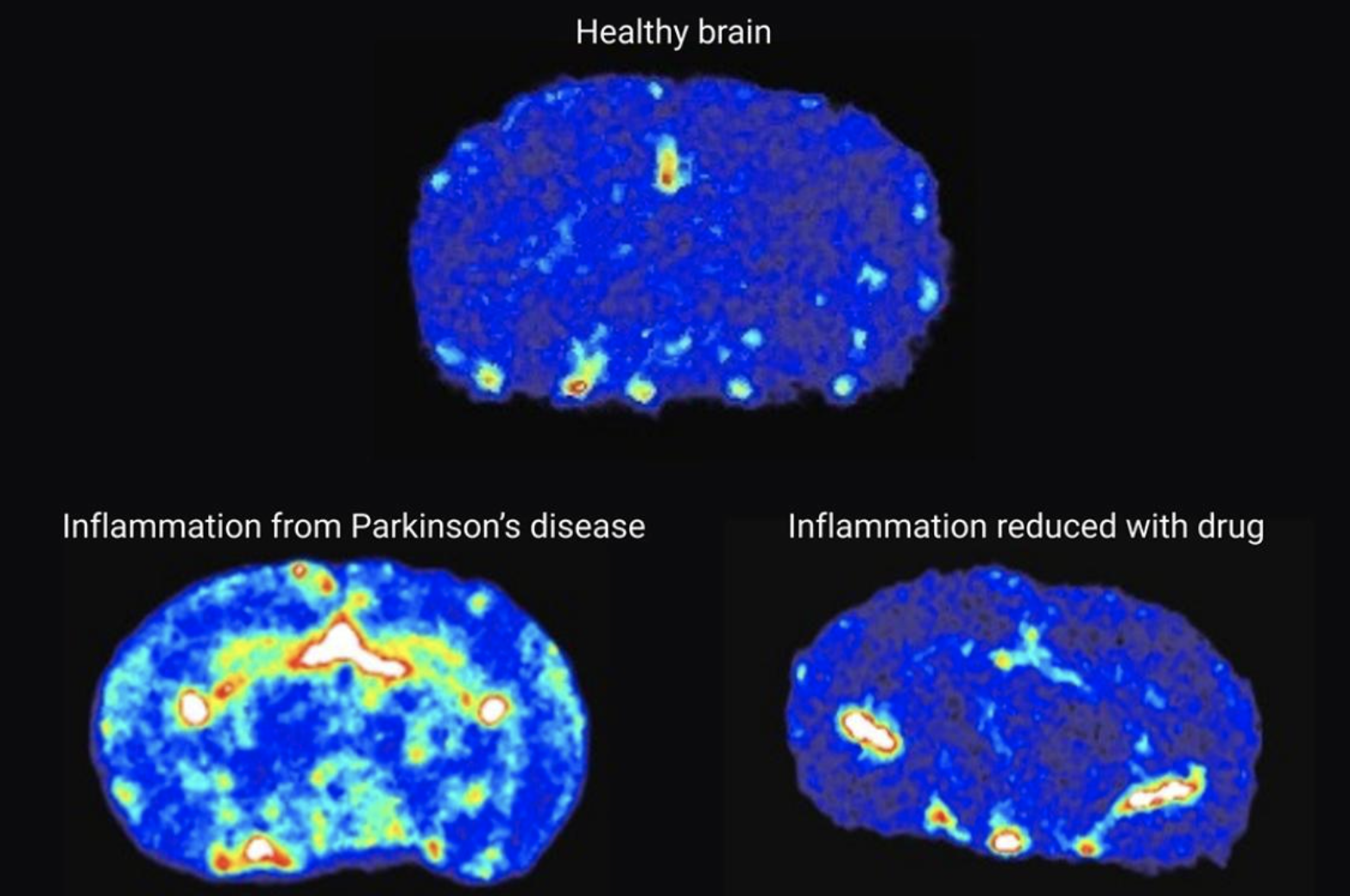
The image above is from their new research paper published in Brain, demonstrating how Inzomelid can potently reduce inflammation in a mouse model of Parkinson’s disease. The successful development of Inzomelid, or a similar drug, to treat Parkinson's disease would mark a breakthrough, as it could become the first therapy of its kind capable of halting Parkinson’s disease progression.
An NLRP3 Inflammasome Inhibitor, a Potential Game-Changer
A safe and effective NLRP3 inhibitor might represent a new milestone in the treatment of many neurodegenerative and autoimmune conditions. We speculate that such a drug might also be used in investigator-initiated trials or off-label studies for post-infectious ME/CFS driven by chronic EBV reactivation or other conditions where excessive NLRP3 inflammasome activation has been characterized. That being said, many new speculative treatments seem like a good idea on paper, but often fall short and do not provide a noticeable clinical benefit. Until then, we will be watching closely for news of the world's first licensed NLRP3 inhibitor.
Brain Storm Briefs
The following are highlights from recently published scientific studies that could reshape medical perspectives on conditions, drive innovations in diagnostics or treatments, or deliver broad technological breakthroughs to deepen our understanding of 30+ diseases of interest to the Brain Inflammation Collaborative.
1. Laughing Gas Offers Relief For Treatment-resistant Depression
A recent meta-analysis published in eBioMedicine on November 30, 2025, led by researchers from the University of Birmingham, indicates that inhaled nitrous oxide (N2O) offers rapid relief for adults with major depressive disorder (MDD) and treatment-resistant depression (TRD), where nearly half of patients fail to respond to standard antidepressants. The review of seven clinical trials found that a single dose at 50% concentration significantly reduces depressive symptoms within 24 hours, though effects typically fade by one week. Researchers suggest the anti-depressive effects are likely due to N2O's action on glutamate receptors similar to ketamine.
2. Virax Biolabs Approach to Diagnosing Infection-Associated Chronic Conditions
Virax Biolabs Group Limited (NASDAQ: VRAX), a biotechnology company that will soon test its ViraxImmune™ T-cell assay aimed at improving the diagnosis of Long COVID, ME/CFS, and post-treatment Lyme disease. Key achievements include completing recruitment ahead of schedule for the UK clinical study VRX-002 (160 participants), with initial data expected in Q2 2026; completing enrollment in a second UK trial (VRX-003, 100 subjects); and a collaboration with Emory University for U.S. studies on Long COVID to support FDA pathways. The company advanced its ImmuneSelect RUO portfolio for potential near-term revenue from research customers and presented T-cell dysfunction data at a scientific meeting.
3. Early Rehab After Head Injury Could Cut Alzheimer’s Risk in Half
A new study from Case Western Reserve University suggests that prompt treatment for head injuries, even if symptoms appear minor, could reduce the risk of developing Alzheimer’s disease by up to half, with physical and cognitive therapy within a week specifically lowering the risk by more than 40 percent. Co-author Austin Kennemer noted that these findings could encourage patients to advocate for immediate rehabilitation services and prompt hospitals to prioritize post-injury rehab. Traumatic brain injuries, caused by violent or sudden impacts and linked to Alzheimer’s, often lead to delayed treatment due to perceived minor symptoms, misattribution to other conditions, or cognitive impairments preventing recognition of the need for care, as per their newly published paper.
4. New Autopsy Findings Reveal Severe HPA Axis Collapse in Severe ME/CFS: Dramatic Loss of CRH-Producing Neurons
A preliminary, unpublished autopsy study presented at the 2025 IACFS/ME conference by a Dutch research group reported severe hypothalamic-pituitary-adrenal (HPA) axis dysfunction in seven severely ill ME/CFS patients, characterized by a dramatic reduction in corticotropin-releasing hormone (CRH)-producing neurons in the hypothalamus. This selective loss of CRH neurons led to reduced CRH projections to the pituitary and evidence of cortisol suppression. This report suggests a broadly impaired stress and energy regulation system that could explain core symptoms such as fatigue, poor sleep, pain, and autonomic issues in ME/CFS.
5. Balance Problems May Play a Big Role in Standing Issues for People with ME/CFS
Japanese doctor Kunihisa Miwa presented at the 2025 ME/CFS conference that many patients have trouble staying steady when standing or walking, called disequilibrium. In his study of 160 patients, about 25% swayed when standing still with eyes closed, and 44% had trouble with walking tests. He believes this balance problem causes more trouble with being upright than the common heart rate issue called POTS, because patients with balance problems often can't stand for 10 minutes, while those with POTS can. These balance issues can make people more tired, as the body works harder to stay steady, muscles tense up, and the brain uses extra effort to keep oriented. Miwa thinks inflammation in the brainstem causes this, and he tried two treatments: an antibiotic called minocycline and brain stimulation called rTMS, both of which greatly improved balance and standing ability in small studies. While more careful studies are needed, this idea suggests that reducing brain inflammation could help some people with ME/CFS feel better when standing.
Our Mission
Complex chronic conditions, including infection-associated chronic illnesses (e.g., Long COVID, ME/CFS, post-treatment Lyme disease syndrome), autoimmune disorders (e.g., lupus, autoimmune encephalitis), and neurodegenerative diseases (e.g., multiple sclerosis), share common hallmarks such as neuroinflammation, overlapping immunopathologies, overlapping symptoms and comorbidities, and treatment responses. For instance, many with Long COVID also have POTS or MCAS, while children and adolescents with PANDAS/PANS can also present with POTS, OCD, and eating disorders involving restrictive eating. The parallels between these conditions are staggering.
That is why we are among the first non-profits to take a collaborative approach to research. Our mission is to complement the work of single-condition advocacy groups by fostering a collective research framework that spans 30+ related conditions. These conditions affect millions in the United States, yet no cures exist.
We are actively using our clinical health platform, unhide®, to not only help patients (children, adolescents, and adults) like you uncover hidden patterns in your health, but also to build a collaborative network of researchers with different clinical and scientific backgrounds needed to study these medical conditions with the all-encompassing approach it deserves.
We humbly thank you in advance for your continued support. Together we can make a difference.
Sincerely, The Brain Inflammation Collaborative Team
1. Liu Y, Tao X, Tao J. Strategies of Targeting Inflammasome in the Treatment of Systemic Lupus Erythematosus. Front Immunol. 2022;13:894847. doi:10.3389/fimmu.2022.894847
2. Deora V, Lee JD, Albornoz EA, et al. The microglial NLRP3 inflammasome is activated by amyotrophic lateral sclerosis proteins. Glia. Feb 2020;68(2):407-421. doi:10.1002/glia.23728
3. Yin H, Liu N, Sigdel KR, Duan L. Role of NLRP3 Inflammasome in Rheumatoid Arthritis. Front Immunol. 2022;13:931690. doi:10.3389/fimmu.2022.931690
4. Keane RW, Dietrich WD, de Rivero Vaccari JP. Inflammasome Proteins As Biomarkers of Multiple Sclerosis. Front Neurol. 2018;9:135. doi:10.3389/fneur.2018.00135
5. Vakrakou AG, Boiu S, Ziakas PD, Xingi E, Boleti H, Manoussakis MN. Systemic activation of NLRP3 inflammasome in patients with severe primary Sjögren's syndrome fueled by inflammagenic DNA accumulations. J Autoimmun. Jul 2018;91:23-33. doi:10.1016/j.jaut.2018.02.010
7. Jewell S, Herath AM, Gordon R. Inflammasome Activation in Parkinson's Disease. J Parkinsons Dis. 2022;12(s1):S113-s128. doi:10.3233/jpd-223338
8. Ali FEM, Ibrahim IM, Ghogar OM, Abd-Alhameed EK, Althagafy HS, Hassanein EHM. Therapeutic interventions target the NLRP3 inflammasome in ulcerative colitis: Comprehensive study. World J Gastroenterol. Feb 14 2023;29(6):1026-1053. doi:10.3748/wjg.v29.i6.1026
9. Opipari A, Franchi L. Role of Inflammasomes in Intestinal Inflammation and Crohn's Disease. Inflammatory Bowel Diseases. 2014;21(1):173-181. doi:10.1097/mib.0000000000000230
10. Karasawa T, Takahashi M. Role of NLRP3 Inflammasomes in Atherosclerosis. J Atheroscler Thromb. May 1 2017;24(5):443-451. doi:10.5551/jat.RV17001
11. Verma D, Fekri SZ, Sigurdardottir G, Bivik Eding C, Sandin C, Enerbäck C. Enhanced Inflammasome Activity in Patients with Psoriasis Promotes Systemic Inflammation. Journal of Investigative Dermatology. 2021/03/01/ 2021;141(3):586-595.e5. doi:https://doi.org/10.1016/j.jid.2020.07.012
12. Cristina de Brito Toscano E, Leandro Marciano Vieira É, Boni Rocha Dias B, et al. NLRP3 and NLRP1 inflammasomes are up-regulated in patients with mesial temporal lobe epilepsy and may contribute to overexpression of caspase-1 and IL-β in sclerotic hippocampi. Brain Research. 2021/02/01/ 2021;1752:147230. doi:https://doi.org/10.1016/j.brainres.2020.147230
13. Sharma BR, Kanneganti T-D. NLRP3 inflammasome in cancer and metabolic diseases. Nature Immunology. 2021/05/01 2021;22(5):550-559. doi:10.1038/s41590-021-00886-5
14. Godbout JP, Moreau M, Lestage J, et al. Aging exacerbates depressive-like behavior in mice in response to activation of the peripheral innate immune system. Neuropsychopharmacology. Sep 2008;33(10):2341-51. doi:10.1038/sj.npp.1301649
15. Xia CY, Guo YX, Lian WW, et al. The NLRP3 inflammasome in depression: Potential mechanisms and therapies. Pharmacol Res. Jan 2023;187:106625. doi:10.1016/j.phrs.2022.106625
16. O'Connor KA, Johnson JD, Hansen MK, et al. Peripheral and central proinflammatory cytokine response to a severe acute stressor. Brain Res. Nov 21 2003;991(1-2):123-32. doi:10.1016/j.brainres.2003.08.006
17. Goshen I, Kreisel T, Ounallah-Saad H, et al. A dual role for interleukin-1 in hippocampal-dependent memory processes. Psychoneuroendocrinology. Sep-Nov 2007;32(8-10):1106-15. doi:10.1016/j.psyneuen.2007.09.004
18. Saresella M, Piancone F, Marventano I, et al. Multiple inflammasome complexes are activated in autistic spectrum disorders. Brain Behav Immun. Oct 2016;57:125-133. doi:10.1016/j.bbi.2016.03.009
19. Saad K, Abdallah AM, Abdel-Rahman AA, et al. Polymorphism of interleukin-1β and interleukin-1 receptor antagonist genes in children with autism spectrum disorders. Prog Neuropsychopharmacol Biol Psychiatry. Dec 20 2020;103:109999. doi:10.1016/j.pnpbp.2020.109999
Brain Inflammation Collaborative 925 Genesee St #180440 Delafield, WI 53018