If you're having trouble viewing this email, you cansee it online.
Feast of Christ the King
Dear Friend,
Regis College is shaping a new generation of leaders—women and men formed in the Ignatian tradition to serve a complex, divided world. From Toronto to the global Church, our students accompany others with faith, justice, and compassion.
This year, your support can make an extraordinary impact. We’re launching: The Master of Psychospiritual Care, preparing ministers and chaplains for trauma-informed service in parishes, schools, and hospitals.
Walking in Service, a congregational leadership project, supported by the Lilly Endowment Inc., bringing theological education to Catholic Indigenous communities in Ontario and across Canada through land-based and community-guided learning.
These initiatives reflect Regis’s strategic visions for the future—deepening partnerships, strengthening Ignatian formation, and ensuring the College’s mission serving the Church and world remains vibrant for generations to come. Your gift will help open doors for students and empower leaders who embody faith in action.
At Regis College, we stand at a crossroads of faith and culture that feels both urgent and grace-filled. Ours is a world restless for meaning, often divided by fear and ideology, yet still yearning for wisdom and hope. In this moment, Regis’s Jesuit mission—to form men and women for lay and ordained service to others—has never felt more vital or more possible.
Our college, rooted in the heart of Toronto and federated with the University of St. Michael’s College and the Toronto School of Theology, has long been a meeting ground for global voices. Over half of our students come from outside Canada. Together, they form a community of learning that embodies the Church’s universality and the Society of Jesus’s call to walk with the excluded, accompany youth, and care for our common home. The result is not simply academic excellence, but a form of leadership formation that integrates intellect, compassion, and discernment.
This year, two new initiatives in collaboration with the Regis St. Michael's Faculty of Theology are drawing that mission into sharper focus.
First, the Master of Psychospiritual Care—newly launched in 2025—will prepare pastoral leaders, chaplains, and caregivers for trauma-informed ministry in parishes, schools, and healthcare settings. By bridging theology and psychology, this program responds directly to the needs of a wounded world, offering formation for those called to listen, heal, and accompany.
Second, our Indigenous Congregational Leadership Project, supported by the Lilly Endowment, is deepening Regis’s long-standing partnership with Indigenous communities across Ontario and beyond. Through community-based and land-based learning, Indigenous elders, scholars, and faith leaders are co-creating pathways of theological education that honour Indigenous languages, stories, and spiritual traditions. This initiative reflects Regis’s commitment to truth and reconciliation as a spiritual and educational journey.
Together, these projects are shaping the spirit of our ongoing five-year strategic planning process:
·Building and deepening partnerships across Jesuit, university, ecclesial, and community networks;
·Attracting and forming new Ignatian leaders—both faculty and students;
·Strengthening discernment-based governance; and
·Expanding the financial capacity that sustains our mission.
These emerging priorities are not abstract goals. They are concrete steps toward ensuring that theology at Regis remains alive—responsive to culture, engaged with science and society, and rooted in the transforming love of God.
Every gift from our friends and alumni helps us keep that vision alive. Your support funds scholarships for Indigenous and international students, professional development for our faculty, and program innovation that brings theology into dialogue with real human experience.
In an age that often trades hope for cynicism, Regis College continues to form leaders who believe, discern, and serve with courage. I thank you for walking with us—partners in a mission that finds God in all things and seeks, always, to build a more compassionate and just world.
With gratitude and hope,
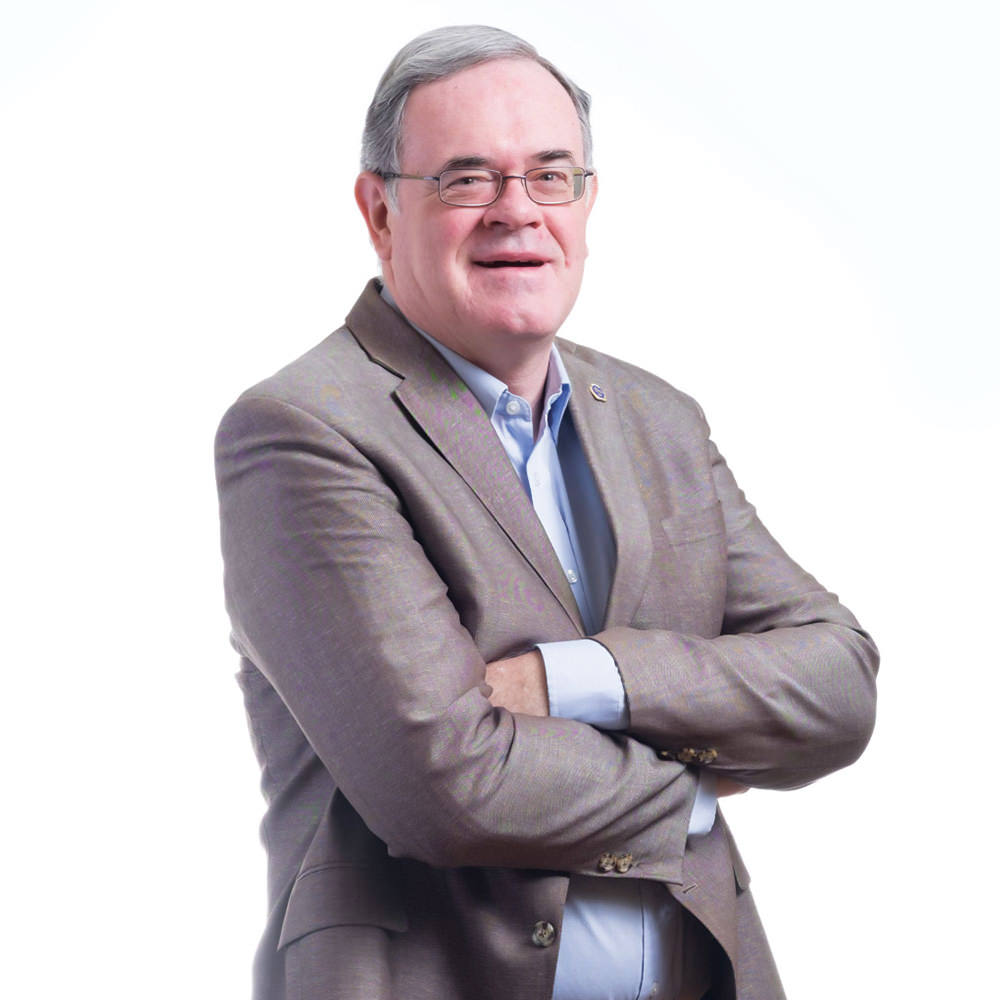
Gordon Rixon, SJ
President
Regis College
Walking in Service
Regis College has been awarded $1.4 million ($997,593 U.S.) in grant money by the Lilly Endowment Inc.'s Pathways for Tomorrow initiative. ...
Life in Community, Aidan Hart with contributions from Donald Jackson, Copyright 2002, The Saint John’s Bible, Saint John’s University, Collegeville, Minnesota USA. Used by permission. All rights reserved.
Peacemakers
“I am no longer a just war theorist. I think the world is way beyond that, now that we have nuclear weapons, now that we have computers,” philosopher Fr. Jack Costello, a former Regis College president, told this reporter a week after Russia invaded Ukraine in 2022.
But if just war is not possible, then what is viable in a world consumed by conflict? Regis College’s current president has enlisted Jesuit ethicist Fr. Ron Mercier, economist Peter Warrian, theologian Margaret Lavin and diplomat Anne Leahy to explore the possibilities in a Windows on Theology course – Blessed be the Peacemakers, Jan. 14 to Feb. 18, available online or in person.
“The world is being challenged by war and rumours about war. What does faith have to say about this?” is the essential question behind the new course, said current Regis president Fr. Gordon Rixon.
Rixon hopes the conversation will lead people attending the weekly sessions to “taking the next, sometimes small, practical steps to respond and co-operate with the divine.”
War and peace aren’t just political and diplomatic problems, said Rixon.
“Human history is healed and guided by recognizing the divine in the moment and co-operating with it,” he said. “Diplomats and politicians need spiritual support and the consolation of faith to persevere in their work.”
Nobody is irrelevant to the work of peace – neither retired elders nor young students.
“Regis has been blessed with the presence and energy of many elder activists,” said Rixon.
Along with his fellow Jesuit Jack Costello, Rixon has one sure conviction backing him up as he thinks about war in our time: “The Church is a church of peace.”
A Common Mission
For Irish Jesuit Provincial Superior Fr. Shane Daley it’s all about the mission.
“The purpose of the Society of Jesus has always been missionary. The desire to make Christ known to all peoples has brought hundreds of Jesuit missionaries to travel to far away countries and cultures,” Daley told RFQ in an email.
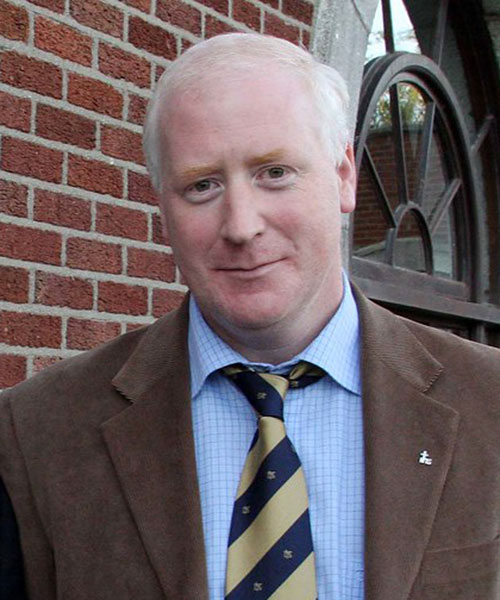
Father Provincial Shane Daly, SJ
Daley will be at Regis College Nov. 21 to accept an honorary doctorate on behalf of Ireland’s Jesuits. He will be the main attraction at the annual convocation gala dinner celebrating the feast of Christ the King. This year’s event has been subtitled “Regis College at the Global Crossroads.”
With a long history of sending missionaries to Malawi, Zambia, Hong Kong, Singapore and Malaysia, the Irish Jesuits now find they are no longer in a position to send missionaries out. But the mission continues, and they’ve found an ally in Regis College.
As Regis welcomes students from around the world, including Jesuit scholastics from countries where the Irish Jesuits maintained a significant presence through the 20th century, Daley and his brothers in Ireland have been able to continue their historic missions by financially supporting Regis College.
“Our ability to offer financial support to Regis College unites us, with our brothers in Canada and beyond, to that ongoing mission to announce Christ and help create a more just and humane world,” Daley told RFQ.
The aim is to “equip the next generation of Jesuit priests and brothers with the skills needed to proclaim the Gospel wherever they are sent,” he said.
The convocation will begin with a 4:30 p.m. Mass celebrated by Canadian Provincial Superior Fr. Jeffrey Burwell and end with a reception. All students, faculty, staff, alumni/ae, and friends of the college are welcome to attend. A ticketed Gala dinner will follow. The $200 tickets, including a $75 donation, are sold out.
Assorted stained glass from St. Joseph Chapel, Regis College.
If the stained glass windows in St. Joseph’s Chapel at Regis College seem bold and modern now, imagine the effect they might have had when they were installed in 1960, two years before the Second Vatican Council assembled for its first sessions.
The windows, commissioned by the Sisters of St. Joseph of Toronto when the chapel was part of St. Joseph College, were created by the studio of Karel Versteeg, an immigrant Dutchman who came to Canada after the Second World War.
Versteeg didn’t start off as an artist. Trained as a lawyer, he spent the Second World War in the diplomatic service of Holland. While in Geneva, he had the opportunity to see the relatively new dalle-de-verre technique for stained glass. He later learned how to execute such windows in France.
In a classic example of how everything sounds better in French, the English for dalle-de-verre is slab glass. But the English name is properly descriptive. Developed in Avignon, France just after the First World War, the new type of stained glass begins with very thick and very large slabs of glass. These slabs are broken, and the resulting pieces framed in concrete mixed with epoxy. It’s industrial-age art – not a medium that lends itself to representational or highly detailed depictions of religious figures, sweetly sentimental, glass artist Sarah Hall told RFQ.
“It works wonderfully for abstract art, given the very nature of it. You’ve got these huge, thick slabs of glass. You break them over an anvil and then facet them along the edges with a hammer. It never lends itself to any kind of sweet, little details,” she said. “It really has such a wonderful power that really suits abstract work.”
Hall also points out that dalle-de-verre (slab glass) was an important contributor to mid-20th century Catholic art. It fit perfectly into the ambitions of the Sacred Art Movement, as articulated by Dominican Fr. Marie-Alain Couturier. In his influential journal L’Art Sacré, Coutourier made the case for sacred art that would not be a refuge from the modern world, but an incarnation of the sacred within modern reality.
In the decades before the Second Vatican Council, the sacred art movement, now often referred to as Catholic modernism, captured the imagination of major artists and architects including George Braque, who cofounded cubism with Picasso, Marc Chagall, Henri Matisse, George Rouault, and the architect and planner Le Corbusier.
The Sisters of St. Joseph heard about Karel Versteeg and dalle-de-verre from a Basilian priest who taught art and church history at the University of St. Michael’s College in the early 1950s. Fr. George Flahiff first saw abstract, slab glass windows in Burlington, Vermont after the Second World War. By 1962 his openness to modernity was sought by Pope John XXIII, who made him a member of the Council of Fathers at the great ecumenical council.
The sisters were under heavy pressure from their architects, Gordon Adamson and Assoc., to install more conventional leaded glass windows from the busy Toronto studio of Miss Yvonne Williams. Williams would have charged $15,000 for four stained glass windows. In 2025 dollars, that would have come to $173,000. In reply to a letter from the architect urging the sisters to get their order into Williams, an assistant to Mother Margaret wrote, “At the present time we are not in a position to meet this expenditure.”
In 1959 the sisters turned to Versteeg’s studio for an initial window at $3,000. Seeing the first, they immediately ordered up three more at a total cost of $11,500 for four windows, or about $123,000 in 2025 dollars.
But Hall doesn’t think the sisters were just looking to save money. “They would have also been kind of, I think, stepping out a bit, really, to (commission) work in this technique, which was clearly modern,” said Hall.
The commission to Versteeg asked for windows depicting faith, hope, charity and the tree of life. There is no indication in the archives or on the windows themselves which is which, and it remains a topic of speculation for present-day viewers.
Hall regrets that little of the art and architecture currently found in Catholic churches has remained true to the ideals of the Sacred Art Movement. Nostalgia for some gauzy past situated vaguely between the 16th and 18th centuries has not brought about a more vital or realistic church, in Hall’s view.
But at Regis, the Jesuits are custodians of a bold, bright, incarnate light that streams through broken glass.
Friends of Regis
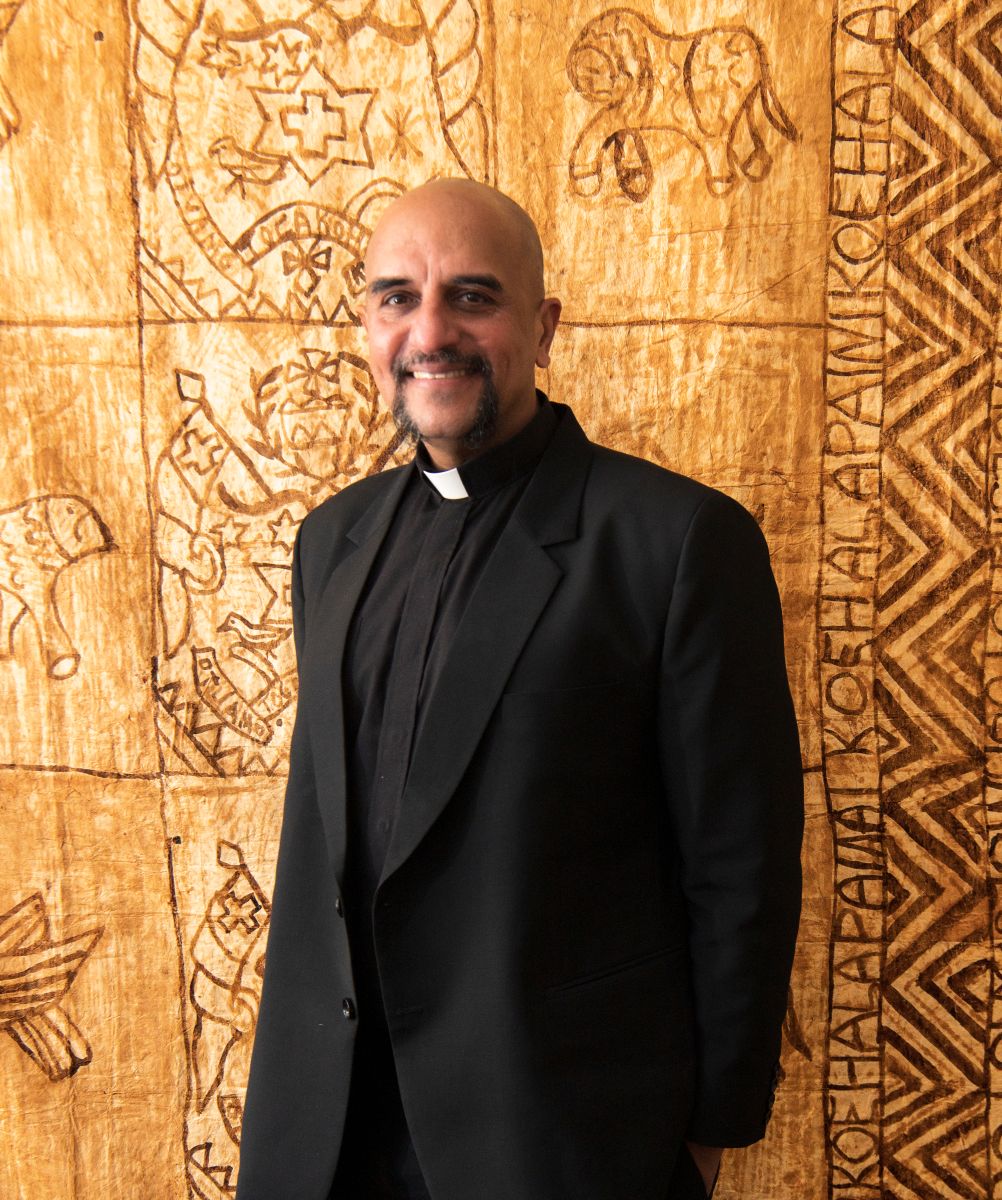
Fr. Roy Pereira, SJ
Fr. Roy Pereira, SJ
As Jesuit Fr. Roy Pereira looms over his keyboard on the JazzGoa YouTube channel, the neuroscience of this tricky sequence from the tonic chord (C major) to its secondary dominant (E7) to the subdominant (F), then winding through back alleys of various diminished chords and leading notes to a bouncy balance between the keys of C and G, cannot be entirely described in the electro-chemical language of neuroscience. But Pereira is certain that the 1930 hit song by Dorothy Fields and Jimmy McHugh, "On The Sunny Side of the Street," can teach us what it means to live a healthy life in the balance of our individual brain chemistry.
On sabbatical from Loyola Marymount University in Los Angeles, Pereira is at Regis as a visiting scholar developing his research into healthy aging and active longevity for brain health.
“The question is, what are some of the markers from neuroscience which could tell us that this is what we need to do, and what we need not to do – and it could be for anyone in any age group, 30, 40, 50 – to prevent Alzheimer’s dementia,” Pereira explained to RFQ.
The author of Uncertain Times: Wellness Strategies from Neuroscience and Ignatius has addressed the academic council of the Regis St. Michael’s Faculty of Theology and delivered a public lecture on the subject of resilience and mental health.
“How do we use the tools from neuroscience and spirituality to build up faith and hope and love in these very difficult times?” he asks.
Part of his answer is contemplation and he is an ardent advocate for meditation among his students. At Loyola Marymount he leads a “community of care” approach to supporting the mental health of university students.
Pereira doesn’t buy the popular notion that students have somehow become more fragile, more vulnerable to episodes of poor mental health, over the past 50 years.
“We have the tools now to diagnose, and then we have the ways to address these issues,” he said. “Stigma around mental health is also slowly being worn away, and today people are more likely to talk openly.”
In addition to his academic work, Pereira has joined the Regis St. Mike's choir and will lead the music at the Christ the King Feast Day celebration, as well as give the Advent retreat at Our Lady of Lourdes, the Jesuit parish in Toronto.
Melan Fernando, CPA
Melan Fernando, CPA, claims he can’t sing. If forced, the best he could do is Sweet Caroline – a tune so wired into basic human neural networks even disappointed Red Sox fans can mumble-shout their way through it halfway through the seventh inning.
But Regis College didn’t hire Fernando to sing. The new treasurer (since Oct. 10) was brought on board to make the numbers sing.
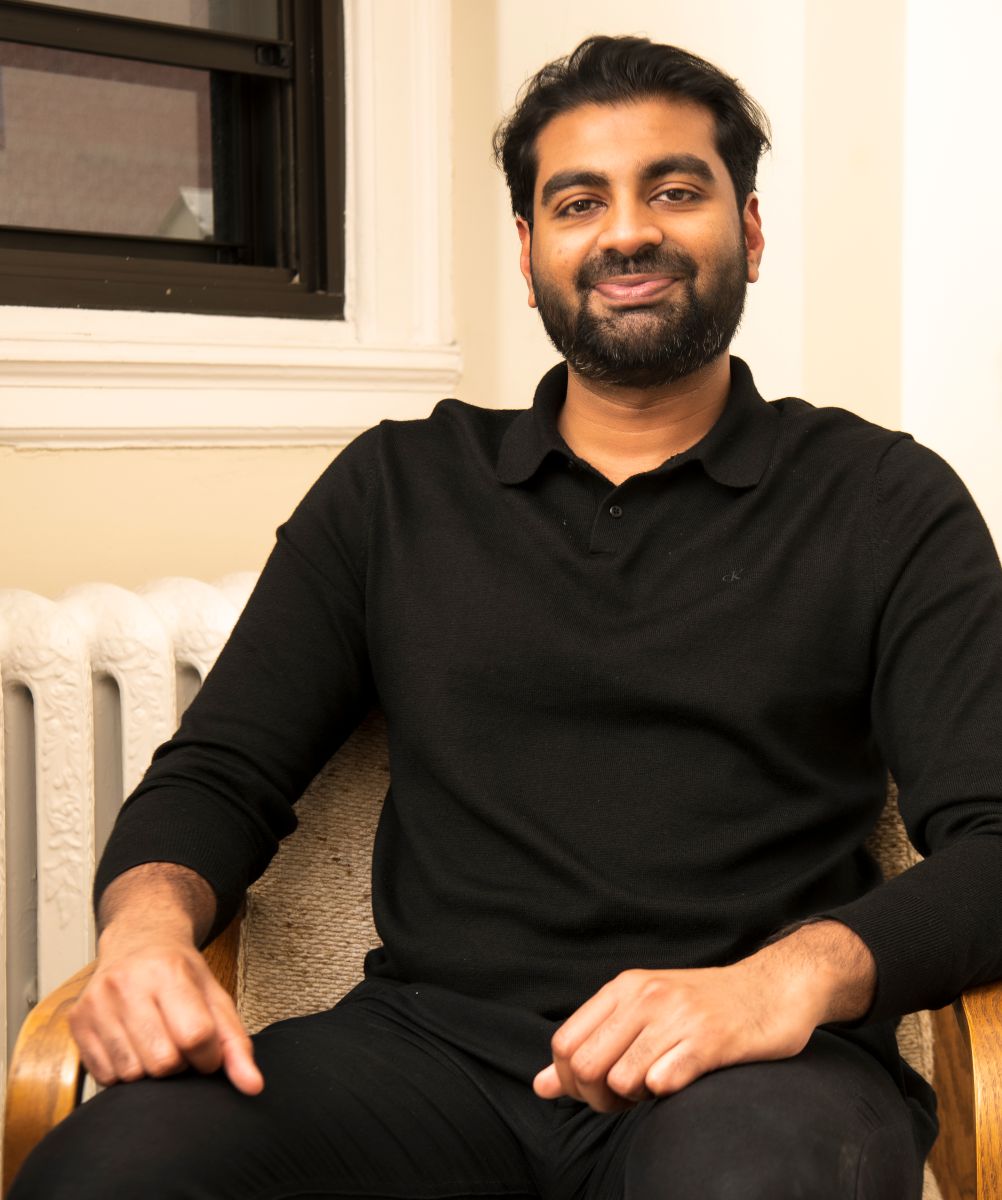
Melan Fernando, CPA
“When the numbers align, reports are clear, and I’ve made processes a little easier for everyone,” Fernando has had a good day at work.
“I’m very detail-oriented and genuinely enjoy helping organizations strengthen their financial systems and reporting,” he said in an email.
The 34-year-old freelance finance and accounting consultant specializes in not-for-profit organizations and is enjoying his part-time gig at Regis. But don’t ask him to sing.
He Shall Judge, Sally Mae Joseph, Copyright 2005, The Saint John’s Bible, Saint John’s University, Collegeville, Minnesota USA. Used by permission. All rights reserved.
Justice for God's people, and the importance of creating a just society, is another major theme emphasized by the text treatments and illuminations in The Saint John’s Bible. It appears here in two text treatments for Isaiah 1 and 2 by Sally Mae Joseph. Again, it is important that we pay attention to the words of the prophets and the portrait they paint of a hopeful future. The call is to “seek justice” and work on behalf of the oppressed and vulnerable. The words of Isaiah 2:4 have been repeated as a slogan and in fact engraved on monuments for peace throughout the ages. The great African American spiritual “Down by the Riverside” used this verse in its jubilant refrain: “Ain't gonna study war no more.” This verse was picked up by the peace movement of the 1960s and ’70s, and is sung today by scouts around the campfire.
Turning swords of war into plowshares for growing food is a powerful image. It is so central that it is repeated again in Micah 4:3. The vision of God’s perfect kingdom is first of all one where there is no war. As set down in the opening of the Bible, the creation story in Genesis, God’s vision is for fruitfulness, for growth and renewal and peace. Interestingly, both these text treatments use the word “Learn”: “Learn to do good,” and then “Neither shall they learn war any more.” In the fallen world, living up to God’s purpose is hard work, and it is a process. We have to study and learn it, turning our attention to it.
—Susan Sink, The Art of the Saint John's Bible: A Reader's Guide to Wisdom Books and Prophets (Collegeville, MN: Liturgical Press, 2008), p. 57.
Recent Publications & Conference Presentations
John Dadosky,“Lonergan, Decolonization and First Nations Peoples: Reflections of an Insider on the Outside,” World Christianity Conference, Marquette University, Milwaukee, 2-5 October 2025. —, "The Significance of Early Quakerism for Contemporary Ecclesiology," Ecumenical Trends 54/5, September-October 2025.
Susan K. Wood, SCL, “Baptismal Communion and the Spirit: Reimagining the Church in the Third Article of the Creed,” Touchstone: Heritage and Theology in a New Age, 43/3 (October, 2025): 35-43. —, “Reception of the Decree on Ecumenism in the U.S. Context,” in Vatican II: Legacy and Mandate, Vol. 5: Vatican II in North America, Australia, and Oceania, edited by Massimo Faggioli, Catherine Clifford, Ormand Rush and Richard Lennan. (Peters, 2025). Pp. 429-446. —, “Baptismal Waters: Bookends of Life and Mission,” in The Wiley Blackwell Companion to Liturgical Theology, ed. by Porter Taylor and Khalia J. Williams (Chichester: Wiley Blackwell, 2025), 178-189. —, “The Magisterial Responsibility to ‘Teach According to the Scriptures’,” in Holy Scripture in the Catholic Church: Ecclesial Dimensions of Biblical Exegesis (Die Heilige Schrift in der katholischen Kirche: Ekklesiale Dimensionen biblischer Exegese), ed. Aaron Pidel, Thomas Söding, and Aleksandra Brand, Herders Biblische Studien, Vol. 102 (Herder, 2025), pp. 289-304. —, “The Unity of the Church in the Third Article of the Creed,” plenary address, and “Baptismal Ecclesiology and a Synodal Church: From Font to Communion and Mission,” breakout section meeting, at the Sixth Faith and Order World Conference, St. Bishoy Monastery, Wadi El Natrun, Egypt, October 28, 2025.
Christian Ethics and Indigenous Spirituality in Dialogue: The Seven Grandfather Teachings and Lonergan’s Structure of the Human Good Presented by Christine Jamieson, PhD (Theological Studies, Concordia University) December 4, 2025 | 6:30 PM Alumni Hall 440 (121 St. Joseph St.) RSVP: http://bit.ly/4qG330Y — Fraser Centre: Women in Theology Webinar Speakers: Sr. Audrey Wong, fcJ (PhD student), Dr. Fiona Li (Professor, St. Mark’s College), and Dr. Cynthia Cameron (Professor, RSM) Facilitated by Gerard Ryan, SJ December 8, 2025 | 7:00-8:00 PM RSVP: frasercentre.ca/webinars
(1).png)
 Fr. Gordon Rixon, S.J.
.jpg)

.png)
.png)




.png)
.png)
