Inside: New GC members, new stories, new trainings, new publications and more
If you're having trouble viewing this email, you cansee it online.
June 2026 Newsletter
In This Issue
Welcome new Governing Council members
Feature Story: Seattle Aquarium Hope Objects
Climate Stories teaser
T4CJ Book Group and Summer Retreat
July Changing the Conversation webinar
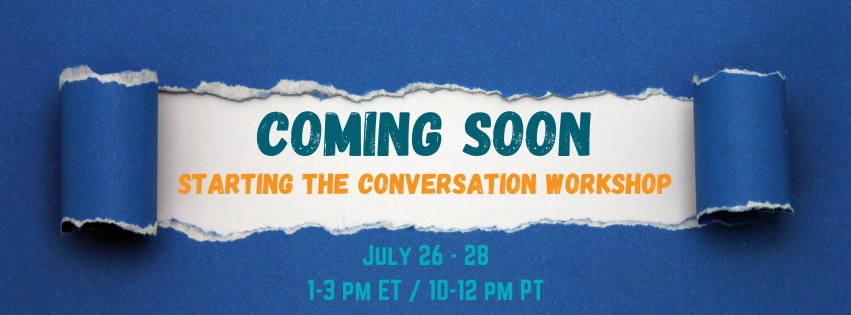
Coming Soon: Starting the Conversation training
New publications
During late spring each year, our new Governing Council (GC) grows and changes, saying ‘goodbye for now’ to members who have served their 2-year (or more) commitments, and welcoming those who will serve the NNOCCI Community over the next two years. We are extremely grateful for the support and care provided by the GC in moving the work of the Network forward - it would truly be impossible without them.
Please join us in offering a very warm welcome to our new GC Members!
Communications Committee: Clara Schroeder, Jodi Stewart
JEDI Committee: Ali Theophelis, Kamya Sud
Membership Engagement Committee: Nikki Grottano
Science & Evaluation Committee: Miranda Madrid
Transitioning from South Central Regional Leader role: Ubaida Abdallah
This Month's Featured Story: Seattle Aquarium Hope Objects
This June, we’re celebrating Ocean Month! Dive into this editorial by Nicole Killebrew, 2011 NNOCCI Alum and Training Committee member and learn more about the Seattle Aquarium’s Ocean Pavilion.
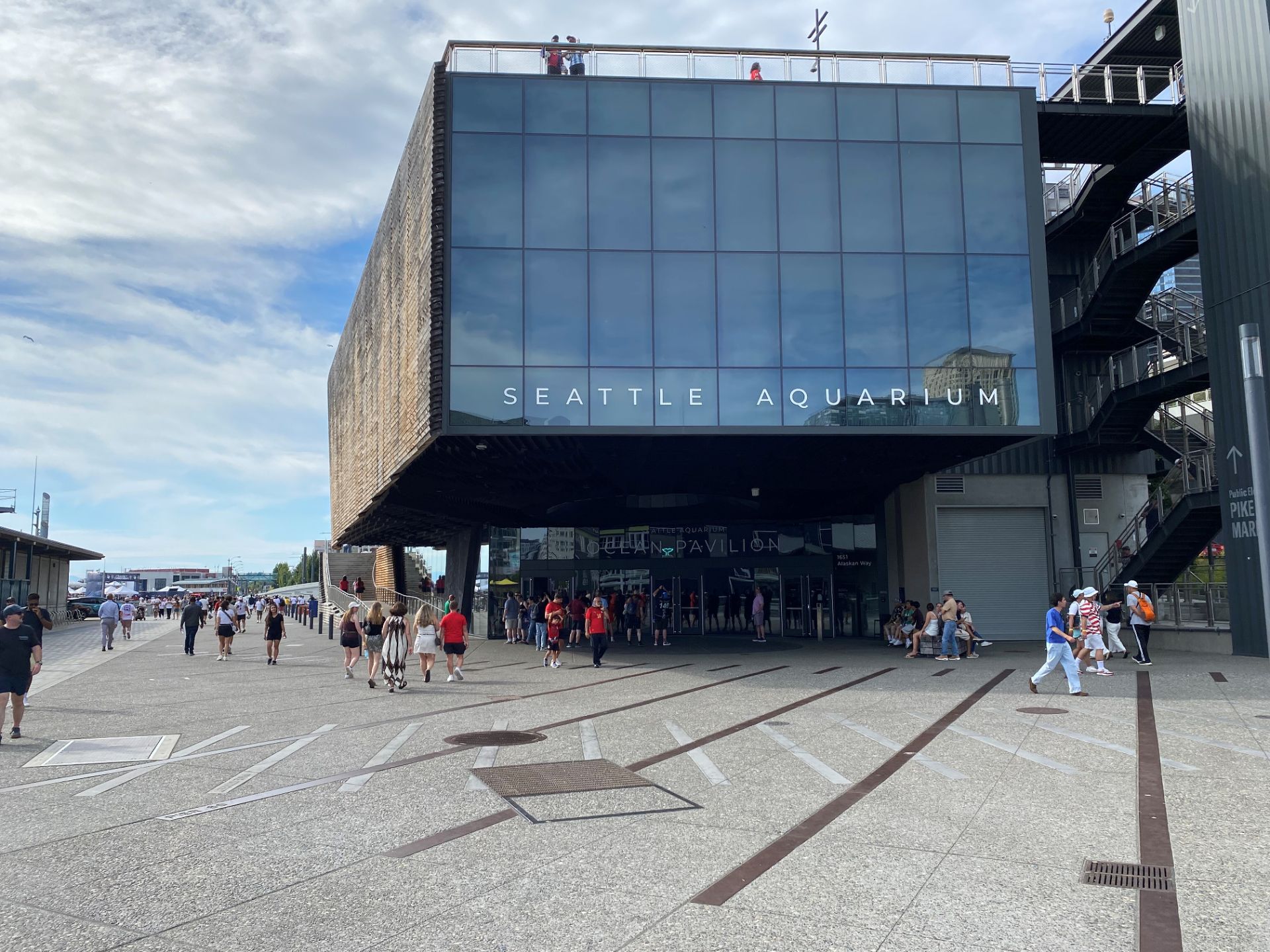
In August 2024, the Seattle Aquarium opened a new space, Ocean Pavilion. The entire building is a celebration of the Coral Triangle, an epicenter of marine biodiversity in the heart of the Indo-Pacific. While the animals and habitats we care for in Ocean Pavilion represent a tropical ecosystem, we have an opportunity to emphasize the interconnectedness of our One World Ocean and how marine conservation efforts in the Coral Triangle relate to efforts in our local temperate waters of the Pacific Northwest.
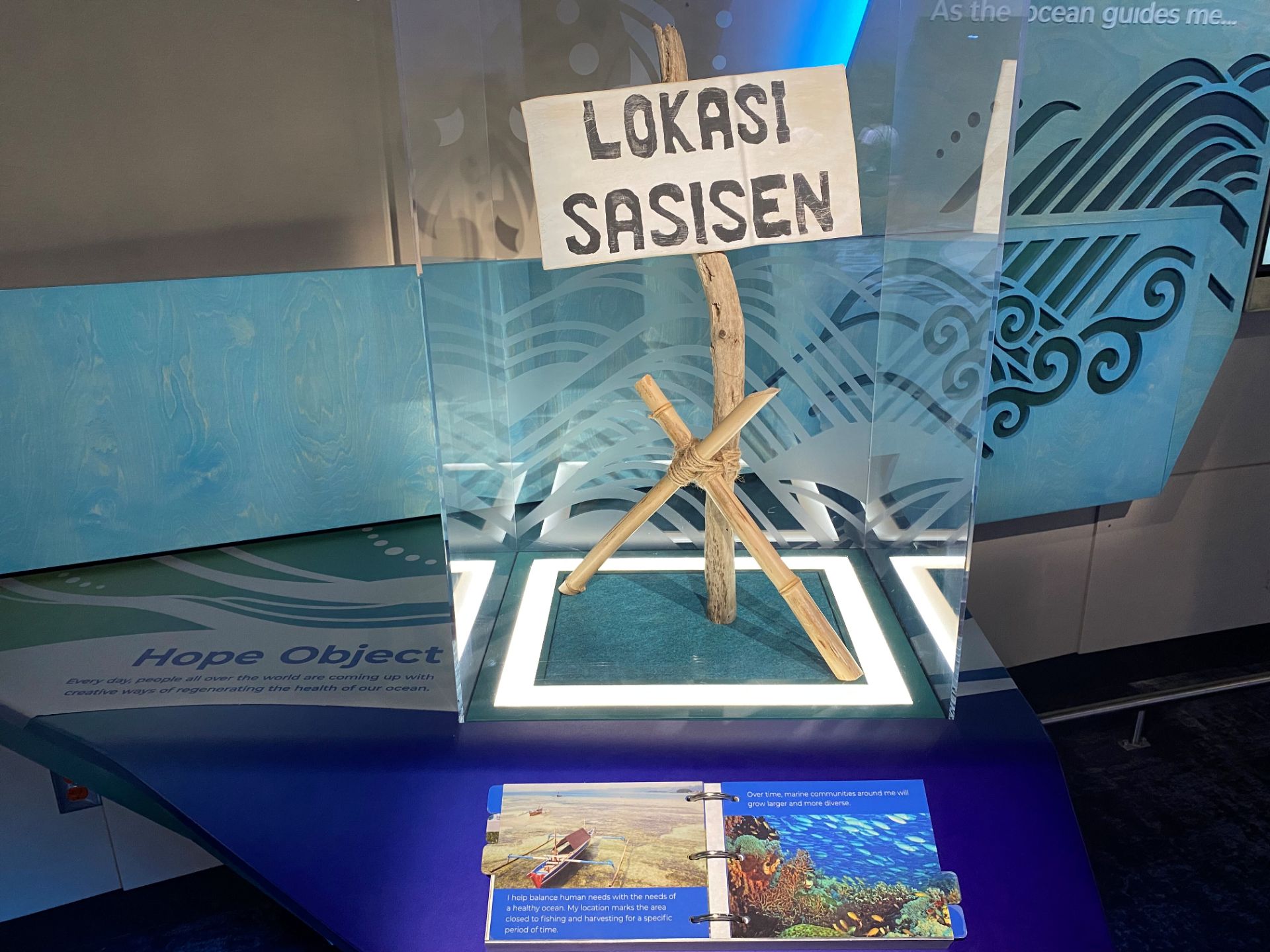
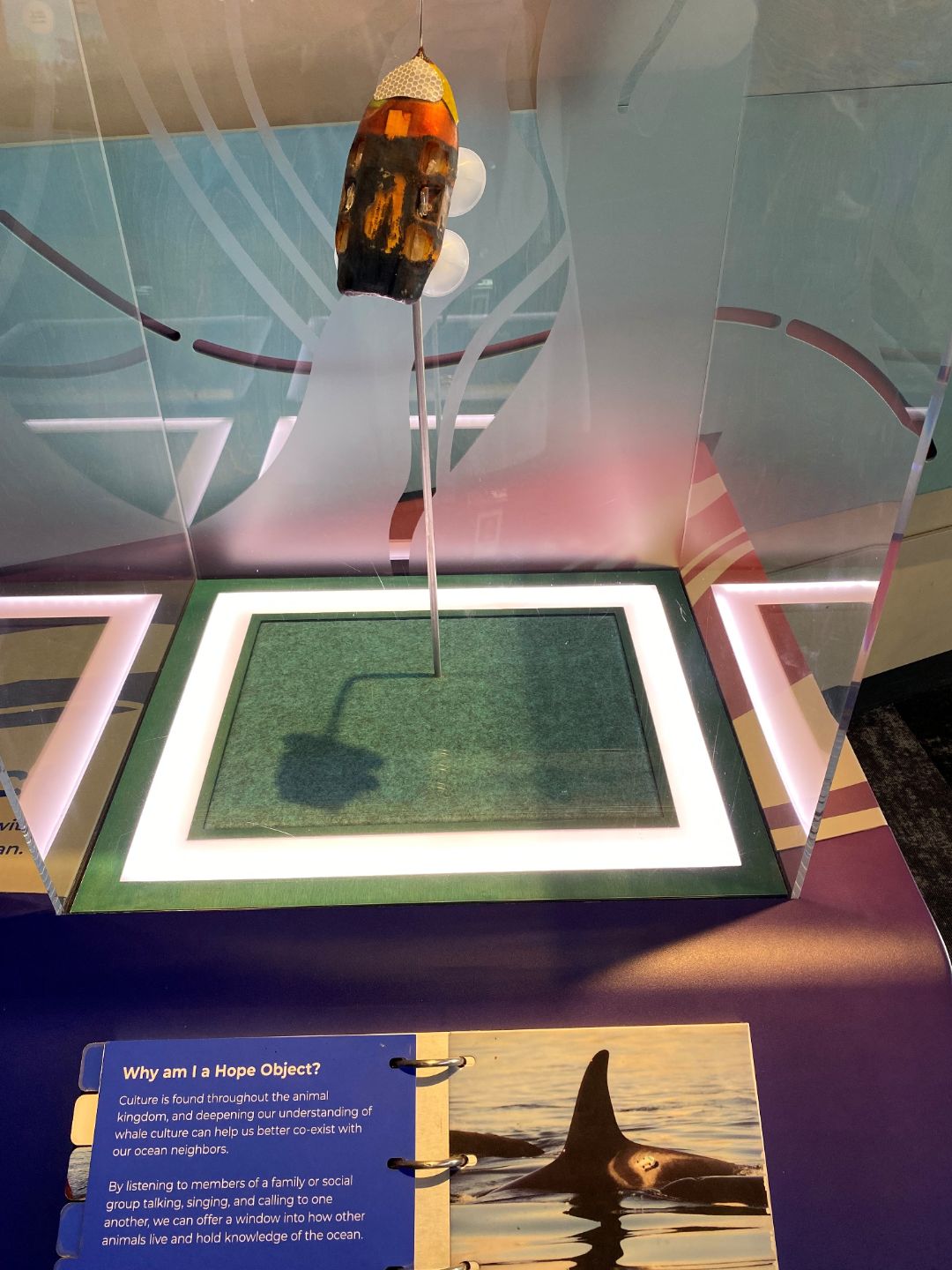
In addition to our animal habitats, Ocean Pavilion is home to another exhibit feature: Hope Objects. These are objects that amplify ocean optimism by highlighting tangible regenerative conservation practices. Can an object elicit hope? It can tell a story. It can represent a solution.
Hope Objects provide examples of community-led conservation actions. Accompanying narrative flip books are written with NNOCCI strategic framing and empathy best practices. These stories offer prompts inviting inquiry, exploration, and perspective taking: “What could I be?” “What might I be used for?”, and “How might I help the ocean?”
The hope objects chosen for Ocean Pavilion represent both traditional and innovative thinking in the work to protect and regenerate the ocean. Four examples are selected and described below:
Sasi Sign: When a community feels a marine area is in need of protection,
they come together to make a Sasi Laut, an “oath to the ocean”, to respect and protect what it gives. Sasi signs are placed along the shore to indicate a ‘no-take’ fishing area. Island communities throughout the Coral Triangle have traditions like Sasi Laut that help recover and sustain their marine ecosystems.
Modular Artificial Reef Structure (MARS): When a coral reef has been damaged due to climate change impacts or harmful fishing practices, MARS frames help corals grow faster to restore and expand new healthy reef habitats.
PISCES Selective Fishing Light: PISCES lights attach to fishing nets and deter specific animals. They prevent accidental bycatch of marine life and protect ocean biodiversity.
Digital Acoustic Tag (DTAG): Acoustic tags can record whale sounds and movement. “Culture is found throughout the animal kingdom, and deepening our understanding of whale culture can help us better co-exist with our ocean neighbors. By listening to members of a family or social group talking, singing, and calling to one another, we can offer a window into how other animals live and hold knowledge in the ocean.”
Hope objects can inspire us. These objects symbolize a variety of community-driven approaches to marine conservation. While located in Ocean Pavilion, the hope objects demonstrate our shared responsibility to protect ocean systems across the globe, from the Salish Sea to the Coral Triangle, and that by working together we can have a greater positive impact on the health of the ocean. We are connected to the ocean in our lives every day. We influence and are influenced by ocean systems. These systems are essential to life on earth. By caring for the ocean, we care for each other.
Check out this climate story!
If you’ve taken our Framing the Conversation course, you’re familiar with climate stories—the “final project” that students create throughout the duration of the workshop. We’re excited to showcase the stories you’ve put time and effort into! Here’s a glimpse of this month’s highlighted story:
“From prehistory to modern times, the lifestyles and communities of the Gulf coast have revolved around cultural staples such as fishing, beach-going, and eating local seafood. All of these activities involve a small, but inherent risk of exposure to Vibrio spp. bacteria. Vibrio is a group of naturally occurring microbes that can be found in estuaries and oceans throughout the world. Although most are harmless, several species can be pathogenic to humans; infections can occur from ingestion of raw seafoods -most commonly shellfish- or through wound exposure to seawater, fish slime, or uncooked seafood juices. Vibrio spp. infections are numerically rare, but can be life-threatening; therefore, safeguarding our residents (especially those who depend on coastal waters for their livelihoods), visitors, and consumers of Gulf seafood by minimizing vibrio infection risk is paramount. Interestingly enough, reducing our risk can involve a key aspect of those cultural staples I mentioned earlier- fresh, local food. But more on this in a bit…”
Stay tuned to read the whole climate story! We’ll be sharing it in the coming weeks across our social media channels.
JEDI Partner | Teach for Climate Justice Project
Want to learn more about Climate Justice? Tom Roderick’s Teach for Climate Justice Project is hosting a FREE study group to discuss Tom’s book Teach for Climate Justice this summer from July 15-August 19th. The group will meet weekly via Zoom on Wednesday evenings from 5:00-6:30 pm ET over the 6 weeks. The goal of these discussions is to inspire and support great teaching, empower educators to live their calling with authenticity and passion, and lay the foundation for a grassroots movement for transformative climate justice education. All participants will receive a FREE copy of the book. Visit teachforclimatejustice.org/events to sign up!
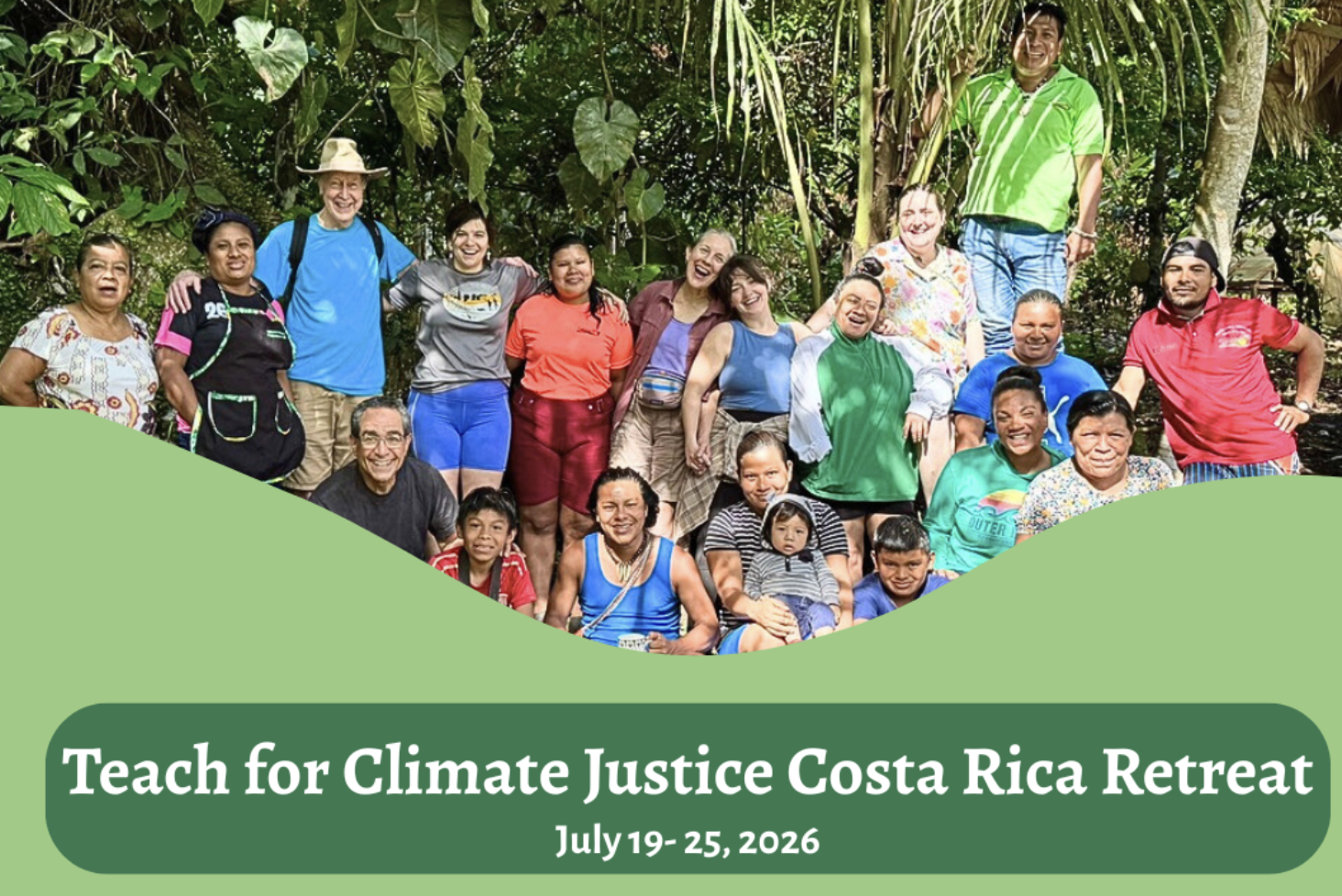
The Teach for Climate Justice Project is also offering a weeklong summer retreat to the Costa Rican rainforest for educators ready to connect with the exuberant biological diversity of the Central American rainforest and learn powerful strategies for bringing climate justice into the classroom. The trip is facilitated by Matthew Cook of Latin American Service Expeditions, Bribri elder Bernarda Morales, and Adriana Guzman of the Teach for Climate Justice Project. To promote deep conversation and maintain an intimate community, this trip is limited to just 10 participants. Registration is first come, first served.
For a detailed description of the retreat, the trip itinerary, and information about cost, please visit teachforclimatejustice.org/events.
Are you looking for more practical tips and insights from and for effective climate leaders? Work That Lasts is a thoughtful newsletter aimed at helping individual climate leaders think about and design systems that sustain people, purpose, and the planet.
Published every other Wednesday, Work that Lasts offers regenerative workflows, leadership insights, and tools for doing meaningful climate work without burning out. Subscribe here or read past issues.
Free Changing the Conversation Webinar
Whether you are a trained NNOCCI member, or brand new to us and think we’re a team of potato dumplings, we want YOU to help ‘teach the choir to sing’ about effective, hopeful climate communications!!
By sharing the power of strategic framing on climate with people in your professional or personal life, you are helping talk about it and empowering communicators everywhere.
Please register for, and share, this upcoming one-hour free opportunity with colleagues, friends, and family!
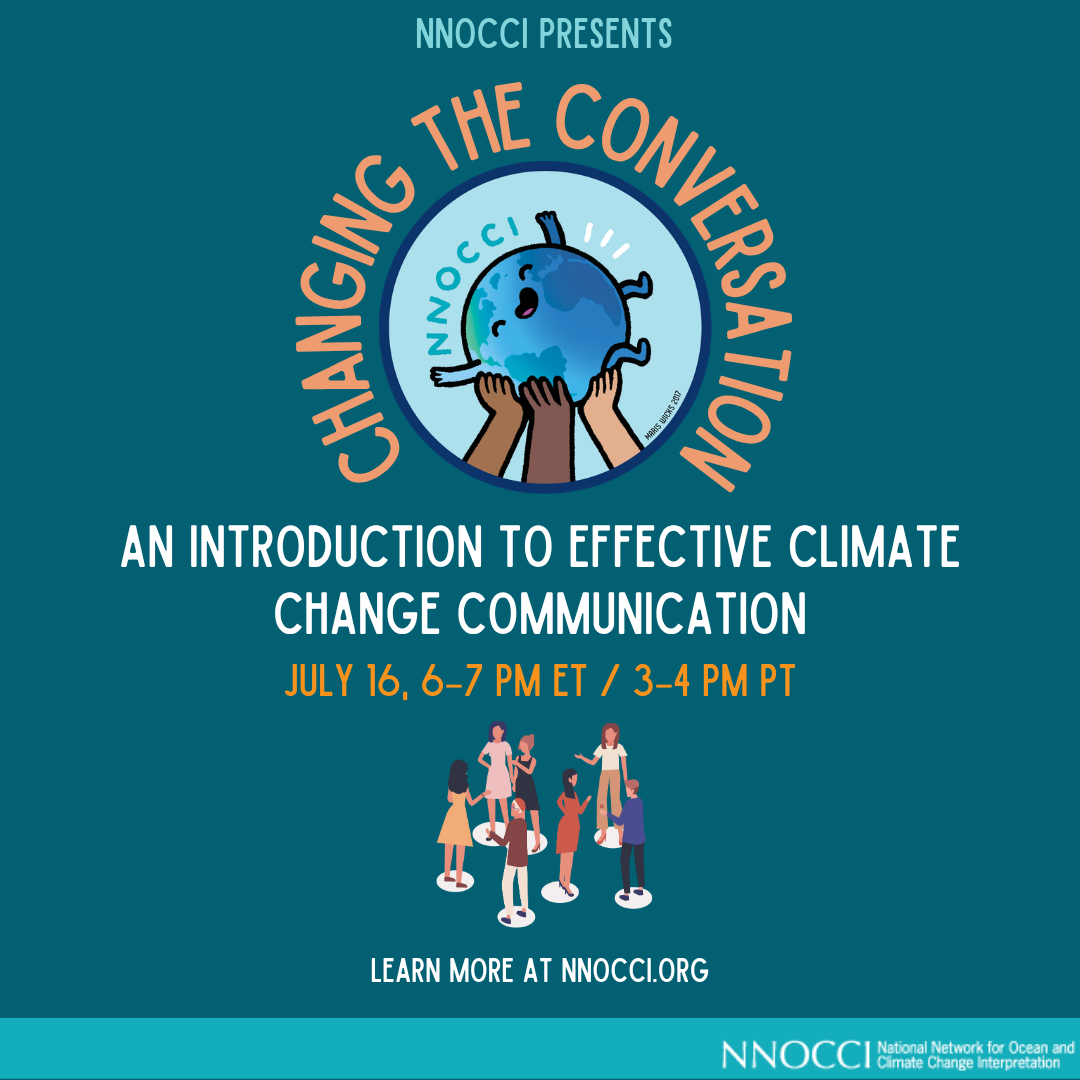
Changing the Conversation: An Introduction to Effective Climate Change Communication
Please join us on Thursday, July 16th from 6 - 7 pm ET / 3 - 4 pm PT
Trying to talk about climate change but finding that facts alone don’t always land? While climate science is essential, social science shows us how to share climate messaging in ways that truly connect with our audiences. Whether you’re brand new to the National Network for Ocean and Climate Change Interpretation (NNOCCI) or just want to learn more, this is a great chance to connect with us.
Join experienced NNOCCI trainers to explore how tested values and metaphors can help audiences become more open to climate messages, and become part of a community working to make climate conversations more positive, civic-minded, and solutions-focused.
With over 15 years of impact, 35+ peer-reviewed publications, and a growing network of nearly 900 trained members across the U.S., Canada, and beyond, NNOCCI is an internationally recognized leader in climate change interpretation. NNOCCI is proud to operate through a fiscal sponsorship with The Marine Mammal Center.
Registration will open in the coming days for the more in-depth 6-hour Starting the Conversation Workshop, which will take place from Tuesday, July 28th, to Thursday, July 30th, from 1-3 pm ET / 10-12 pm PT each day.
Please let us know if you have any questions about this offering by emailing us at ContactNNOCCI@gmail.com.
We are thrilled to share the news of a new book chapter recently published highlighting NNOCCI’s work that went into print earlier this month, How to Ensure Your Climate Messages Inspire Climate Action: A Step-by-Step Guide in The Palgrave Handbook of Climate Change Research in Transdisciplinary Education! This marks the 35th publication highlighting the work of NNOCCI, and we’d like to extend a hearty congratulations to the writers, Hannah Pickard, Dr. Megan Ennes, John Anderson, and Jeanette Johnston. Thank you for cheerleading our community’s work to the world!
It must be ‘book chapter season’ because a final draft was just submitted for Interpreting Climate Change: The Good, The Bad and The Ugly as part of the Handbook on Environmental Interpretation and Education, written by Adam Ratner and Kait Birghenthal. Publication is expected in early 2027.
Have NNOCCI news to share?! Please let us know by contacting us at ContactNNOCCI@gmail.com. We love celebrating our Network’s amazing contributions to the field of climate communication!
You are receiving this email because you are an integral part of our NNOCCI network. Thank you for framing your climate communications as hopeful and solutions-oriented!
Our mailing address is: National Network for Ocean and Climate Change Interpretation 2000 Bunker Road The Marine Mammal Center Sausalito, CA 94965-2619